20 smart storage ideas for small homes
Practical storage for apartments and small houses, using wall space, the backs of doors, the space under furniture, and a few inexpensive containers.
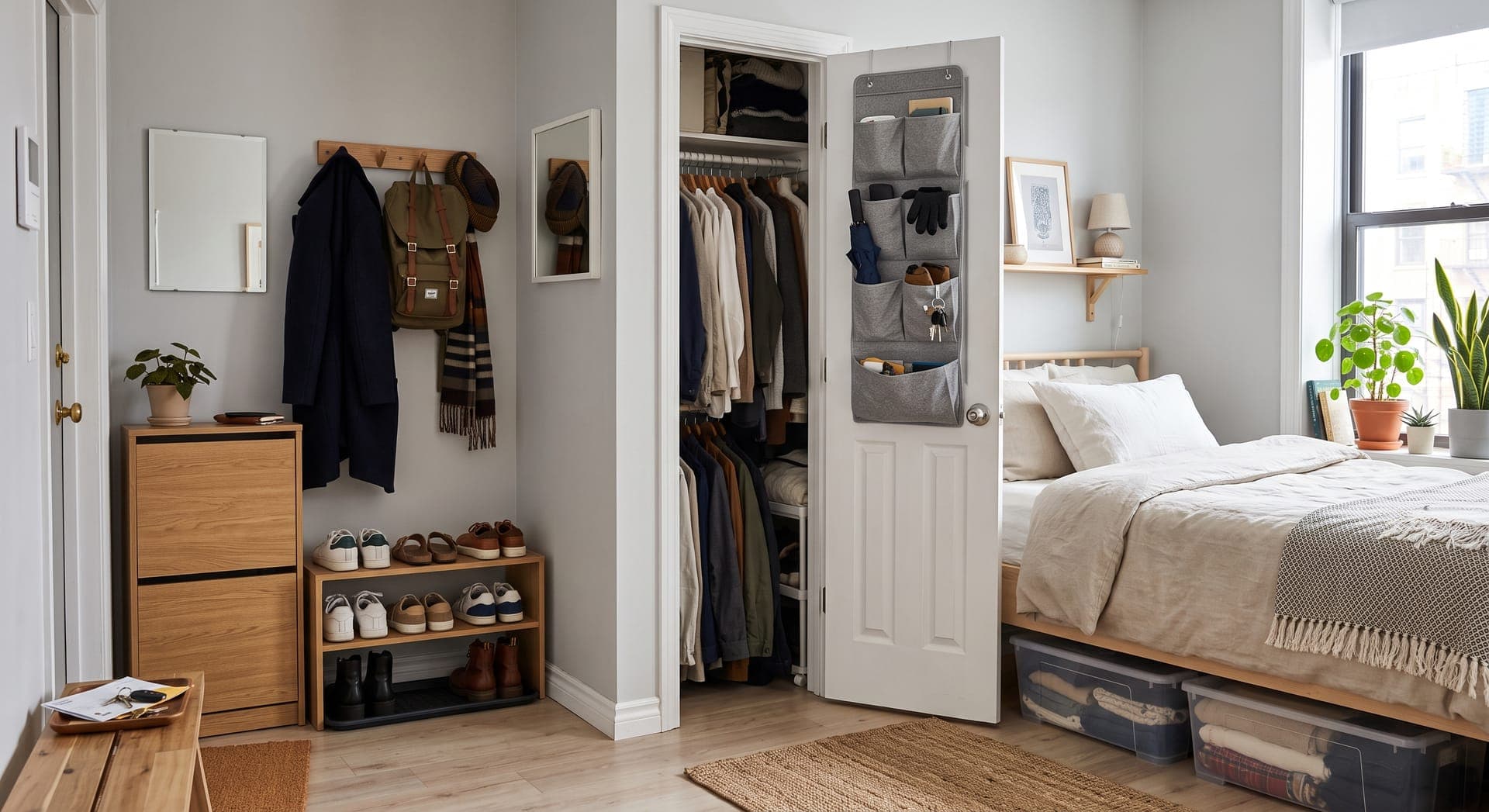
Small homes rarely run out of space evenly. The floor and the counters fill up while the walls above head height, the backs of doors, and the space under furniture stay empty. Most of the ideas below move things into that unused space. None of them needs built-in carpentry, and the ones marked renter friendly need no drilling or can be undone easily.
Before adding any storage, spend an hour removing what you no longer use. Storage for things you do not need just moves the clutter somewhere else.
Clear out first, then measure
- Pick one area: a closet, the entryway, under the bed.
- Take everything out and sort it into keep, donate or sell, and throw away.
- Group what you keep by how often you use it: daily, weekly, seasonally, rarely.
- Measure the space before buying containers. Note the height, width, and depth, and the size of any door opening.
Daily items belong at the height between your hips and shoulders. Seasonal and rarely used items can go high up, low down, or under furniture.
Use the walls
1. Shelves above head height
A shelf running around a room or along one wall about a foot below the ceiling holds books, boxes, and seasonal items without taking any floor space. Use matching boxes so it looks tidy from below.
2. A pegboard or wall rail
In a kitchen, workspace, or entryway, a pegboard or rail with hooks keeps tools, utensils, or bags visible and off surfaces. You can rearrange it as your needs change.
3. Wall hooks by the door
A row of hooks at the entrance holds coats, bags, and keys, so they stop collecting on chairs. Add a second, lower row for children. Adhesive hooks rated for the weight are renter friendly for lighter items.
4. Narrow wall-mounted shelves
Picture-ledge shelves, only a few inches deep, fit in hallways and beside doors where a bookcase would block the way. They are good for spices, toiletries, and small books.
5. A fold-down desk or table
A wall-mounted table that folds flat gives you a desk or dining surface that disappears when you need the floor. Mount it into wall studs, because it will take weight and leaning.
Use the doors
6. Over-the-door organizers
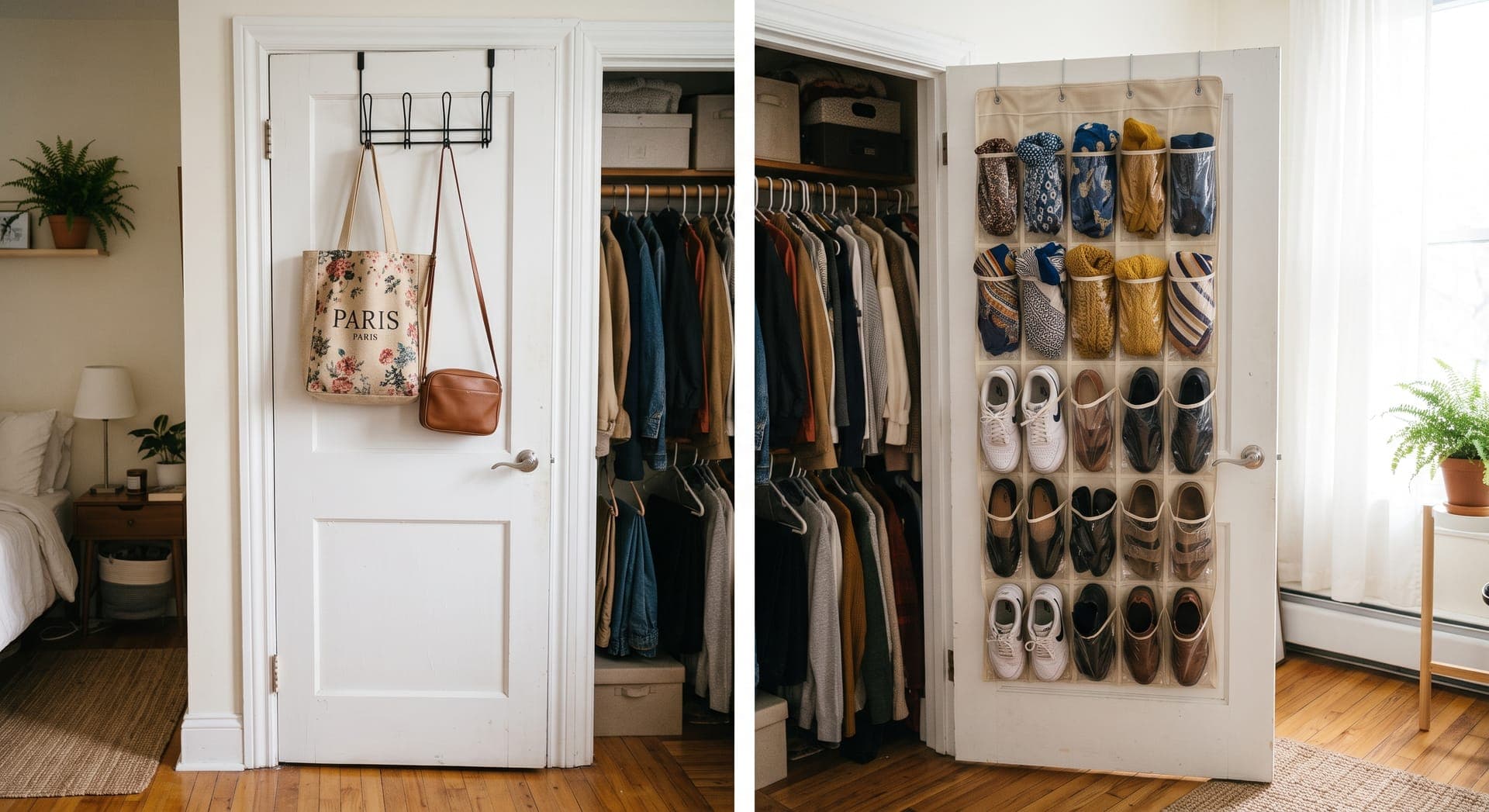
Pocket organizers on the back of a closet, pantry, or bathroom door hold shoes, cleaning supplies, snacks, or toiletries. They hook over the top of the door, so they are renter friendly. Check that the door still closes fully with the organizer filled.
7. Hooks and racks inside cabinet doors
Small adhesive hooks or a slim rack inside a kitchen or bathroom cabinet door hold lids, cutting boards, cleaning cloths, or a hair dryer. Measure the shelf depth first so the door can close.
8. A door-mounted mirror with storage
A full-length mirror that hangs on a door and opens to reveal shallow shelves takes care of jewelry, makeup, or small accessories in a bedroom without a dresser.
Use the space under and around furniture
9. Under-bed boxes
Flat boxes with lids or wheels slide under most beds and hold seasonal clothes, bedding, and shoes. Bed risers add a few inches of clearance if you need it. Choose closed boxes to keep out dust.
10. A bed with drawers or a lift-up base
If you are replacing a bed, a storage bed holds as much as a small dresser, which frees floor space elsewhere.
11. Storage ottomans and benches
An ottoman or bench with a lid gives you seating and a place for blankets, toys, or shoes. Put one at the foot of the bed or by the entrance.
12. The space beside the refrigerator
A slim rolling cart, only a few inches wide, fits into the gap many kitchens have beside the refrigerator. It is good for cans, spices, or cleaning supplies.
13. Under the sink
The space around the drain pipes is often wasted. A two-tier organizer designed to fit around plumbing, or a pair of small stacking drawers, doubles what you can store there. Keep the area around the shutoff valves clear so you can reach them quickly.
Make closets and cabinets hold more
14. A second hanging rod
Most closets have one rod with empty space below the shirts. A hanging second rod that hooks onto the first doubles space for short items. No drilling needed.
15. Shelf risers
Wire or wooden risers split the height of a tall cabinet shelf into two levels, which is useful for plates, mugs, and canned food.
16. Stackable clear containers
Clear containers with labels let you see what is inside without opening every box. Choose one size and style so they stack neatly and you can rearrange them.
17. Slim matching hangers
Thin, matching hangers take less rail space than a mix of bulky plastic and wire ones. Many people find they gain a noticeable amount of closet space just by switching.
Small changes that keep things in order
18. A landing spot for daily items
A small tray or bowl near the door for keys, wallet, and headphones stops those things drifting onto every surface.
19. Baskets for each category
One basket for chargers and cables, one for remote controls, one for mail. When each category has one container, putting things away takes seconds.
20. A one-in, one-out habit
When something new comes in, something similar goes out. It is the simplest way to stop storage filling up again.
Notes for renters
- Over-the-door organizers, tension rods, freestanding shelves, under-bed boxes, and hanging closet rods need no permission.
- Adhesive hooks work for light items, but some damage paint when removed. Test one in a hidden spot and follow the removal instructions.
- Ask your landlord before drilling for shelves or a fold-down desk. Many will agree if you fill the holes when you leave; the guide to fixing holes in walls shows how.
Mistakes to avoid
- Buying containers before clearing out. You end up storing things you do not need.
- Overloading wall anchors. Check the weight rating and use wall studs for anything heavy.
- Putting daily items in hard-to-reach places. They will end up on the counter again.
- Using many different container styles. Matching boxes look calmer on open shelves.
- Blocking access to shutoff valves, the electrical panel, or a heating unit.
Questions about small-home storage
Where should I start if every room is full?
Start with the entryway. Hooks, a shoe rack, and a landing spot for keys deal with the things that come in every day, and it is often the most visible improvement.
Is it worth buying furniture with storage?
When you are replacing something anyway, yes. A storage bed or ottoman holds a lot. It rarely makes sense to replace furniture that works just to gain storage.
How do I stop clutter coming back?
Give every category one place, keep daily items easy to reach, and do a ten-minute reset each evening. The guide to cleaning more efficiently builds that reset into a routine.
Pick one area this weekend
Choose the area that annoys you most, clear it out, and add one or two of the ideas above. Most of them take an hour. For a kitchen, start with how to organize a small kitchen. To make the room itself feel larger once it is clear, see how to make a small room feel bigger.
This guide is general information. Homes, materials, and local rules differ, so check product instructions and the regulations where you live. Read the full disclaimer.