How to make a small room feel bigger
A small room feels cramped mostly because of blocked light, a crowded floor, and too many things at eye level. Each of these can be changed.
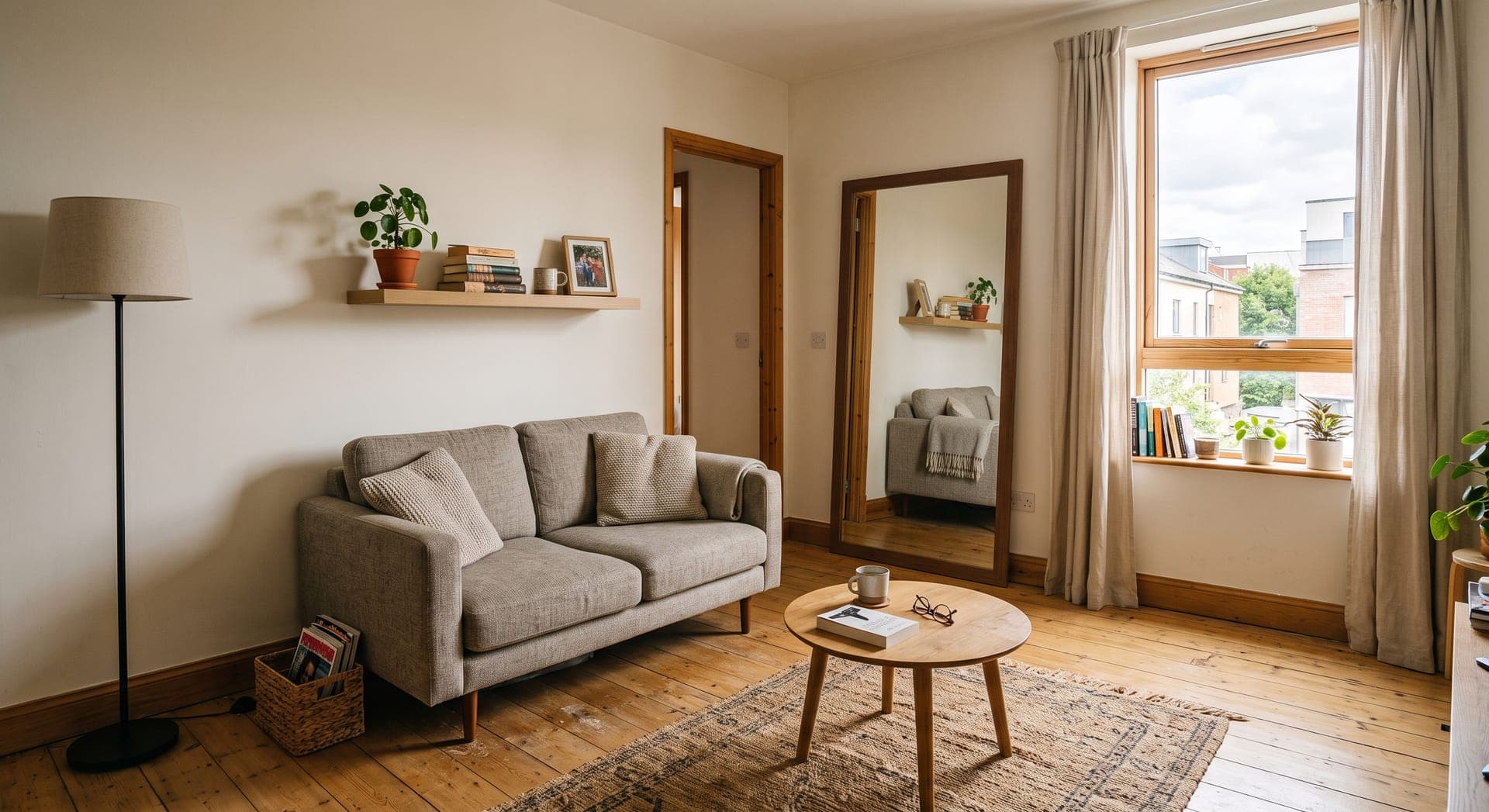
You cannot add square feet without building work, but you can change how much of a room your eye takes in at once. A room feels larger when you can see across it, see a good amount of floor, and see light reaching the corners. It feels smaller when furniture blocks the view, the floor disappears under things, and every surface at eye level is busy.
The changes below work in bedrooms, living rooms, home offices, and studio apartments. Most cost nothing beyond the effort of moving furniture.
Work out what is making the room feel cramped
Stand in the doorway and look at the room as a visitor would. Then sit where you usually sit. Notice:
- What blocks your view across the room. Tall bookcases and high-backed sofas facing the door are common culprits.
- How much floor you can see. A room with visible floor along the walls and under furniture reads as larger.
- Where the light comes from, and which corners stay dark.
- How many separate objects are at eye level on shelves, walls, and surfaces.
Write down the two or three things that stand out. Fix those first.
Plan the layout on paper before you move anything
Measure the room, the windows, the doors, and the radiators, then sketch it on graph paper or a free room-planning app. Draw in each piece of furniture to scale. Moving shapes on paper is faster than moving a sofa three times.
Keep a clear path through the room from the door to the window or the far side. A walkway of roughly 30 to 36 inches is comfortable for most people. A room you can walk through without turning sideways feels larger than one where furniture crowds the route.
Choose and place furniture to keep sightlines open
- Put tall pieces, such as bookcases and wardrobes, on the wall you see least when you walk in. Often that is the wall the door is on.
- Choose furniture on raised legs. A sofa or dresser that shows floor underneath looks lighter than one that sits on a solid base.
- Use fewer, appropriately sized pieces. One full-size sofa usually works better than a sofa plus two bulky armchairs.
- Consider pieces that do two jobs: an ottoman with storage, a drop-leaf table, a bed with drawers.
- A glass or clear acrylic coffee table takes up the same floor space as a wooden one but blocks less of the view.
- Avoid pushing everything against the walls by default. In some rooms, grouping seating around a rug, with a little space behind the sofa, makes the room feel more organized and less like a waiting room.
Get more light into the room
Daylight makes rooms feel larger, and most rooms get less of it than they could.
- Clean the windows inside and out.
- Mount curtain rods several inches above the window frame and extend them well past each side, so open curtains stack against the wall instead of covering the glass.
- Swap heavy curtains for lighter fabric, or add sheer panels for daytime privacy.
- Move anything blocking the window, including tall plants and furniture backs.
In the evening, a single ceiling light leaves corners dark and makes the walls feel closer. Add lamps at two or three heights, and put one in the darkest corner. The guide to simple DIY improvements explains how to choose bulbs so the light looks even.
Use mirrors where they reflect something worth seeing
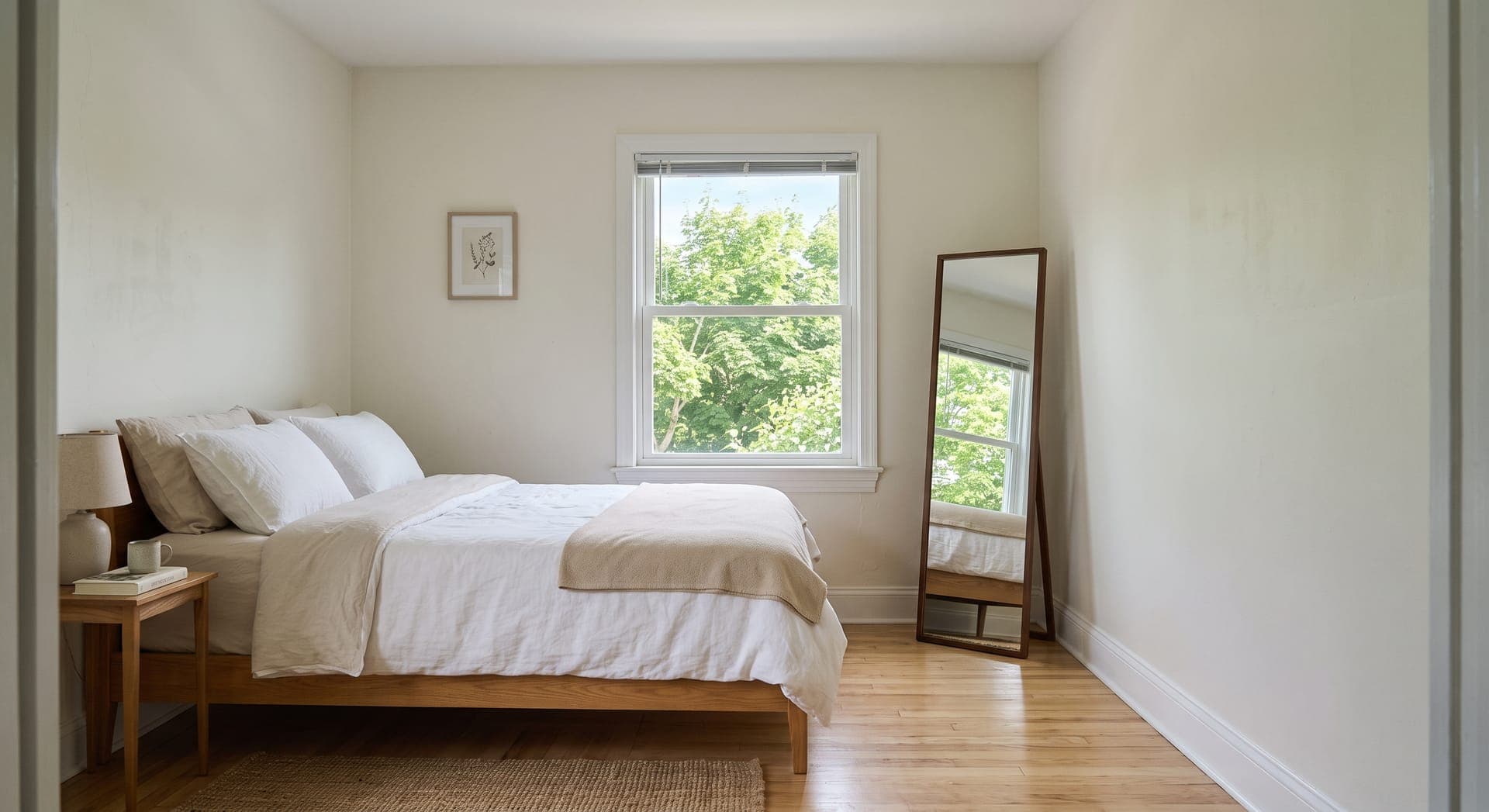
A mirror makes a room feel larger when it reflects light or a view. Place it opposite a window or on a wall next to one, so it catches daylight and sends it further into the room. One large mirror usually works better than several small ones, which break the wall into pieces.
Check what the mirror reflects from where you sit. A mirror facing a cluttered shelf or a blank hallway wall doubles the clutter or the blankness. Large floor mirrors should be secured to the wall, especially in homes with children; the guide to childproofing explains how to anchor heavy items.
Use color to reduce visual breaks
Pale colors reflect more light, which is why white and light neutrals are the usual advice for small rooms. Just as useful is reducing contrast. When the walls, trim, and ceiling are similar in tone, the edges of the room blur and the eye does not stop at each change.
- Paint the ceiling the same color as the walls, or a lighter version of it, so it feels higher.
- Paint trim in the wall color, or close to it, in a small room with lots of doors and frames.
- Keep large furniture and curtains close to the wall color, and add contrast in small objects instead.
Deep colors can also work in a small room you use mainly in the evening, such as a bedroom or a den. A dark, even color across walls and ceiling can make the corners recede. If you are unsure, paint large sample patches and look at them at different times of day. The guide to painting a room covers the job itself.
Cut visual clutter, especially at eye level
A small room cannot hide clutter the way a large one can. Every object at eye level competes for attention.
- Keep open shelves for a few things you like and put everyday items behind doors or in boxes of the same style.
- Clear the floor. Shoes, bags, and baskets around the edges make a room look smaller than the furniture does.
- Group small decorative items together instead of spreading them across every surface.
- Use vertical space for storage, high on the wall or over doors, so the floor stays clear.
The guide to storage ideas for small homes has twenty ways to find space without adding furniture.
Rugs and textiles that help
A rug that is too small makes a room look chopped up. In a living room, choose one large enough for at least the front legs of each seat to rest on it. Keep patterns calm and in colors close to the floor or walls. Hang curtains floor length rather than stopping at the sill; long curtains draw the eye up and make the ceiling feel higher.
Mistakes that make small rooms feel smaller
- Filling the room with small furniture. Many little pieces create more clutter than a few right-sized ones.
- Hanging curtains at the top of the window frame and letting them cover the glass when open.
- Relying on one overhead light.
- Placing a mirror where it reflects clutter.
- Covering every wall with pictures and shelves.
Questions about small rooms
Do dark colors always make a room feel smaller?
No. Pale colors reflect more light and suit most small rooms, especially those with little daylight. A dark color used evenly can make a small room feel enclosed in a comfortable way, which some people like in bedrooms. Contrast and clutter matter more than the color itself.
Where is the best place for a mirror?
On a wall opposite or beside a window, where it reflects light and the view outside. Check the reflection from where you sit before fixing it in place.
How can I make a small room feel bigger without buying anything?
Rearrange the furniture to open a clear path, move tall pieces to the entrance wall, open the curtains fully, move lamps into dark corners, and clear the floor and surfaces. Those changes cost nothing.
Start with the floor and the light
Clear the floor, open up the path through the room, and get light into the corners. Then decide whether the room still needs mirrors, paint, or new furniture. Many rooms do not. For kitchens, which have their own constraints, see how to organize a small kitchen.
This guide is general information. Homes, materials, and local rules differ, so check product instructions and the regulations where you live. Read the full disclaimer.