How to clean your home more efficiently
A simple system: a short daily reset, one weekly clean in a fixed order, and a monthly rotation for the jobs that only need doing now and then.
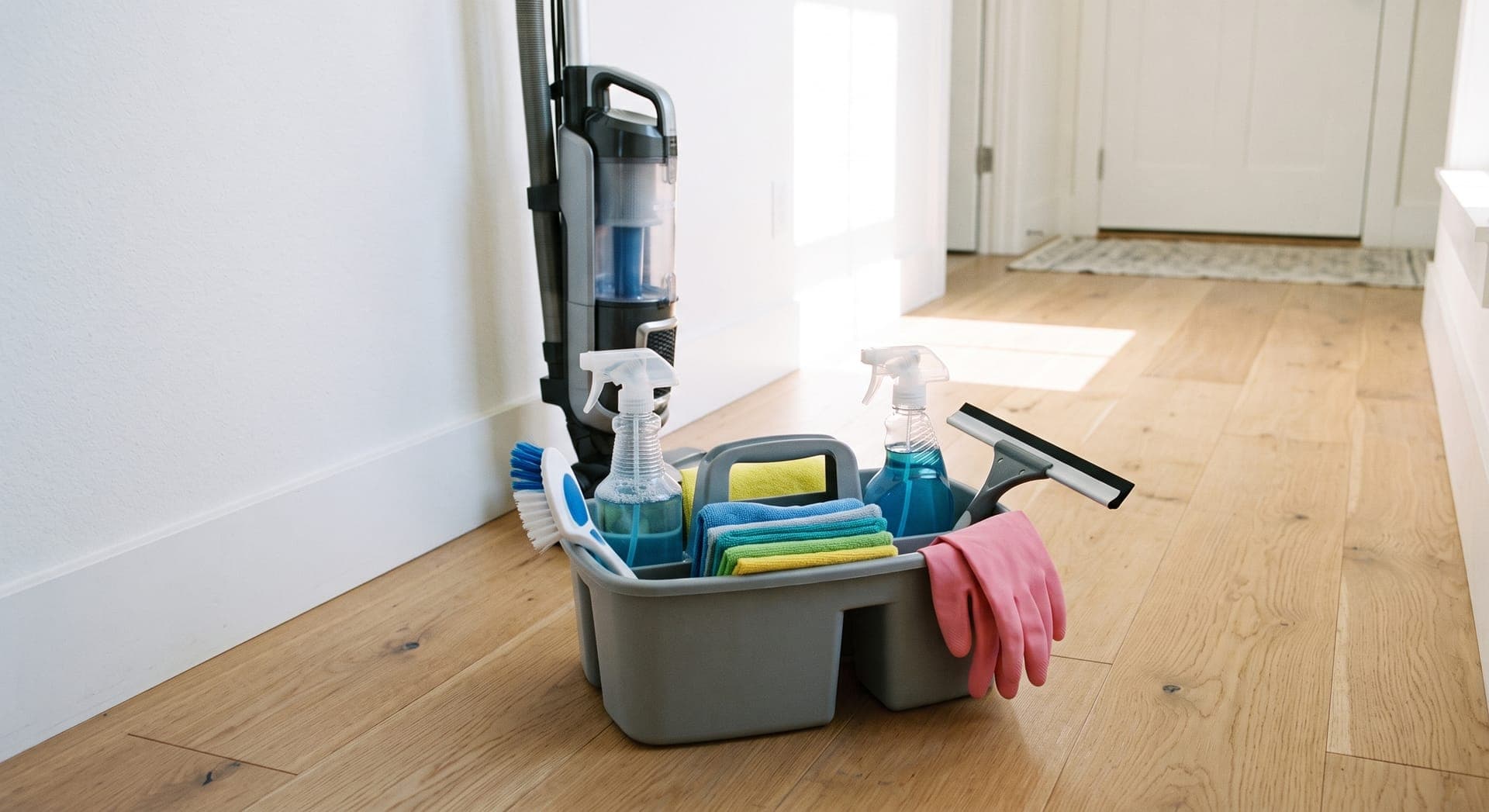
Cleaning takes longer than it needs to when it happens in random order: you wipe a counter, notice the floor, start vacuuming, then find the counter needs wiping again. A simple system fixes that. It has three parts: a short daily reset that stops mess building up, one weekly clean done in a fixed order, and a monthly rotation for the jobs that only need doing occasionally.
The details below are a starting point. Adjust the timings to your home, your household, and how much mess it generates.
Four rules that save time in every room
- Work from top to bottom. Dust from shelves and light fixtures falls onto surfaces and floors, so floors come last.
- Do dry jobs before wet ones. Dust and vacuum before you wipe and mop, or you will push dust around as mud.
- Let cleaners do the work. Spray the shower, sink, and toilet first, then do something else while the product sits for the time on its label. Scrubbing becomes much easier.
- Move around each room in one direction, so you do not cross the same spot twice.
Build a simple kit and keep it together
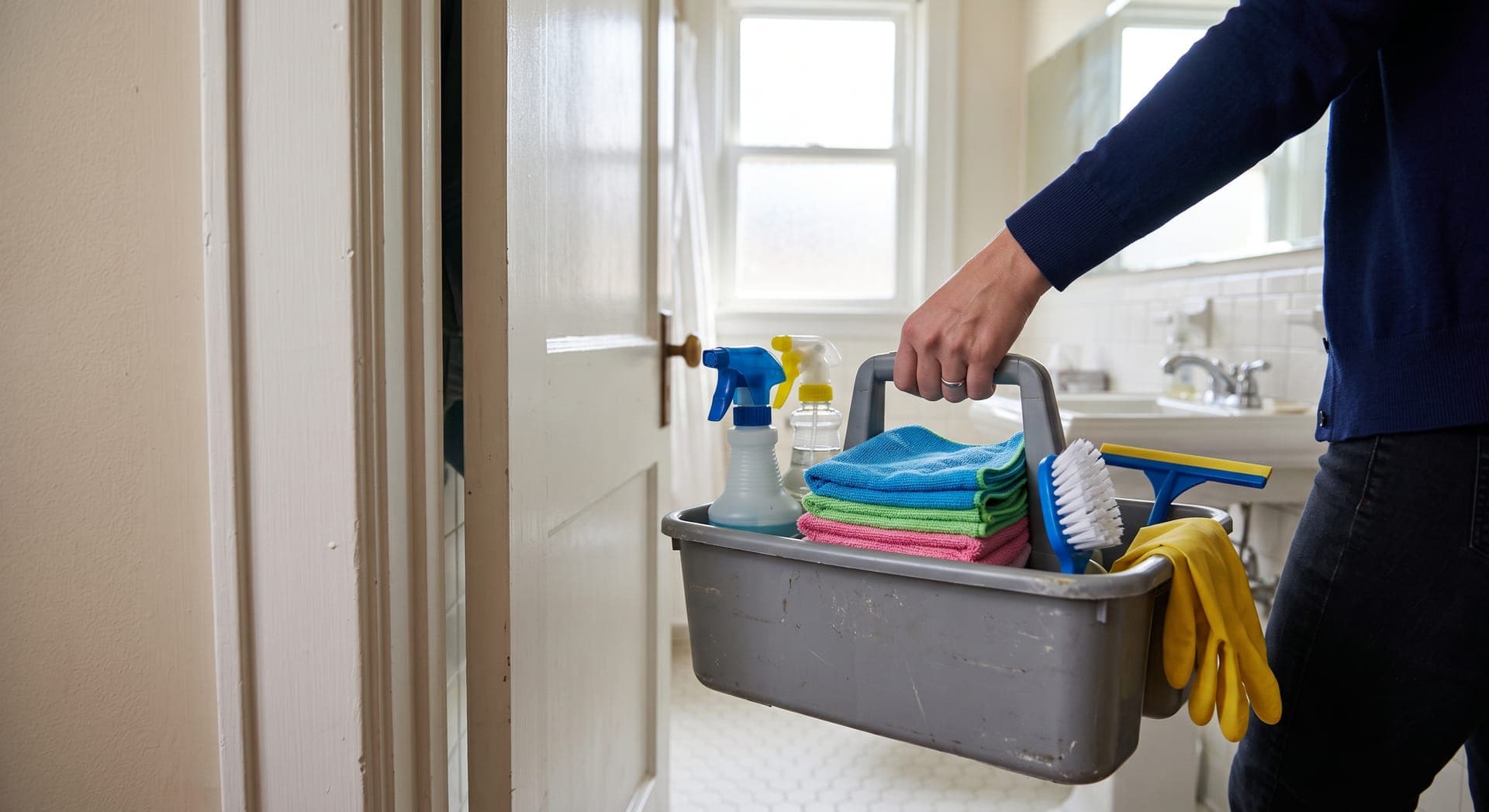
A carry caddy holding everything you need saves the trips back to the cupboard. Most homes need only a few products:
- An all-purpose cleaner for counters and most surfaces.
- A bathroom cleaner suited to your fixtures, and a toilet cleaner and brush.
- Glass cleaner, or a dedicated microfiber glass cloth with plain water.
- A stack of microfiber cloths. Using different colors for kitchen, bathroom, and toilet keeps them separate.
- A scrub brush, an old toothbrush for edges, and a squeegee for the shower.
- Rubber gloves.
- A vacuum with attachments, and a mop suited to your floors.
Check that each product is safe for your surfaces. Acidic cleaners can etch natural stone, and some products damage wood finishes. Never mix cleaning products: bleach combined with ammonia or acids releases toxic gases.
The daily reset: 10 to 15 minutes
The daily reset keeps the home from sliding into a mess that takes a whole weekend to fix. Do it at the same time each day, such as after dinner.
- Load or wash the dishes and wipe the kitchen counters and stove top.
- Put away things that are out of place, room by room. A basket helps: carry it round and empty it as you go.
- Hang up coats and put shoes, keys, and bags in their places by the door.
- Take out the trash if it is full.
- Start, move, or fold one load of laundry if needed.
The weekly clean, in order
Instead of cleaning each room completely before moving to the next, do each type of task across the whole home. You carry fewer tools, and you get into a rhythm with each one. In a typical apartment or small house this takes two to three hours; with practice it gets faster.
- Pick up and declutter every room, so surfaces and floors are clear.
- Strip the beds and start the washing machine.
- Spray the toilets, sinks, tubs, and showers with cleaner, and leave them.
- Dust every room from top to bottom: light fixtures, shelves, picture frames, furniture tops, then lower surfaces.
- Clean the kitchen: wipe appliance fronts, the microwave, the cabinet handles, the backsplash, and the sink.
- Return to the bathrooms. Scrub and rinse the fixtures, clean mirrors, wipe surfaces, and replace towels.
- Vacuum every room, including under the edges of furniture.
- Mop hard floors, starting in the far corner and working back toward the door.
- Empty all trash cans and wipe their lids.
- Make the beds with clean linen.
If two hours in one go does not fit your week, split the list: dust and kitchen one evening, bathrooms and floors another. The order within each session still matters.
Room-by-room shortcuts
Kitchen
- Wipe spills as they happen. Dried-on spills take far longer.
- Keep counters mostly clear so wiping takes seconds; see how to organize a small kitchen.
- Run the dishwasher every night it is full, and empty it in the morning.
- Wipe the inside of the microwave after any splatter while it is still warm.
Bathroom
- Squeegee the shower glass and tiles after each use. It prevents most soap scum and limescale.
- Keep a cloth and spray under the sink for a 30-second wipe of the sink and faucet each morning.
- Run the fan after every shower to slow mold growth; the guide to removing bathroom mold explains why.
Bedrooms
- Make the bed each morning. A made bed makes the rest of the room look tidier with no other effort.
- Keep a laundry basket in each bedroom so clothes do not reach the floor.
Living areas
- Give remotes, chargers, and magazines one basket or tray each.
- Use a lint roller or a vacuum attachment on upholstery weekly if you have pets.
Entryway
- Use a good doormat outside and inside each entrance. Much of the dirt in a home comes in on shoes.
- A shoe rack by the door makes a no-shoes habit easy.
The monthly rotation
Pick one block each week, and you cover everything once a month without a big spring-cleaning weekend.
| Week | Jobs |
|---|---|
| Week 1 | Clean out the fridge, wipe its shelves, clean the microwave and oven, rinse the dishwasher filter |
| Week 2 | Wipe baseboards, doors, door handles, and light switches; dust vents and fan grilles |
| Week 3 | Clean windows and mirrors, vacuum upholstery and curtains, clean the washing machine seal and drawer |
| Week 4 | Vacuum mattresses and under furniture, wash pillows or duvets as their labels allow, clean trash cans |
Two or three times a year, add the bigger jobs: washing curtains, deep cleaning carpets, clearing out closets, and cleaning light fixtures. Combine them with the seasonal checks in the home maintenance checklist.
Sharing the work
In shared homes, write the daily, weekly, and monthly lists down and agree who does what. Many households find it easier to split by task than by room, for example one person on bathrooms and floors and another on kitchen and laundry, and to swap every month. Children can take on age-appropriate jobs such as putting away their own things, matching socks, or wiping a table.
Mistakes that make cleaning slower
- Mopping before vacuuming, which turns crumbs and dust into streaks.
- Spraying and scrubbing immediately instead of letting the product sit.
- Using dirty cloths. Wash microfiber cloths after each clean, without fabric softener, which stops them absorbing.
- Using too much product, which leaves residue that attracts dirt.
- Cleaning around clutter instead of clearing it first.
- Spraying cleaner directly onto electronics. Spray the cloth instead.
Questions about cleaning routines
How long should cleaning take each week?
It depends on the size of the home and how many people and pets live there. A daily reset of 10 to 15 minutes and a weekly clean of a couple of hours is a realistic target for many small homes.
Is it better to clean a little every day or all at once?
A little every day keeps the weekly clean short. If your week does not allow daily time, a longer weekly session works, as long as it follows the top-to-bottom, dry-to-wet order.
Do I need a different cleaner for every surface?
No. An all-purpose cleaner, a bathroom cleaner, and a glass method cover most homes. Add a specialist product only for a surface that needs one, such as natural stone.
Start with the daily reset
For the first two weeks, do only the daily reset. Once it is a habit, add the weekly clean in order, then the monthly rotation. If something keeps smelling even after cleaning, the guide to getting rid of bad smells helps track down the source.
This guide is general information. Homes, materials, and local rules differ, so check product instructions and the regulations where you live. Read the full disclaimer.