How to make your home safer for children
Anchor furniture, secure windows and stairs, lock away chemicals and medicines, then get down to a child's height to find what you missed.
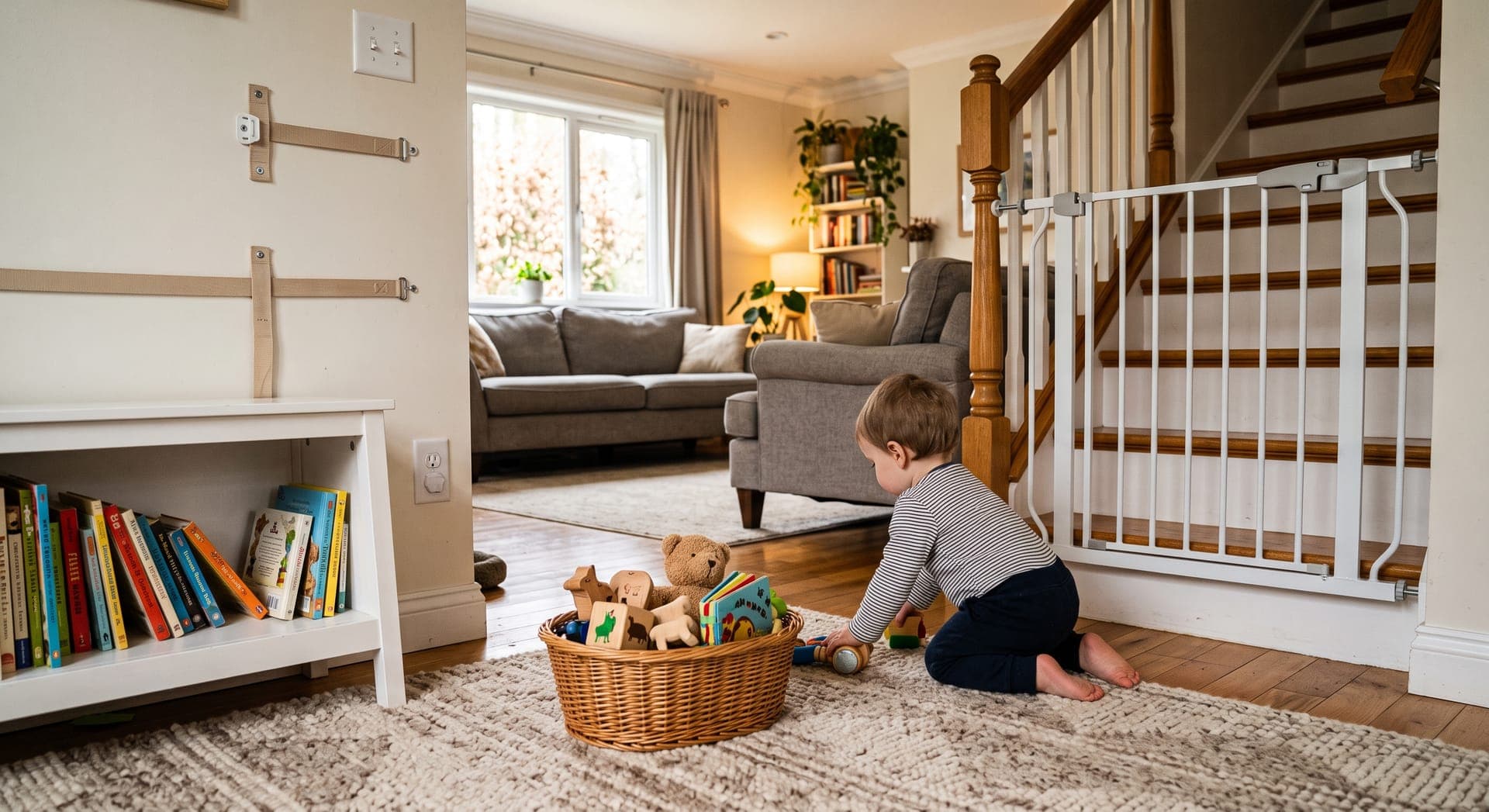
Young children explore by climbing, pulling, opening, and putting things in their mouths, often months before parents expect them to. Childproofing works best before a baby starts crawling, and it needs revisiting as they learn to pull up, climb, and open things. No home can be made completely safe, and none of this replaces supervision. It does remove the hazards that cause the most serious injuries.
The guide is organized by hazard first, because a few measures matter in every room, and then room by room. Product guidance changes, so read the instructions for every safety product you buy and follow any national safety guidance where you live.
Get down to a child's height
Before buying anything, crawl through each room on your hands and knees. Look for what you can reach, pull, open, or climb: cords, low shelves, tablecloths, plants, bags on the floor, small objects under furniture. Make a list as you go. Do it again when your child starts standing, and again when they start climbing.
Anchor furniture and TVs
Furniture and TVs tipping over onto children cause serious injuries and deaths every year. The US Consumer Product Safety Commission's Anchor It campaign recommends anchoring furniture and TVs, and it is one of the most important jobs on this list.
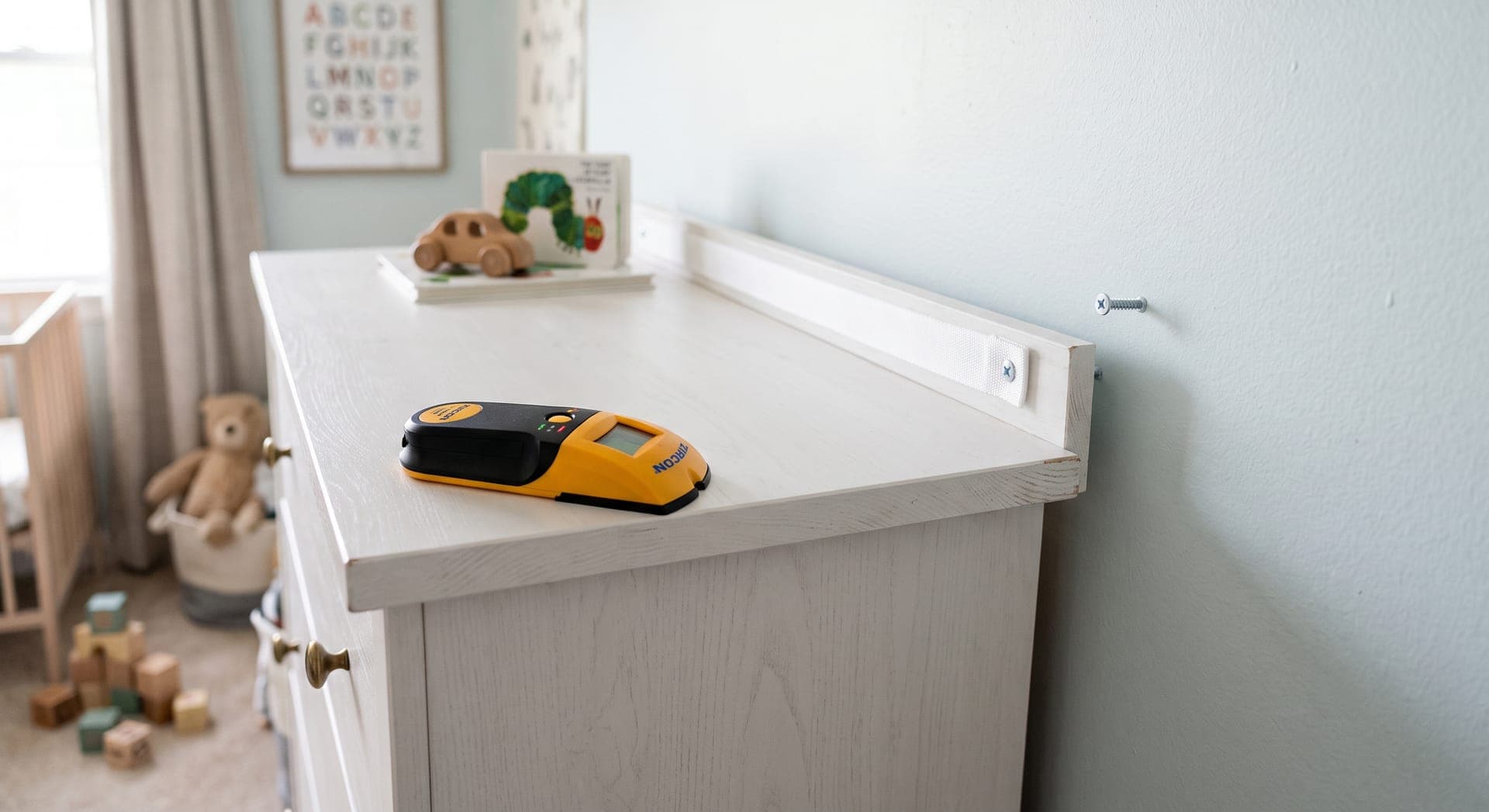
- Anchor every dresser, bookcase, wardrobe, and tall or unstable piece of furniture to the wall with anti-tip straps or brackets. Many new pieces include a kit; you can buy them separately for older furniture.
- Screw the wall end into a stud wherever possible. Use a stud finder, and use anchors rated for your wall type where there is no stud.
- Mount flat-screen TVs on the wall following the mount's instructions, or anchor them to the stand and the stand to the wall. Push older, heavy TVs to the back of a low, sturdy stand and anchor them.
- Keep heavy items on low shelves and in bottom drawers.
- Do not put toys, remotes, or treats on top of furniture where children might climb to reach them.
Renters should ask their landlord about anchoring. Many landlords agree, given that the holes are small and safety is the reason, and filling them later is simple; see how to fix small holes in walls.
Stairs, windows, and falls
- Fit safety gates at the top and bottom of stairs. At the top, use a hardware-mounted gate that screws into the wall or banister. Pressure-mounted gates can be pushed out and are meant for doorways and the bottom of stairs.
- Install window guards or window stops that limit opening, following local fire codes. Some guards have quick-release mechanisms so adults can open windows fully in an emergency. Window screens keep insects out; they do not stop a child from falling.
- Move furniture, beds, and anything climbable away from windows.
- Use non-slip pads under rugs and non-slip mats in the bath.
- Check that stair banisters and balcony railings have no gaps a child could slip through or climb.
Window blind cords
Looped cords on blinds and curtains are a strangulation hazard. Cordless window coverings are the safest choice. If you keep corded blinds, cut looped cords and fit safety tassels, and wind cords onto a cleat mounted high on the wall, out of reach. Move cribs, beds, and furniture away from windows with cords.
Electrical outlets and cords
- Fit outlet covers or sliding cover plates on outlets a child can reach. Tamper-resistant outlets, which have built-in shutters, are required in new construction in many places; an electrician can install them.
- Keep cords behind furniture and out of reach, and use cord covers for any that run along the floor.
- Unplug and put away chargers when not in use. Children chew on cables.
- Do not leave appliances such as hair straighteners and irons plugged in or cooling within reach.
Medicines, chemicals, and small objects
- Store all medicines, vitamins, and supplements up high, in a locked or latched cabinet. Child-resistant packaging slows children down; it does not stop them.
- Move cleaning products, laundry detergent pods, dishwasher detergent, and chemicals out of low cabinets, or fit child-safety latches or magnetic locks on those cabinets.
- Store button batteries, and the devices that contain them, out of reach, and check that battery covers are screwed shut. Swallowed button batteries can cause severe internal burns quickly.
- Check floors for coins, magnets, small toy parts, and other choking hazards regularly, especially if older children have small toys.
- Keep handbags and guests' bags off the floor, since they often hold medicines.
Keep the poison control number to hand
Save your local poison control center's number in your phone and post it on the fridge. In the US, Poison Help is 1-800-222-1222. If a child is unconscious, having trouble breathing, or having a seizure, call emergency services immediately.
Room by room
Kitchen
- Turn pot handles toward the back of the stove and cook on rear burners when you can.
- Fit stove knob covers if a child can reach the controls, and an oven door lock if needed.
- Keep knives, scissors, and glass items in a latched drawer or up high.
- Keep hot drinks away from counter edges and do not hold a hot drink while holding a child.
- Use a latch on the dishwasher, and load knives point down.
Bathroom
- Never leave a young child alone in the bath, even for a moment. Empty the tub straight after use.
- Set the water heater to 120°F (about 49°C) or lower to reduce scald risk, and test bath water before putting a child in.
- Fit a toilet lid lock, and keep the bathroom door closed with a door knob cover or a high latch.
- Store razors, medicines, and cosmetics in a latched cabinet.
Living areas
- Fit corner guards to sharp table edges, or move those tables out of the main play area.
- Use a fireplace screen or a gate around fireplaces and heaters.
- Check houseplants. Some are toxic if eaten; move them out of reach or rehome them.
- Use door stoppers or finger guards on doors that slam.
Bedrooms and nursery
- Follow safe sleep guidance for babies: a firm, flat mattress in a crib that meets current safety standards, with no pillows, bumpers, or loose blankets.
- Keep the crib away from windows, cords, and shelves.
- Anchor dressers and changing tables, and keep supplies within your reach but out of the baby's.
Smoke and carbon monoxide alarms
Make sure every bedroom and every level of the home has working smoke alarms, and that carbon monoxide alarms are installed where the manufacturer and local rules require, typically outside sleeping areas. Test them monthly. The monthly maintenance checklist includes this.
Common childproofing mistakes
- Waiting until a child is mobile. Children often start crawling or pulling up earlier than expected.
- Using a pressure-mounted gate at the top of stairs.
- Anchoring furniture into drywall without a suitable anchor or stud.
- Relying on window screens to prevent falls.
- Storing medicines in a handbag or on a bedside table.
- Installing safety products once and never checking them. Latches loosen, and children learn to open them.
Questions about childproofing
When should I start?
Before your baby starts rolling and crawling, usually within the first few months. Start with furniture anchoring, alarms, and storing medicines and chemicals safely, then add gates and latches as your child becomes mobile.
Do I need to childproof if a child only visits?
For regular visits, cover the biggest risks: put medicines and chemicals up high, block stairs, check that heavy furniture is stable, and pick up small objects. Grandparents' homes are a common place for children to find medicines.
Can I hire someone to do this?
Yes. Handypersons can anchor furniture and fit gates and window guards. Some areas have professional childproofing services. For tamper-resistant outlets or any electrical change, use a licensed electrician.
Start with the serious hazards
Anchor the furniture and TVs, lock away medicines and chemicals, secure stairs and windows, and check your alarms. Then do the crawl-through and work through the room-by-room list. Repeat the check every few months as your child grows. For jobs that need a professional, see when to DIY and when to call a professional.
This guide is general information. Homes, materials, and local rules differ, so check product instructions and the regulations where you live. Read the full disclaimer.