How to remove mold from bathroom walls safely
Small patches of surface mold are a cleaning job. The harder part is lowering the humidity that let it grow, and knowing when a patch is too large to handle yourself.
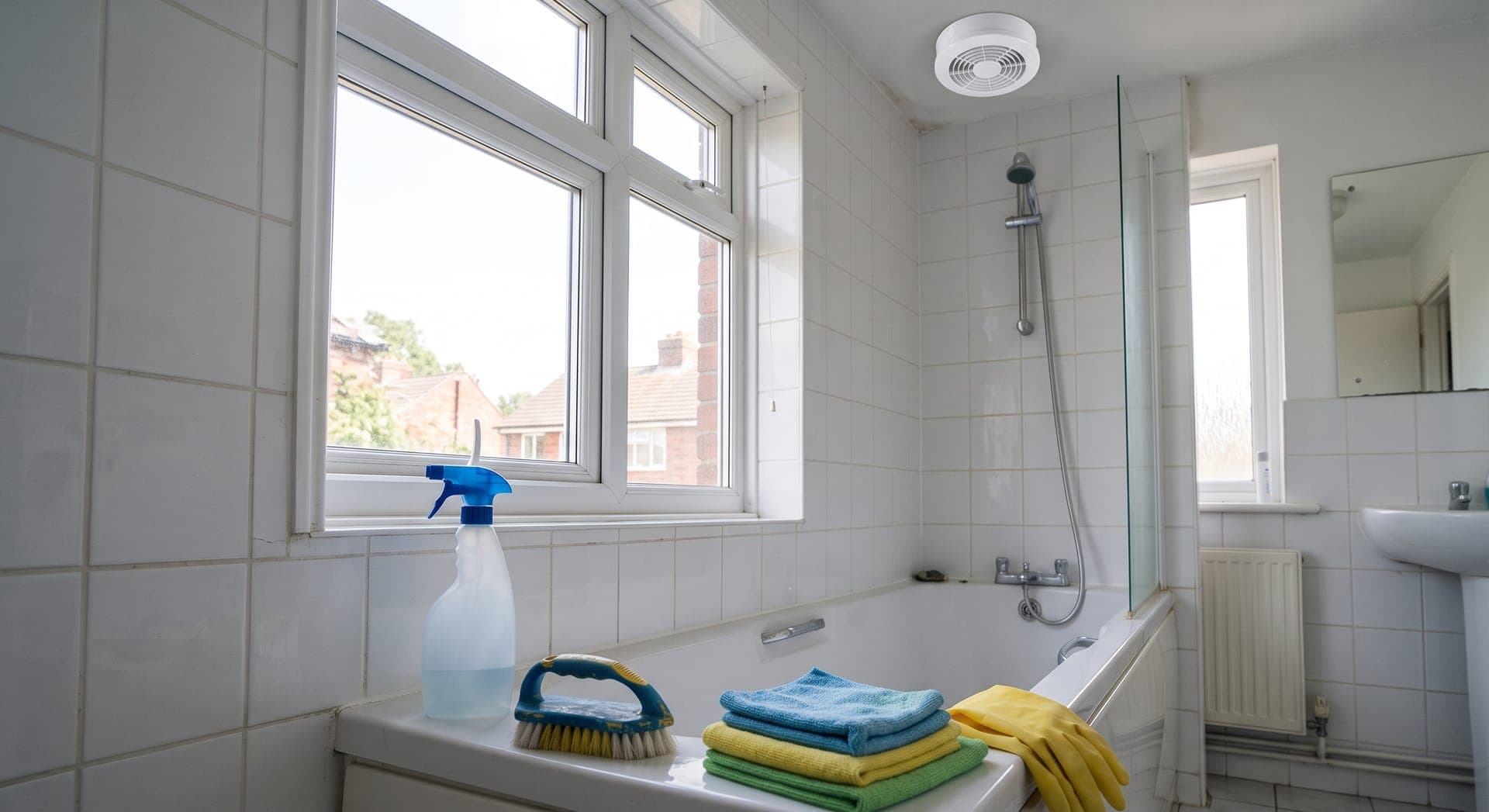
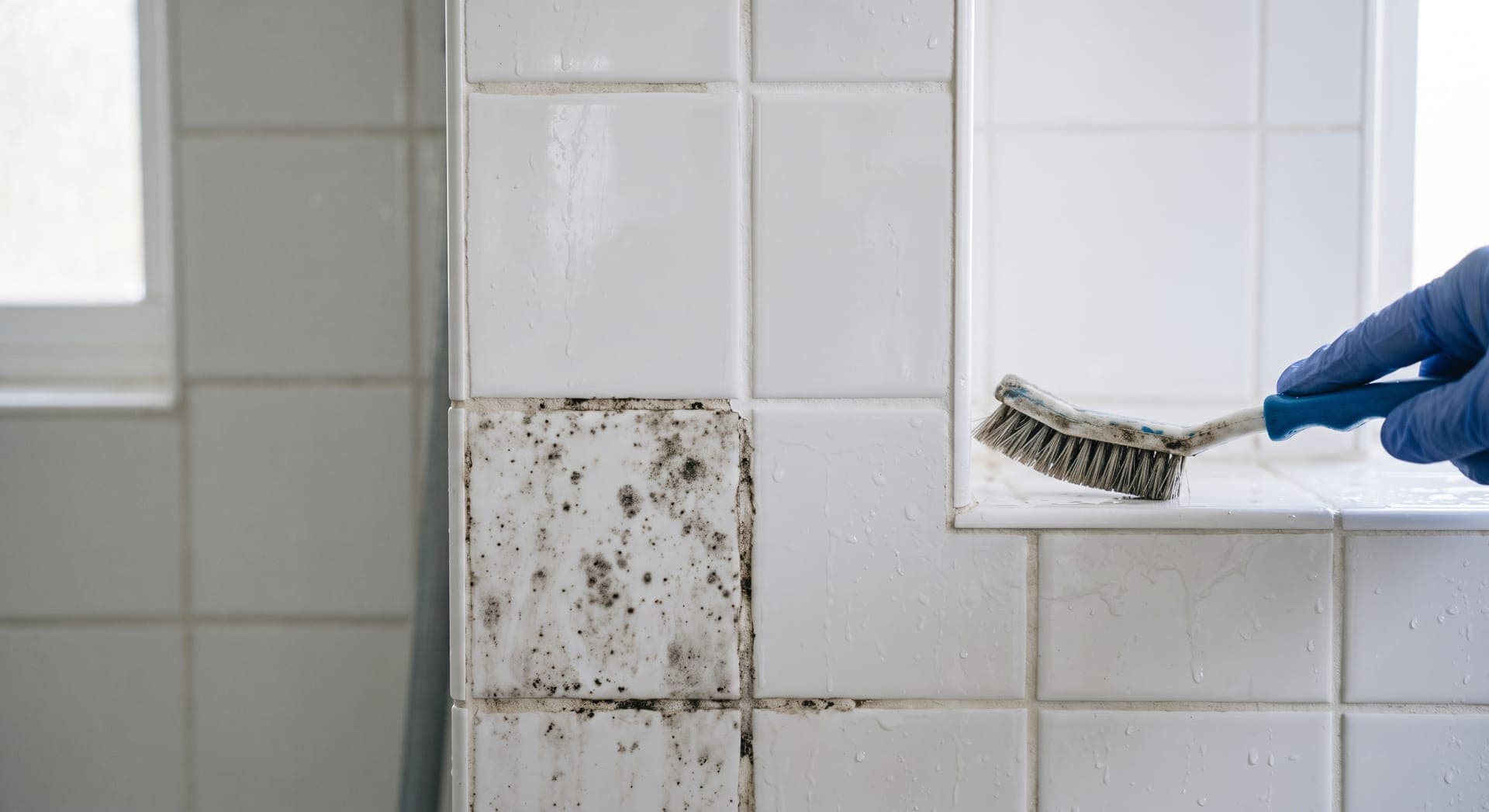
Bathrooms grow mold because they are warm and wet for part of every day and often dry out slowly. The black or gray spots that appear on ceiling corners, grout lines, and the caulk around a tub are usually a surface problem you can clean yourself. They will come back, though, unless the room dries out faster after each shower.
This guide covers how to tell mold from dirt, how to clean small areas safely, and how to change the conditions that let it grow. It also explains the signs that mold has gone beyond what a household cleaning job can fix.
Is it mold, mildew, or just dirt?
Mildew is the common name for mold in its early, flat, surface stage. It usually looks gray or white and powdery. Established mold is often black, green, or dark brown and can look fuzzy or slimy. For a cleaning job, the difference matters less than the size of the area and what it is growing on.
Soap scum and ordinary grime can look similar. A quick test: dab the spot with a cotton swab dipped in diluted household bleach (about one part bleach to ten parts water). Mold and mildew usually lighten within a minute or two. Dirt does not. Wear gloves, keep the room ventilated, and rinse the spot afterward.
Decide whether this is a job for you
The US Environmental Protection Agency suggests that most people can clean up a moldy area of less than about 10 square feet themselves. That is roughly a 3-foot by 3-foot patch. Larger areas, mold that keeps coming back, or mold inside walls are better handled by a professional.
Someone else should do the cleaning if you have asthma, mold allergies, a lung condition, or a weakened immune system. The same applies to anyone pregnant who would rather avoid the exposure. Keep children and pets out of the room while you work.
What you need
- Rubber or nitrile gloves that reach mid-forearm.
- Safety goggles without ventilation holes, so spray and spores cannot reach your eyes.
- An N95 respirator. A loose paper dust mask does not filter mold spores well.
- A household detergent or a bathroom cleaner labeled for mold, a bucket of warm water, and a spray bottle.
- A soft scrubbing brush for walls and an old toothbrush or grout brush for joints.
- Microfiber cloths or paper towels and a trash bag.
Open the window and run the exhaust fan before you start, and keep both going for at least an hour after you finish.
How to clean mold from tile, grout, and painted walls
Tile, glass, and other hard surfaces
- Spray the area with warm water and detergent, or with a bathroom mold cleaner used exactly as its label says.
- Leave it for a few minutes so the cleaner can work.
- Scrub the tile and grout lines with the brush. Grout is porous, so work along each joint.
- Rinse with clean water and wipe the surface dry. Mold left damp will regrow quickly.
- Bag used paper towels and wash cloths separately on a hot cycle.
Bleach removes stains on grout well, but the EPA notes that bleach is not usually needed to clean up mold; scrubbing with detergent and water and drying the surface is what does the work. If you do use bleach for staining, dilute it as the label directs and never combine it with other products.
Never mix cleaning products
Bleach mixed with ammonia, vinegar, or other acidic cleaners releases toxic gases. Many glass cleaners contain ammonia, and some toilet and descaling cleaners are acidic. Use one product, rinse it off completely, and air the room before using another.
Painted walls and ceilings
Wipe the patch with a cloth wrung out in warm detergent solution. Avoid soaking the wall, because water that gets into drywall paper feeds the mold. Dry the area with a clean cloth and let the fan run.
If the stain lifts and the paint is intact, you have dealt with a surface problem. If the drywall feels soft, the paint is bubbling, or a dark stain shows through again within a few days, the mold is likely in the board itself. Painted-over mold also keeps growing underneath. In both cases, the affected drywall usually needs cutting out and replacing, which is worth getting quoted by a professional if the area is more than a small patch.
Silicone caulk around the tub and shower
Mold often grows into silicone caulk, and no cleaner reaches it once it is inside. If black spots remain after cleaning, cut the old caulk out with a utility knife or caulk removal tool, clean and dry the joint completely (overnight is best), and apply a fresh bead of bathroom silicone that is labeled mold resistant. The guide to weekend DIY projects includes recaulking a tub step by step.
Keep the bathroom dry so mold does not come back
Mold needs moisture, so a bathroom that dries within an hour of a shower gives it much less chance to return.
- Run the exhaust fan during every shower and for at least 20 minutes after. A timer switch or a humidity-sensing fan makes this automatic.
- Check that the fan actually pulls air. Hold a single square of toilet paper near the grille while it runs. If the fan cannot hold it, the grille may be clogged with dust or the duct may be blocked. The duct should vent outdoors, never into the attic.
- Squeegee the walls and glass after showering. It takes under a minute and removes most of the water the room would otherwise have to evaporate.
- Open the window or leave the door open afterward when you can.
- Hang towels and bath mats spread out to dry, and wash them often.
- Fix drips and failed caulk promptly, because they keep surfaces wet.
A small digital hygrometer costs little and tells you how humid the room stays. The EPA recommends keeping indoor humidity below 60 percent, ideally between 30 and 50 percent. A bathroom will spike during a shower; the useful thing to watch is how quickly it falls afterward. If your whole home stays humid, the guide to stopping condensation on windows covers ventilation and humidity for the rest of the house.
Mistakes that make mold worse
- Painting over mold. Regular paint traps it, and it grows through. Clean and dry first, then use a primer and a bathroom paint if you repaint.
- Dry brushing or sanding moldy surfaces, which sends spores into the air. Keep surfaces damp while you clean them.
- Cleaning but leaving the surface wet.
- Mixing products to make them stronger.
- Switching the fan off as soon as you leave the shower.
When mold needs a professional
Call a mold remediation professional if
- The moldy area is larger than about 10 square feet.
- Mold returns quickly after cleaning, or you can smell it but cannot see it.
- It follows a leak, a flood, or sewage backup, or it is inside walls, under flooring, or in ventilation ducts.
- Anyone in the home is having health symptoms you think might be connected.
If you rent, report mold to your landlord in writing, with photos. Persistent mold often points to a leak or ventilation fault that is the owner's responsibility.
Questions about bathroom mold
Is vinegar or bleach better?
For most small jobs, detergent and water followed by thorough drying is enough. Undiluted white vinegar is a common alternative on hard surfaces. Bleach lightens stains well. Whatever you use, use it on its own, follow the label, and do not mix it with anything else.
Will mold-resistant paint stop the problem?
It helps on walls and ceilings once the surface is clean and dry, but it cannot make up for a room that stays wet. Ventilation does more than any coating.
How do I know whether the mold is inside the wall?
Warning signs include a musty smell that stays after cleaning, soft or crumbling drywall, bubbling paint, and stains that grow from behind. A professional can check with a moisture meter without opening the wall.
A routine that keeps mold away
Once the visible mold is gone, the routine is short: fan on during and after every shower, squeegee the glass and tiles, hang towels open, and wipe the corners where mold first appeared once a week. Check the room with a hygrometer for a week or two to see how fast it dries. If it takes hours, improving the fan will help more than any cleaner. The cleaning system guide shows how to fit these jobs into a weekly routine.
This guide is general information. Homes, materials, and local rules differ, so check product instructions and the regulations where you live. Read the full disclaimer.