How to get rid of bad smells in your home
An air freshener covers a smell for an hour or two. Finding the source and cleaning or drying it gets rid of the smell. Here is how to track it down, room by room.
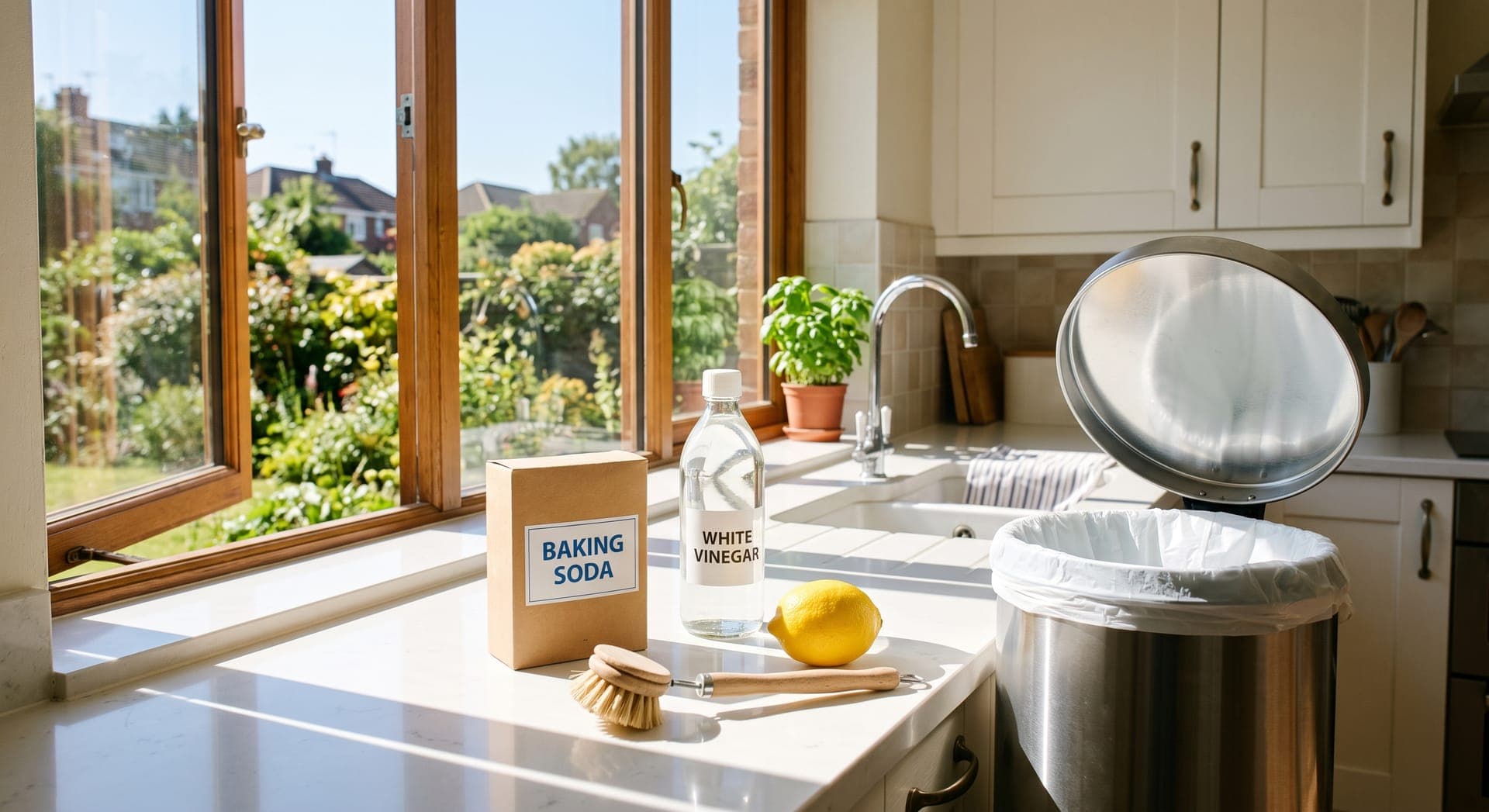
A persistent smell in a home almost always has a physical source: food residue, damp fabric, a dry drain, mold, or something trapped in a carpet. Sprays and plug-in fresheners cover it for a while, then the smell returns because the source is still there. Find the source, clean or dry it, and the smell goes with it.
This guide starts with the smells that signal danger, then shows how to track down an ordinary smell and deal with it room by room.
Smells that need action now
- Rotten eggs or sulfur near gas appliances or throughout the home: this may be a gas leak. Natural gas and propane have this smell added so leaks are noticeable. Leave the building straight away. Do not switch lights or appliances on or off, use a phone indoors, or light anything. Call your gas utility's emergency line or emergency services from outside.
- Burning plastic, hot electrical smell, or a fishy smell near outlets or appliances: this can mean overheating wiring or components. Switch off and unplug the appliance if it is safe to do so, or switch off the circuit at the breaker, and call an electrician. If you see smoke or flames, leave and call emergency services.
Carbon monoxide has no smell at all. Only a working CO alarm will warn you about it.
Track the smell to its source
Treat it as a search. Note when the smell is strongest: in the morning, after cooking, after rain, when the heating comes on. Then walk the home slowly and sniff close to likely sources. Bend down; many sources sit at floor level.
| Smell | Common sources |
|---|---|
| Musty, earthy | Mold or damp: under sinks, in basements, behind furniture on outside walls, in closets, in damp towels and laundry |
| Sewage or drain smell | A drain trap that has dried out, a dirty drain or overflow, or a leaking toilet seal |
| Sour or rotten | Food in the fridge, trash can, dishwasher filter, disposal, or under appliances |
| Ammonia | Pet urine in carpets or upholstery, or urine around the base of a toilet |
| Stale, greasy | Range hood filters, the oven, cooking oil residue on cabinets |
| Damp laundry smell | The washing machine door seal or detergent drawer, or clothes left damp |
| Strong, sweet decay | A dead rodent in a wall, attic, or under a floor |
Kitchen
- Trash can: empty it before it is full, and wash the inside of the can itself with hot, soapy water. Let it dry before adding a new liner. Residue under the liner is a common source.
- Refrigerator: take out anything past its date, wipe spills, and clean the drip tray under the fridge if your model has one you can reach. An open box of baking soda on a shelf absorbs some odors; replace it every few months.
- Sink drain and disposal: clean the stopper and strainer. With the disposal switched off, scrub the rubber splash guard, top and underside, where food collects. The guide to unclogging a sink explains how to clean the trap underneath.
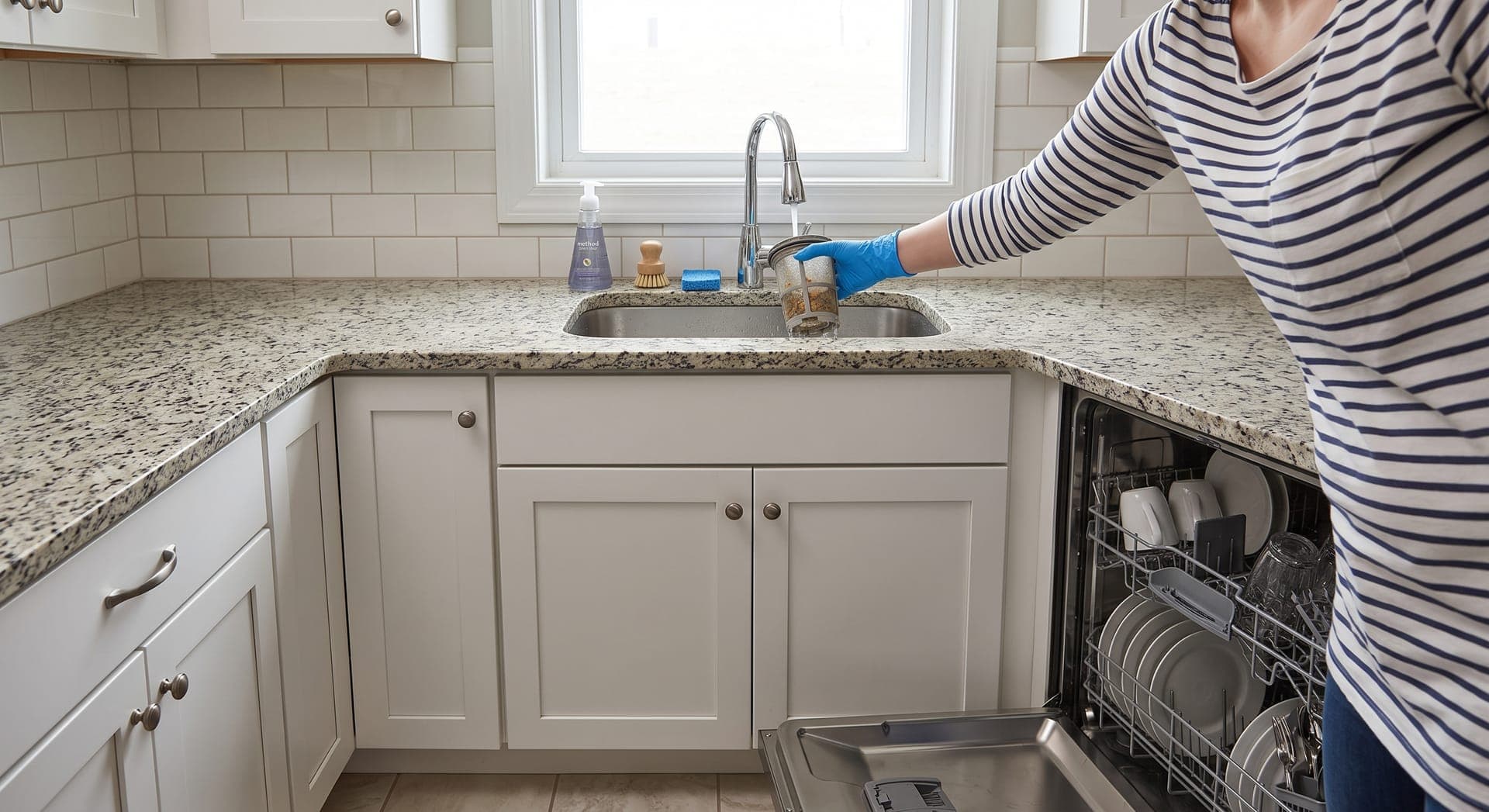
- Dishwasher: remove and rinse the filter at the bottom, usually a twist-out cylinder. Wipe the door seal and run an empty hot cycle with a dishwasher cleaner or as the manual suggests.
- Microwave: heat a bowl of water with lemon slices for a few minutes, leave the door closed for a few more, then wipe the inside.
- Range hood: soak metal grease filters in hot water with dish soap or degreaser, or put them in the dishwasher if the manual allows. Replace charcoal filters on the schedule in the manual.
Bathroom
- Toilet: clean under the rim and around the base where the toilet meets the floor, and the bolt caps. If the smell persists or the toilet rocks, the wax seal under it may have failed. Replacing it means lifting the toilet; it is a manageable job for a confident DIYer and a quick one for a plumber.
- Drains: clean hair from sink and shower drains. Clean the sink overflow channel with a bottle brush and hot soapy water.
- Towels and mats: hang them spread out to dry, and wash them often. Towels that smell musty after washing may need a hot wash.
- Ventilation: run the fan during and after showers. Musty bathrooms usually have a moisture problem; see how to remove bathroom mold safely.
Drains that are rarely used
Every sink, shower, and floor drain has a trap that holds water to block sewer gas. In a guest bathroom, basement floor drain, or a sink you rarely use, that water evaporates and the smell comes through. Run water in each one for half a minute every couple of weeks. For floor drains, pour in a bucket of water.
If you smell sewage even though all traps are full, there may be a problem with the drain vent or a broken pipe. That needs a plumber.
Carpets, rugs, and upholstery
- Vacuum thoroughly, slowly, in two directions.
- For general staleness, sprinkle baking soda over a dry carpet, leave it for several hours or overnight, and vacuum it up.
- For pet urine, use an enzyme cleaner made for pet odors. Blot, do not rub, and follow the label: enzyme cleaners need time to work. Avoid ammonia-based cleaners, which can smell like urine to pets and encourage them to return to the spot.
- If the smell remains, it may be in the pad underneath. Professional hot water extraction cleaning, or replacing a section of pad, may be needed.
Check upholstery fabric codes on the care label before cleaning: some fabrics are water safe, some need solvent cleaners, and some should only be vacuumed or professionally cleaned.
Fabrics and laundry
- Wash curtains, cushion covers, bedding, and throws following their care labels. Fabrics hold cooking and smoke smells for a long time.
- Air out closets and drawers, and do not put away clothes that are still slightly damp.
- On front-loading washing machines, wipe the rubber door gasket, including inside its folds, and clean the detergent drawer. Run a hot cleaning cycle as the manual suggests, and leave the door open between washes so the drum dries.
- Take laundry out promptly when the cycle ends.
Garbage, recycling, and compost areas
Rinse food containers before recycling them. Wash outdoor bins with a hose and a little detergent every few weeks in warm weather, and keep their lids closed. Line a kitchen compost caddy with newspaper or a compostable bag and empty it every couple of days.
Clear the air once the source is gone
Open windows on opposite sides of the home for a few minutes to create a cross-breeze. Run kitchen and bathroom fans. Activated charcoal bags can absorb lingering odors in closets and cupboards. Fragrance is fine if you like it, but add it after the source is gone, not instead of finding it.
Mistakes to avoid
- Masking a smell with fragrance before finding the source.
- Mixing cleaning products to make them stronger. Bleach with ammonia or acids produces toxic gases.
- Ignoring a musty smell. It usually means damp, which is easier to fix early.
- Washing a urine spot with hot water and ordinary detergent, which can set the smell. Use an enzyme cleaner.
Questions about household smells
Why does my house smell when the heating first comes on?
Dust burning off a furnace, radiator, or heat exchanger after months unused gives a short-lived dusty smell. It should fade within a day. A persistent burning or electrical smell, or any gas smell, needs a technician.
The smell is inside a wall. What now?
A smell that is strongest at one spot on a wall may be a dead animal, a leak, or mold. A dead animal smell fades over a few weeks. A musty or damp smell that lasts needs investigating for a leak.
Do odor-absorbing products work?
Baking soda and activated charcoal absorb some odors in enclosed spaces such as fridges and closets. They are helpers. They will not fix a smell whose source is still there.
Find it, clean it, dry it
Most household smells come down to food residue, damp, or a drain. Work through the room-by-room checks above, starting where the smell is strongest. To keep smells from building up again, the guide to cleaning more efficiently puts the weekly checks into a routine.
This guide is general information. Homes, materials, and local rules differ, so check product instructions and the regulations where you live. Read the full disclaimer.