How to stop condensation on windows
Condensation forms when warm, moist indoor air meets a cold surface. Lower the moisture, move the air, and keep the glass warmer, and it usually stops.
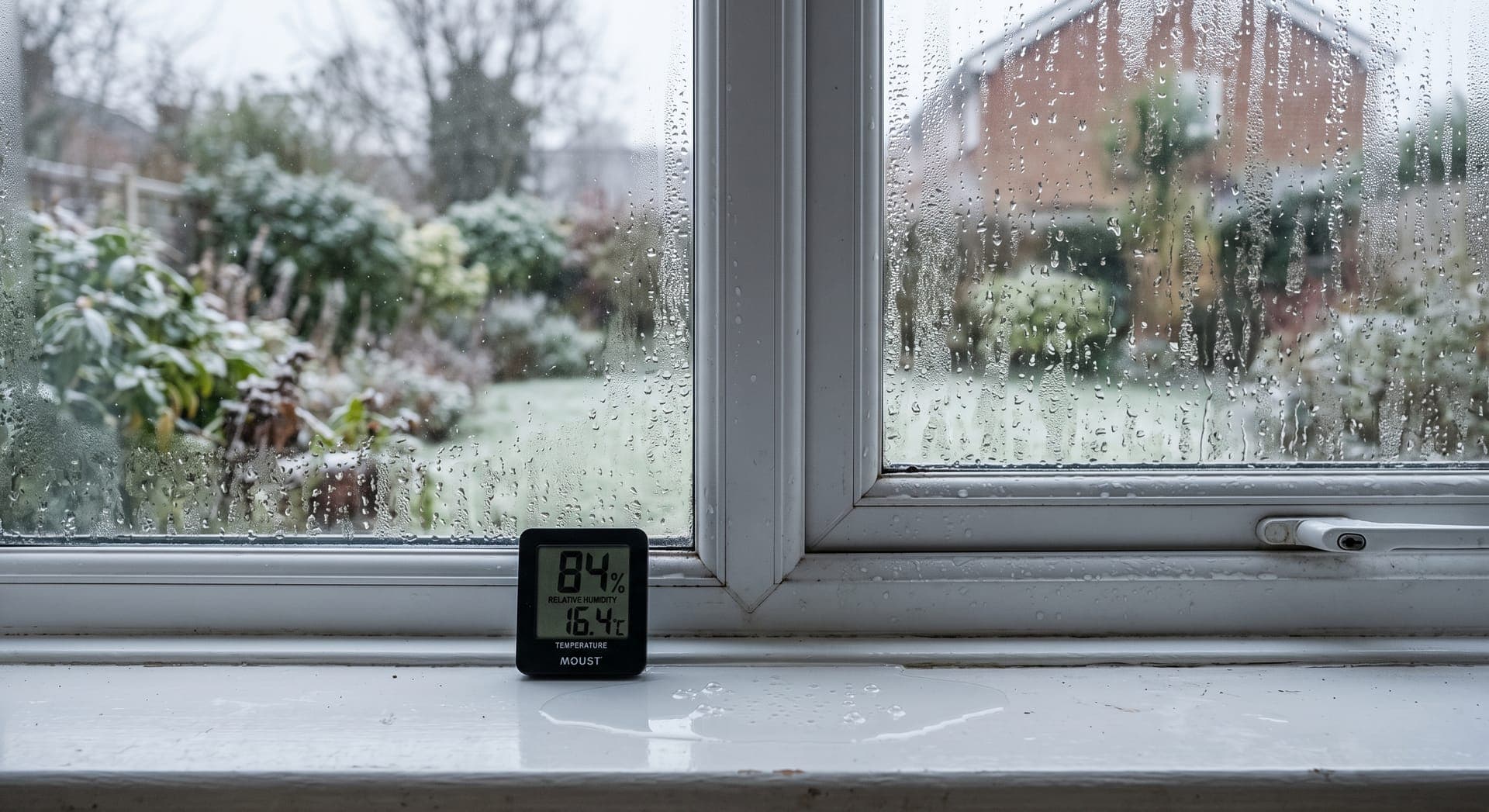
Window condensation forms when warm indoor air carrying water vapor meets glass that is colder than the air's dew point. The vapor turns back into water on the coldest surface in the room, which in winter is usually the window. A little on the coldest mornings is normal. Water streaming down the glass every day, pooling on sills, and growing black spots on the frames means the home is holding too much moisture.
The fix comes down to three things: put less moisture into the air, move moist air out, and keep the glass warmer. Most homes need a bit of each.
Check which side of the glass the water is on
Where the condensation forms tells you what kind of problem you have.
| Where the water is | What it usually means | What to do |
|---|---|---|
| Inside surface of the glass | Indoor air is too humid for how cold the glass gets | Reduce moisture, ventilate, and keep rooms evenly warm |
| Between the panes of double glazing | The seal on the sealed glass unit has failed | Replace the glass unit; ventilation will not fix it |
| Outside surface of the glass | The glass is well insulated and colder than the outdoor dew point on cool mornings | Nothing; it clears as the sun warms the glass |
The rest of this guide is about condensation on the inside surface.
Measure the humidity
An inexpensive digital hygrometer shows the relative humidity in a room. Put one in the bedroom and one in the main living area for a week, and check them morning and evening.
The US EPA recommends keeping indoor humidity below 60 percent, ideally between 30 and 50 percent. In cold weather, windows can fog even within that range, because the colder the glass, the less moisture the air can hold before it condenses. If your windows run with water when the hygrometer reads in the 50s or higher, bringing the humidity down will help.
Put less moisture into the air
Ordinary daily life adds a lot of water vapor to a home: showers, cooking, drying laundry, and simply breathing overnight in a closed bedroom. You cannot stop all of it, but you can cut the biggest sources.
- Dry laundry outdoors when possible, or in a dryer vented to the outside. Drying clothes on racks indoors puts nearly all the water in them into the air. If you have to dry indoors, do it in a room with the door closed and a window open or a dehumidifier running.
- Check that the clothes dryer vent hose is connected and that the outside flap opens when the dryer runs.
- Cover pans while cooking and use the range hood, ideally one that vents outdoors.
- Run the bathroom fan during showers and for at least 20 minutes after, and keep the bathroom door closed until the room clears.
- Move large groups of houseplants away from cold windows, and keep aquariums covered.
Unvented gas and kerosene heaters
Portable heaters that burn gas or kerosene without a flue release water vapor and combustion gases, including carbon monoxide, into the room. If you use one and have heavy condensation, stop using it and have a qualified heating technician look at your heating. Make sure you have working carbon monoxide alarms.
Move moist air out
- Open the trickle vents at the top of the window frames, if your windows have them, and leave them open through winter.
- Open windows wide for five to ten minutes in the morning, especially in bedrooms. A short, full airing exchanges moist air for drier outdoor air without cooling the walls and furniture much.
- Leave interior doors open during the day so air moves between rooms, except for the kitchen and bathroom while they are steamy.
- Keep furniture a few inches away from cold outside walls so air can circulate behind it.
- Clean the grilles on extractor fans, and check that they pull air. A fan that cannot hold a sheet of toilet paper against its grille is not doing much.
Sealing drafts saves heat, but it also reduces the fresh air that carries moisture out. If you have recently draft-proofed and then noticed more condensation, you need more deliberate ventilation to replace what the drafts were doing. The guide to making your home more energy efficient covers that balance.
Keep the glass and the room warmer
- Heat rooms more evenly. Rooms left very cold while others are warm attract condensation, because moist air drifts into them and meets cold surfaces. A low, steady temperature in all rooms usually works better than heating some rooms hot and leaving others unheated.
- Open curtains and blinds during the day. Closed curtains trap a pocket of cold air against the glass.
- Avoid tucking heavy curtains behind radiators under windows, so warm air can rise across the glass.
- Consider secondary glazing or a clear window insulation film kit for single-glazed windows. They add an insulating layer of air and keep the inner surface warmer.
- When windows need replacing anyway, modern double or triple glazing has much warmer inner surfaces than single glazing.
Use a dehumidifier when the rest is not enough
A dehumidifier pulls water out of the air and is useful in rooms that stay damp despite ventilation, such as basements, laundry rooms, and bedrooms without good airflow. Choose one sized for the room, set it to switch off at your target humidity, and empty or drain the tank daily. Clean its filter as the manual describes. It treats the symptom, so keep working on the sources.
Deal with the water that is already there
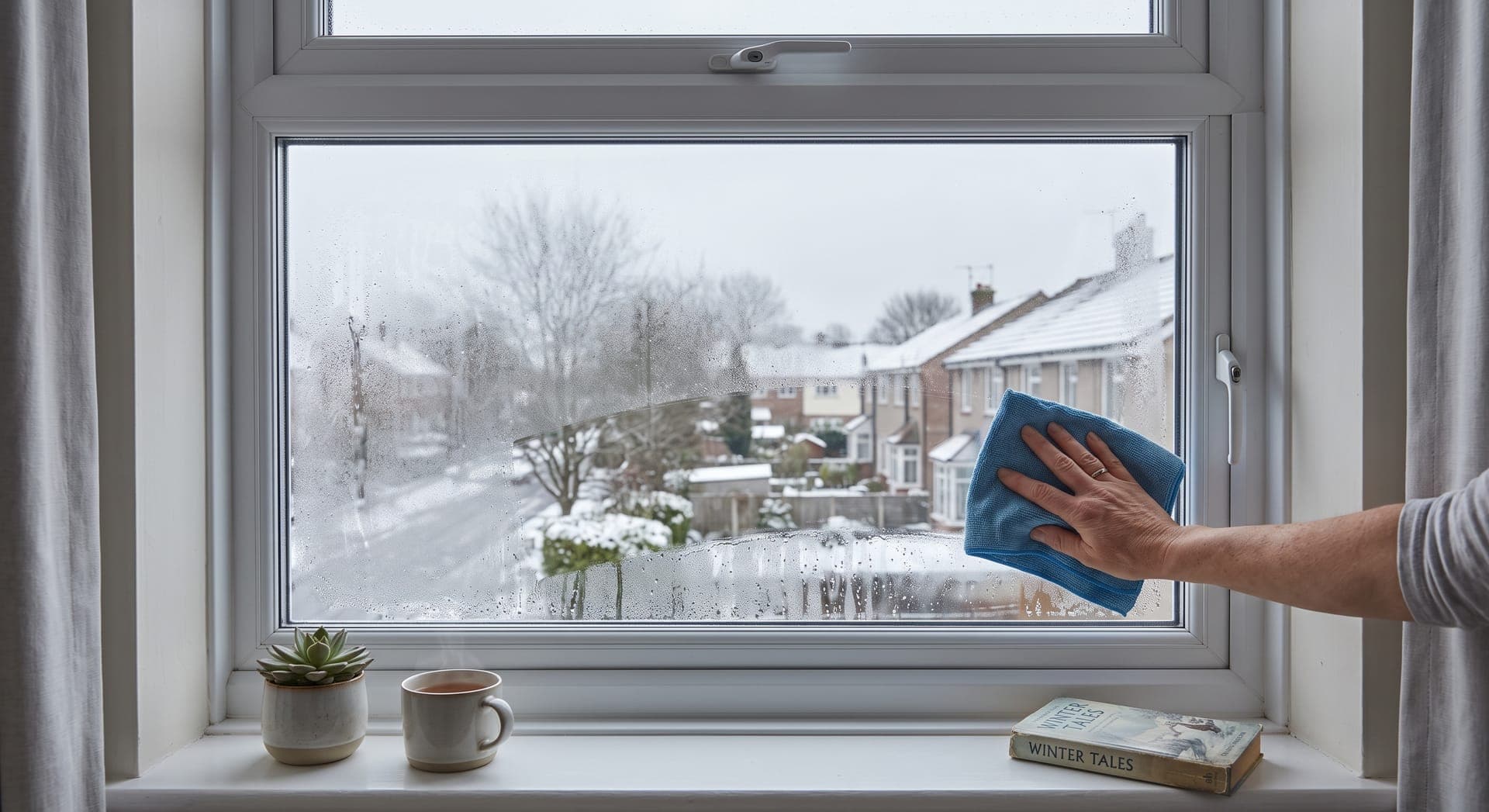
Wipe the glass and sills dry each morning with an absorbent cloth or a small window vacuum. Water left sitting on sills soaks into wood, paint, and caulk, and it feeds mold. Check frames and the corners of sills regularly. Clean any mold spots as described in the guide to removing mold safely.
When condensation points to a bigger problem
Get a professional opinion if
- Walls, ceilings, or the corners of rooms are damp or growing mold, not just the windows.
- Humidity stays above 60 percent despite ventilation and a dehumidifier.
- Window frames are soft or rotting, or water is getting into the wall below the window.
- You see damp patches low on walls, a musty smell, or peeling paint, which can point to leaks or rising damp.
- Condensation appears inside double-glazed units, which need the glass replaced.
A building surveyor, a damp specialist, or an HVAC technician can find the cause. If you rent, report persistent condensation and mold to your landlord in writing.
Mistakes that keep windows wet
- Drying laundry on radiators or racks in closed rooms.
- Closing trickle vents to stop drafts.
- Switching off bathroom and kitchen fans as soon as you leave the room.
- Leaving spare rooms unheated with the doors open to the rest of the house.
- Wiping the glass but leaving the sill and frame wet.
Questions about window condensation
Is some condensation normal?
A thin film on the coldest mornings that clears within an hour or two is common, especially on single glazing and in bedrooms. Heavy condensation every day, or water pooling on sills, is not.
Will new windows fix it?
New double or triple glazing reduces it because the inner glass stays warmer. If indoor humidity is very high, though, moisture will condense on the next coldest surface, such as an outside wall corner. Fix the humidity as well.
Why is condensation worse in the bedroom?
People breathe out moisture all night, bedrooms are often kept cooler, and doors and windows are closed. Opening the window for a few minutes each morning and leaving the trickle vent open usually helps.
A daily routine for wet windows
Each morning, wipe the glass and sills, then open the windows for a few minutes. Keep fans running after showers and cooking, dry laundry outdoors or in a vented dryer, and keep the heating steady. Watch the hygrometer for two weeks. If humidity is still high, add a dehumidifier and look for a larger source. Before the cold months arrive, the guide to preparing your home for winter covers windows, heating, and ventilation together.
This guide is general information. Homes, materials, and local rules differ, so check product instructions and the regulations where you live. Read the full disclaimer.