How to improve indoor air quality at home
Indoor air is often worse than the air outside. Ventilation, moisture control, and cutting the sources do more than any gadget.
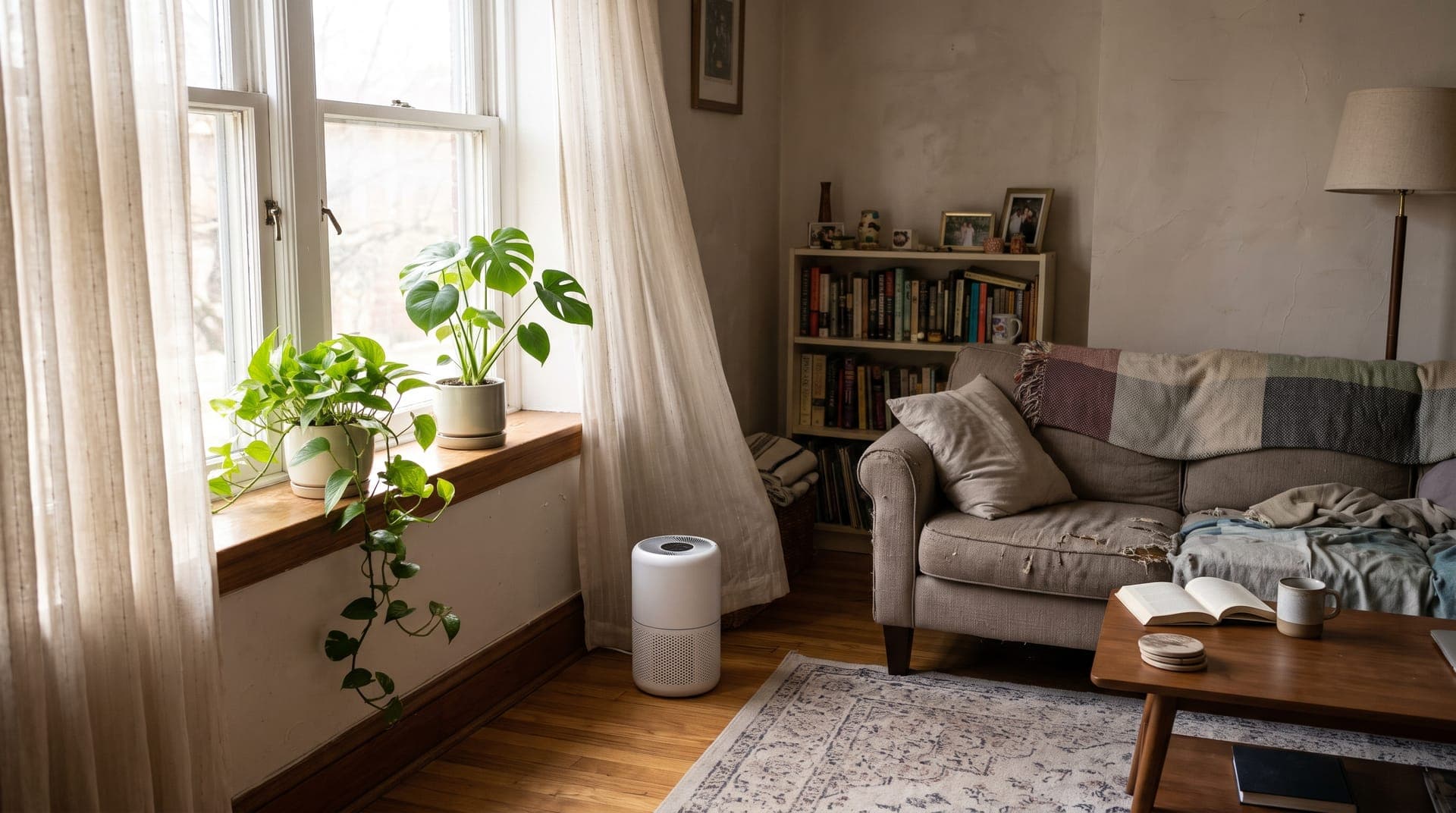
Indoor air is often worse than the air outside, because a sealed home traps moisture, dust, and fumes that have nowhere to go. We also spend most of our time indoors, so that air is what we breathe for most of the day. The good news is that the cheapest fixes, opening windows and controlling damp, do most of the work.
This guide covers what makes the air worse, how to ventilate and manage moisture, how to cut the sources of indoor pollution, and where an air purifier genuinely helps. It also covers the one hazard no purifier can touch, which is carbon monoxide.
What makes indoor air worse
A handful of things account for most indoor air problems, and they tend to overlap in the same home.
- Damp and mold. Moist air lets mold grow, and its spores and musty smell spread through the house.
- Dust and dust mites, which collect in carpets, bedding, and soft furnishings and trigger allergies.
- Fumes from cooking, and from cleaning products and new furnishings that give off volatile organic compounds (VOCs).
- Combustion gases from gas hobs, boilers, open fires, and stoves, including carbon monoxide when an appliance is faulty.
Ventilate every day
The single most effective thing you can do is exchange stale indoor air for fresh outdoor air. You do not need to leave windows open all day. A short, wide-open burst of five to ten minutes clears the air far better than a window cracked for hours, and it lets less heat escape in winter.
Open windows on opposite sides of the home at the same time to create a through-draft, which clears the air in minutes. Run the extractor fan while you cook and for a while after, and use the bathroom fan during and after a shower. If a room has no fan, open its window instead. Ventilating well does not mean giving up on keeping warm: you can still draft-proof without losing ventilation by sealing uncontrolled gaps and opening windows deliberately.
Control moisture
Damp air is the root of two separate problems: it feeds mold, and it lets dust mites thrive, since both need humidity. Keeping indoor moisture down tackles them together. Aim to keep humidity in a comfortable range rather than letting the home feel clammy.
Dry laundry outside when you can, or in a well-ventilated room with the window open, because drying it on radiators pushes litres of water into the air. Cover pans when cooking, and wipe down cold surfaces where water beads. If windows stream with water each morning, that moisture has to go somewhere, so it helps to control condensation at the source. Where damp has already taken hold, deal with it before it spreads and learn how to remove mold safely.
Cut the sources
Ventilation removes pollutants after they appear. It is better still to stop some of them entering the air in the first place.
- Use the cooker extractor every time you fry or roast, not only when the kitchen fills with smoke.
- Choose low-VOC or water-based paints, and let new furniture, carpet, and mattresses air out before heavy use.
- Store solvents, paints, and strong cleaners somewhere ventilated, such as a garage or shed, not a cupboard indoors.
- Keep a no-shoes rule to cut the dust and grit tracked in, and never smoke indoors.
Manage dust and allergens
Dust is not just untidy. It carries dust-mite debris and other allergens, and disturbing it puts them back into the air. The aim is to remove dust rather than stir it up.
- Vacuum with a machine that has a HEPA filter, which holds on to fine particles instead of blowing them out the back.
- Damp-dust surfaces with a slightly wet cloth, so the dust sticks rather than scatters.
- Wash bedding weekly at a hot temperature, which is what kills dust mites.
- Reduce clutter and open shelving in bedrooms, since every surface holds dust that has to be cleaned.
When an air purifier helps
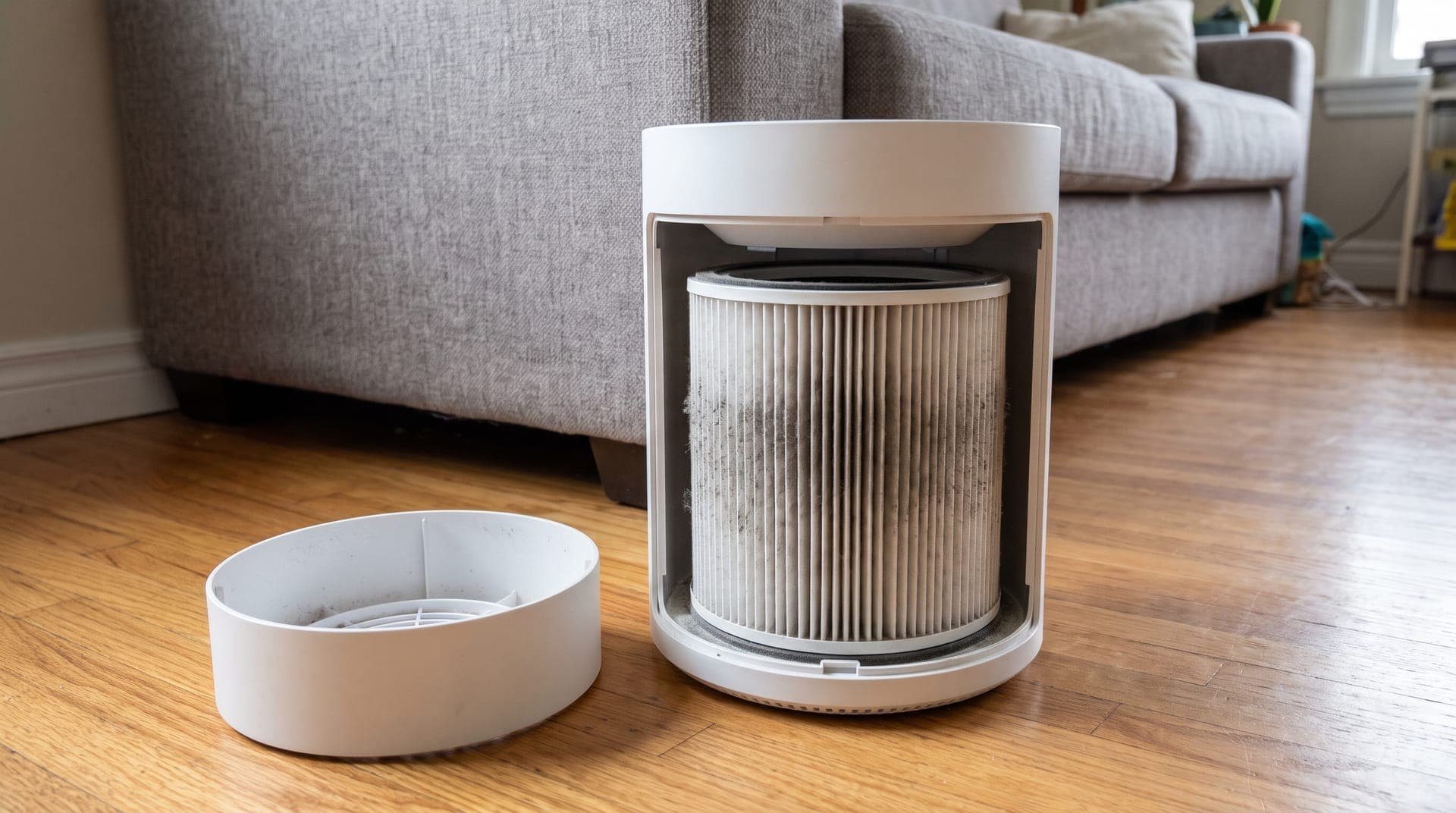
A purifier with a true HEPA filter captures fine particles well: dust, pollen, pet dander, and smoke. For a household with allergies or hay fever, or one near a busy road, that can make a noticeable difference, especially in a bedroom overnight.
It has real limits, though. A standard HEPA purifier does not remove gases, odors, or moisture, and the carbon filters that tackle some smells are small and wear out. Size the unit to the room, since a small purifier in a large living room does little. Most important, a purifier supplements ventilation. It cleans the air already in the room but brings in no fresh air, so it does not replace opening a window.
Carbon monoxide is the one you cannot smell
Carbon monoxide from a faulty gas boiler, fire, or stove is colorless and odorless, and no air purifier removes it. The only protection is to fit a carbon monoxide alarm near your fuel-burning appliances, test it regularly, and have those appliances serviced by a qualified engineer every year.
Questions about indoor air quality
Do houseplants clean the air meaningfully?
Not in the amounts most homes have. The studies that found plants removing pollutants used sealed laboratory chambers, and you would need a dense indoor jungle to match what opening a window does in minutes. Keep plants because you like them. Do not rely on them to clean the air.
Is an air purifier worth buying?
It depends on the problem. If someone in the home has allergies or asthma, or outdoor air near you is poor, a correctly sized HEPA purifier can help with fine particles. If the issue is damp, smells, or stuffiness, ventilation and moisture control will do more, and a purifier spends money on the wrong problem.
How often should I ventilate in winter?
Daily, in short bursts. Opening windows wide for five to ten minutes once or twice a day clears stale, moist air while losing little heat, because the walls and furniture stay warm. That is far better for both air quality and warmth than leaving a window on the latch all day.
The cheap things that matter most
Before buying anything, ventilate daily and keep moisture down. Those two habits address damp, mold, dust mites, and stuffiness at once, and they cost nothing. Add source control, regular cleaning, and a purifier only where a specific problem calls for one. And fit a carbon monoxide alarm regardless, because it guards against the one hazard none of the rest can.
This guide is general information. Homes, materials, and local rules differ, so check product instructions and the regulations where you live. Read the full disclaimer.