How to draft-proof doors and windows
Sealing the gaps around doors and windows is one of the cheapest ways to cut heat loss. The trick is knowing which gaps to close and which to leave.
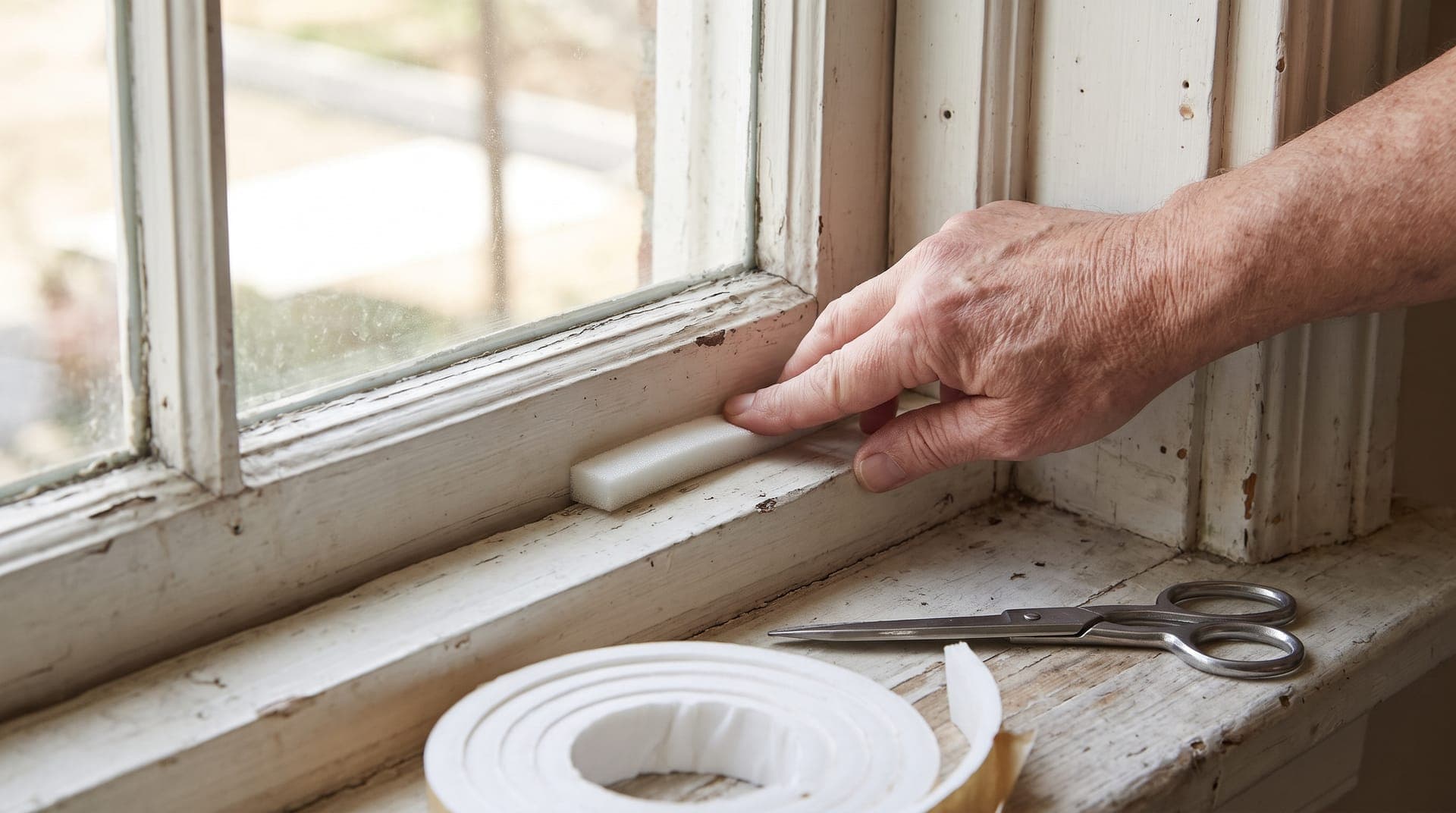
Draft-proofing doors and windows is one of the cheapest ways to make a home warmer, because the gaps that let cold air in are small, easy to find, and easy to seal with materials from any hardware store. The work is mostly patient rather than skilled, and the one rule you must not break is to leave the ventilation that keeps the home safe.
This guide shows how to find the drafts, decide which gaps to seal and which to leave open, and seal around windows, doors, and floors. It ends with the mistakes that waste the effort and where to start for the biggest difference.
Find the drafts first
You cannot seal a draft you have not located, and they are not always where the cold feels strongest. Two simple tests find them.
- Wet the back of your hand and move it slowly along the edges of doors and windows. Moving air feels cold on damp skin where you would miss it dry.
- On a still day, hold a lit candle or an incense stick near the same edges and watch the flame or smoke. It wavers or leans where air is moving.
Check the usual spots: window sashes where they meet, the edges and bottoms of doors, thresholds, mail slots, keyholes, and the line where the floor meets the skirting board. Mark each leak with a pencil or a scrap of tape as you find it.
Which gaps to seal and which to leave
The aim is to stop air leaking out of the gaps you do not want while keeping the ventilation you do. Homes need a certain amount of air exchange to carry away moisture and, where there is a fuel-burning appliance, combustion gases.
- Seal: gaps around sashes and frames, under and around doors, mail slots, and unused keyholes. These leak heat and do nothing useful.
- Leave: trickle vents in window frames, extractor fans in kitchens and bathrooms, and air bricks in walls. These are there on purpose.
- Never block a vent or air brick that supplies a fuel-burning appliance such as a gas fire, boiler, or wood stove. Starving it of air is dangerous.
If you are weighing up the whole house, sealing drafts is one of the quickest steps toward a more energy efficient home.
Seal around windows
Windows leak in two different places, and each needs a different material. The gap where the opening sash closes against the frame needs something compressible; the fixed gap between the frame and the wall needs a sealant.
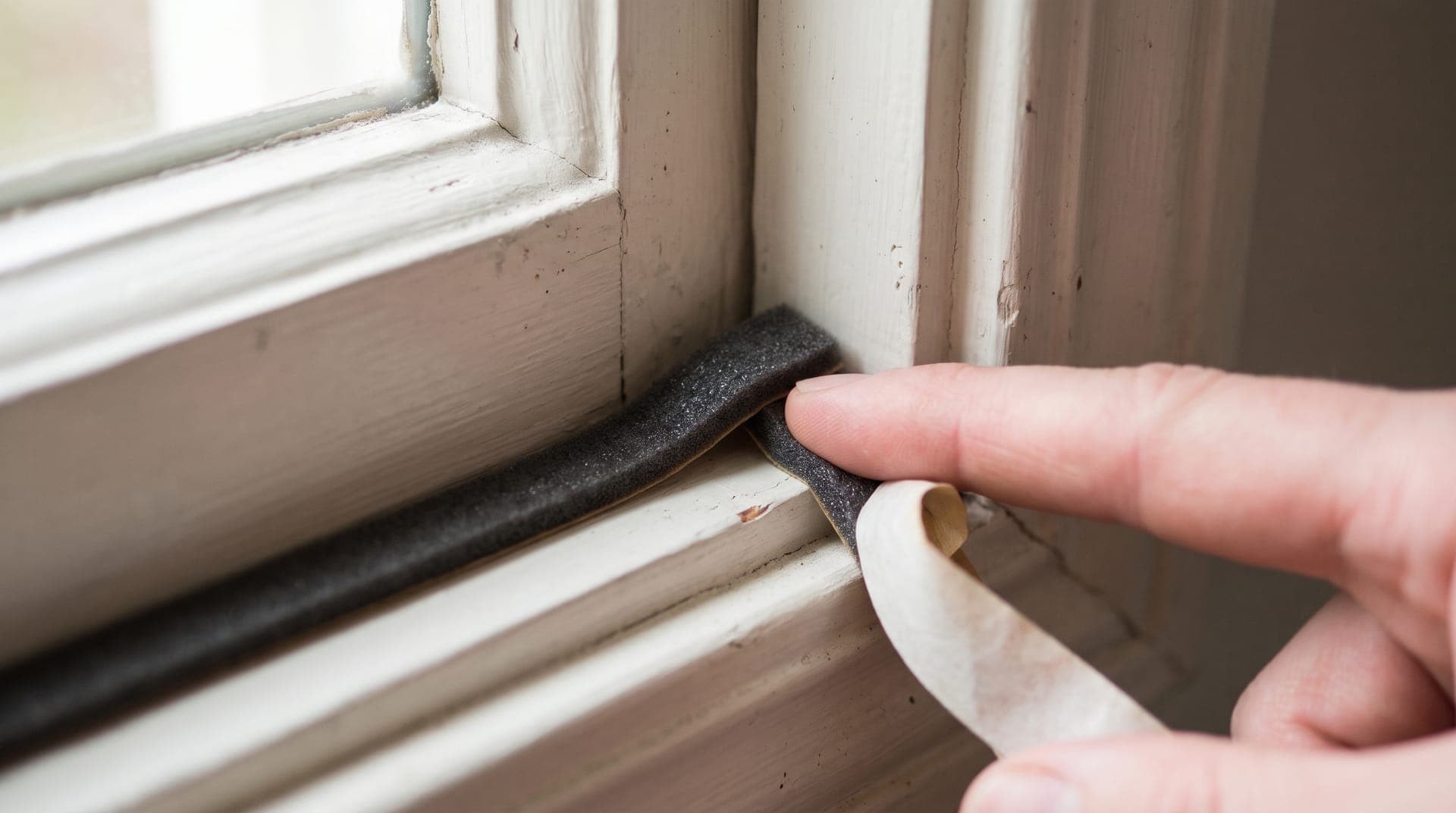
- For the gap where the sash closes, use self-adhesive foam strip or a brush strip. Foam suits gaps that squeeze shut; brush strip suits sliding sash windows.
- For the fixed gap between the frame and the wall, use a frame sealant or flexible filler, which stays put because that joint does not move.
- Clean and dry the surface first with a cloth. Foam strip will not stick to dust or damp paint, and it peels off within weeks if you skip this.
- Measure each run and cut the strip to length rather than stretching it, which thins it and weakens the seal.
Seal around doors
An external door has four leak points, and each has its own fix.
- Sides and top: fit weatherstrip, either self-adhesive foam or a sprung metal or plastic strip, along the frame where the door closes against it.
- Bottom: fit a door sweep or a brush strip to the base of the door, or use a draft excluder across the threshold. The gap under a door is often the biggest single leak.
- Mail slot: add a flap or a brush seal behind it, which closes after the post comes through.
- Keyhole: fit a hinged cover, called an escutcheon, over a keyhole you do not use from outside.
Floors, skirting, and other gaps
In older homes with suspended timber floors, a surprising amount of cold air rises through gaps in the boards and the joint where the floor meets the skirting.
- Fill gaps between floorboards with a flexible filler or a thin cork or foam strip pushed into the gap. Flexible is important, because boards move with the seasons and rigid filler cracks out.
- Seal the gap along the bottom of the skirting board with flexible filler or a decorator's caulk.
- Use a draft excluder along the bottom of internal doors to rooms you keep closed, which stops heat drifting into unused space.
Mistakes to avoid
- Sealing onto a dirty or damp surface. Adhesive strip and caulk will not bond, and the seal fails within weeks.
- Blocking ventilation that is there for a reason, especially vents near a fuel-burning appliance or the only extractor in a bathroom.
- Using rigid filler where the frame or the floor moves. It cracks and falls out, leaving the gap back where it started.
- Stretching foam strip to make it reach. Cut a fresh length instead so the seal keeps its thickness.
Keep ventilation for safety
- Never seal the vents or air bricks that supply a gas or solid-fuel appliance. They provide the air it needs to burn safely.
- Do not cover extractor fans. They remove the moisture that otherwise causes damp and mold.
- Fit a carbon monoxide alarm if you have any fuel-burning appliance. Reducing airflow around one of these can be dangerous, and the alarm is your warning.
Questions about draft-proofing
Will sealing drafts cause condensation?
It can, if you seal so thoroughly that moisture has nowhere to go. The fix is not to leave drafts but to keep deliberate ventilation: trickle vents open, extractor fans running during cooking and showers, and the odd window opened. Done that way, draft-proofing rarely causes a problem. Our guide to condensation on windows covers it in more detail.
How much will draft-proofing actually save?
Enough to notice on both the thermostat and the bill, though the exact figure depends on how leaky the home was to begin with. An old house with bare floorboards and ill-fitting sash windows has far more to gain than a newer, tighter one. The comfort improvement is immediate: rooms stop having cold corners and feel warmer at the same thermostat setting.
Can I draft-proof a rented home without damaging anything?
Yes, with removable options. Draft excluders, a chimney balloon, removable foam strip, and clip-on secondary glazing film all come off cleanly and leave no marks. Avoid caulk, screws, and permanent sealant unless your landlord agrees. Check your tenancy agreement first if you are unsure.
Where to start for the biggest difference
Start with the largest gaps, which are usually the bottom of external doors and any loose sash windows, then work down to the smaller leaks around frames and floors. Those first few fixes give most of the benefit for an afternoon's work. If you are tackling it as the weather turns, our guide to prepare for winter puts draft-proofing alongside the other jobs worth doing before the cold sets in.
This guide is general information. Homes, materials, and local rules differ, so check product instructions and the regulations where you live. Read the full disclaimer.