How to test and replace smoke and carbon monoxide alarms
A smoke alarm only works if it is tested, powered, and not past its expiry date. Carbon monoxide alarms need the same care and the right placement.
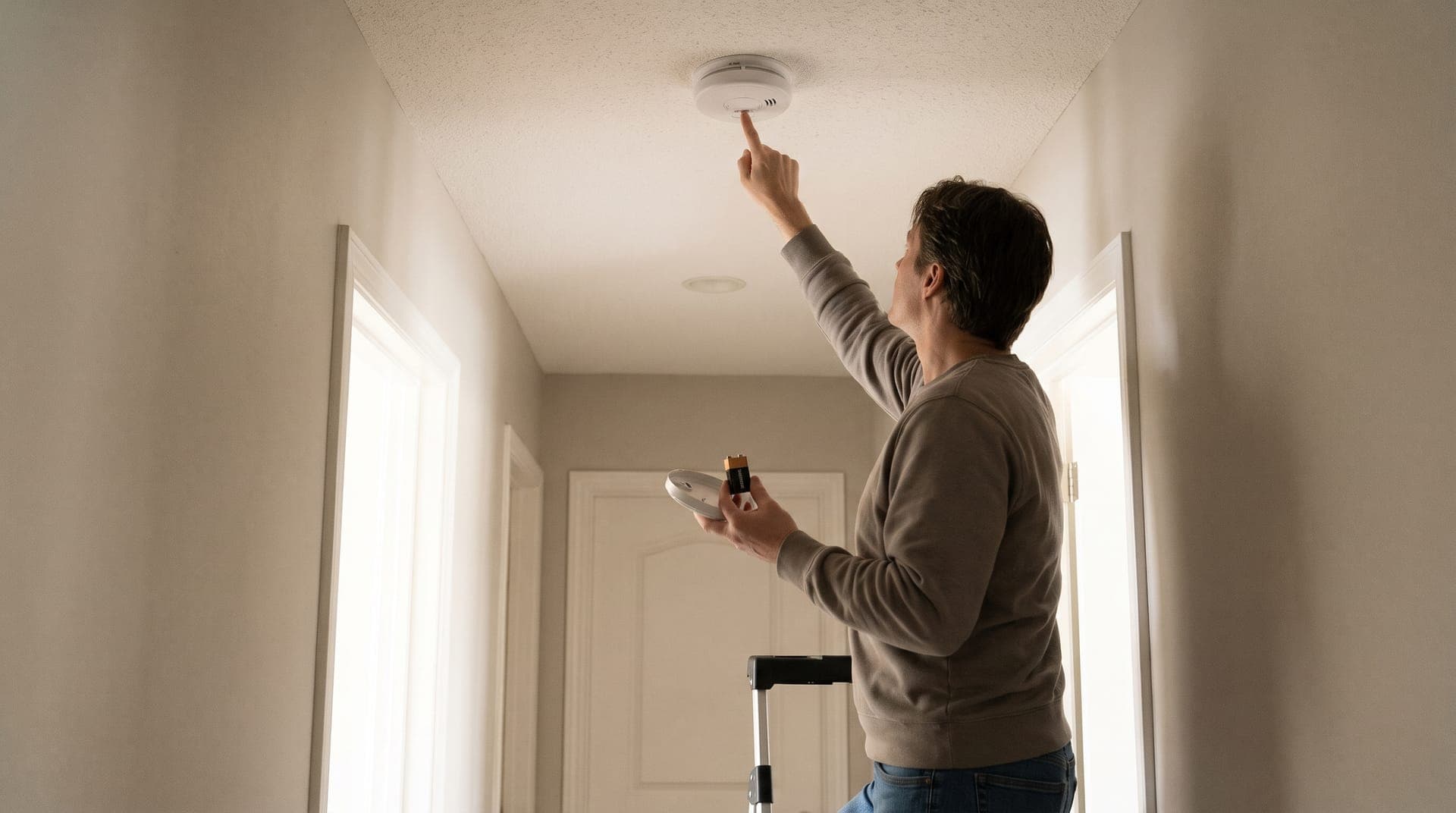
Smoke and carbon monoxide alarms only protect you when they work, and the only way to know they work is to test them. A few minutes a month and a battery change once a year cover almost everything a homeowner needs to do. The rest is knowing where to put the alarms and when the whole unit has reached the end of its life and has to be replaced, battery or not.
This guide covers how often to test, where to fit both kinds of alarm, how to change batteries without creating a dead spot, and what the different beeps are telling you. Specifics such as mounting height and replacement intervals vary by model, so treat your alarm's own manual as the final word where it differs from the general guidance here.
How often to test and what to test
Press the test button on each alarm once a month. The button checks the horn and the electronics, which is what matters in a real fire. Hold it until the alarm sounds, then release. If an alarm does not sound, change the battery and test again; if it still fails, replace the unit.
- Test every alarm in the home on the same day so none gets missed.
- Vacuum dust out of the vents with a soft brush attachment. Dust and cobwebs are a common cause of both failures and false alarms.
- Do not spray cleaning products or air freshener into or near an alarm. The chemicals can coat the sensor and stop it working.
Where to fit smoke alarms
Coverage matters as much as the alarms themselves. Smoke rises, and a fire can start anywhere, so place alarms so that smoke reaches one quickly wherever you are.
- Fit at least one on every level of the home, including the basement.
- Fit one inside each bedroom and one outside the sleeping areas, so a fire while you sleep wakes you.
- Mount high, on the ceiling or high on the wall, since smoke collects at the top of a room. Keep ceiling units away from corners, where air moves little.
- Keep alarms away from kitchens and bathrooms, or use a type made for those areas, to cut false alarms from cooking and steam.
Interlinked alarms, where one sounding sets off all of them, give you the most warning in a larger home. They are part of a wider home safety picture that the monthly maintenance checklist helps you keep on top of.
Where to fit carbon monoxide alarms
Carbon monoxide is colorless and odorless, so a person cannot detect it without an alarm. It comes from anything that burns fuel: a gas boiler or furnace, a wood stove, a gas range, a fireplace, or a car running in an attached garage.
- Fit an alarm near fuel-burning appliances, and one on each level where people sleep.
- Follow the maker's height guidance. Models differ, and some are designed for a specific mounting height rather than the ceiling.
- Keep the alarm out of dead air spaces and away from direct drafts from windows, doors, and vents, which can delay detection.
Because the gas gives no warning of its own, the alarm is the whole defense. A combined concern around open flames and fuel appliances is part of making the home safer, which the guide to make your home safer for children also touches on.
Change the batteries
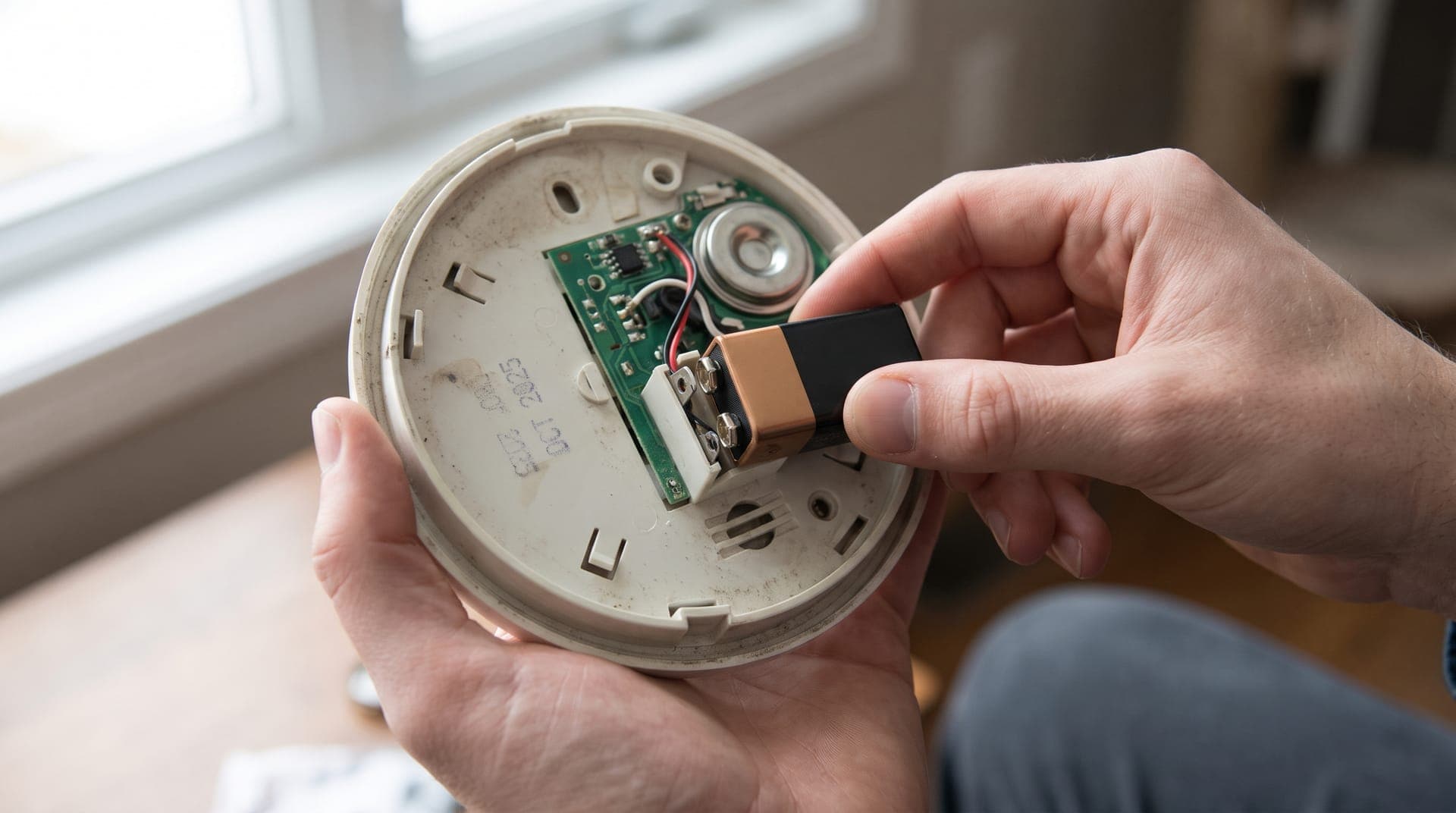
For alarms that take a standard replaceable battery, change it at least once a year whether or not it has chirped. A common habit is to tie it to a fixed date, such as when the clocks change, so it is not forgotten.
- A single chirp every minute or so almost always means the battery is low. Replace it before it fails completely.
- After fitting a fresh battery, press the test button to confirm the alarm sounds.
- Never pull the battery to silence a nuisance alarm and leave it out. An alarm with no power protects no one. Fix the cause of the false alarm instead, such as dust, steam, or cooking smoke.
When to replace the whole unit
Alarms wear out. The sensor degrades over time, and a unit past its date can fail to detect a real fire even with a good battery. Check the date stamped inside or on the back of each alarm.
- Smoke alarms are generally replaced about every ten years from the date of manufacture.
- Carbon monoxide alarms usually need replacing sooner. Follow the interval on the label, which is often five to seven years.
- Sealed units with a ten-year built-in battery are replaced whole when the battery or sensor reaches end of life; you do not change the battery in these.
If you cannot find a date, or the alarm predates your time in the home and you are unsure of its age, replace it. A new alarm costs little against what it protects.
What the different beeps mean
Patterns vary by model, so confirm yours against its manual, but these are the common meanings.
| Sound | Likely meaning | What to do |
|---|---|---|
| Continuous loud alarm | Smoke or carbon monoxide detected. | Treat it as real. Get everyone out and respond as the alarm type calls for. |
| A single chirp every minute or so | Low battery. | Replace the battery, then test. In a sealed unit, this means the unit is near end of life. |
| A different intermittent chirp | End of life, or a fault on many models. | Check the date and the manual. Replace the unit if it has reached its end of life. |
| Silence when you press test | Dead battery, wrong fitting, or a failed unit. | Fit a fresh battery and test again. If it is still silent, replace the alarm. |
If a carbon monoxide alarm sounds
- Get everyone outside into fresh air straight away, including pets.
- Do not go back inside to investigate or open windows first.
- Call your emergency services or gas emergency line from outside.
- Seek medical help if anyone feels dizzy, sick, drowsy, or has a headache. Treat every alarm as real, every time.
Questions about smoke and CO alarms
How many alarms does a home need?
As a baseline, one smoke alarm on every level, one inside each bedroom, and one outside each sleeping area, plus carbon monoxide alarms near fuel-burning appliances and on each sleeping level. A larger or multi-story home needs more. Your local fire service or building code may set a specific requirement, so check it.
Can one unit cover both smoke and carbon monoxide?
Combined smoke and carbon monoxide alarms exist and can be convenient, since they cover both in one place and one test. They are a reasonable choice where you would fit both anyway. Follow the maker's placement guidance, which has to suit both sensors, and note the replacement interval, which is usually the shorter of the two.
Why does an alarm always seem to chirp in the middle of the night?
A low battery chirps more as its voltage drops, and a house is coldest in the small hours, which lowers battery voltage further and tips a marginal battery into chirping. Changing batteries on schedule, before they get that low, avoids the late-night chirp. Do not remove the battery to get back to sleep; replace it.
A date in the calendar
The whole routine comes down to two reminders: a monthly test of every alarm, and a battery change once a year on a date you will remember. Add a check of the manufacture date so no unit outlives its sensor. Those habits sit well alongside the seasonal jobs in the guide to prepare your home for winter, when heating and fuel appliances come back into heavy use.
This guide is general information. Homes, materials, and local rules differ, so check product instructions and the regulations where you live. Read the full disclaimer.