How to fix a running toilet
A toilet that runs after flushing, or refills on its own, usually comes down to a worn flapper or a misadjusted fill valve. Both are cheap, drop-in parts.
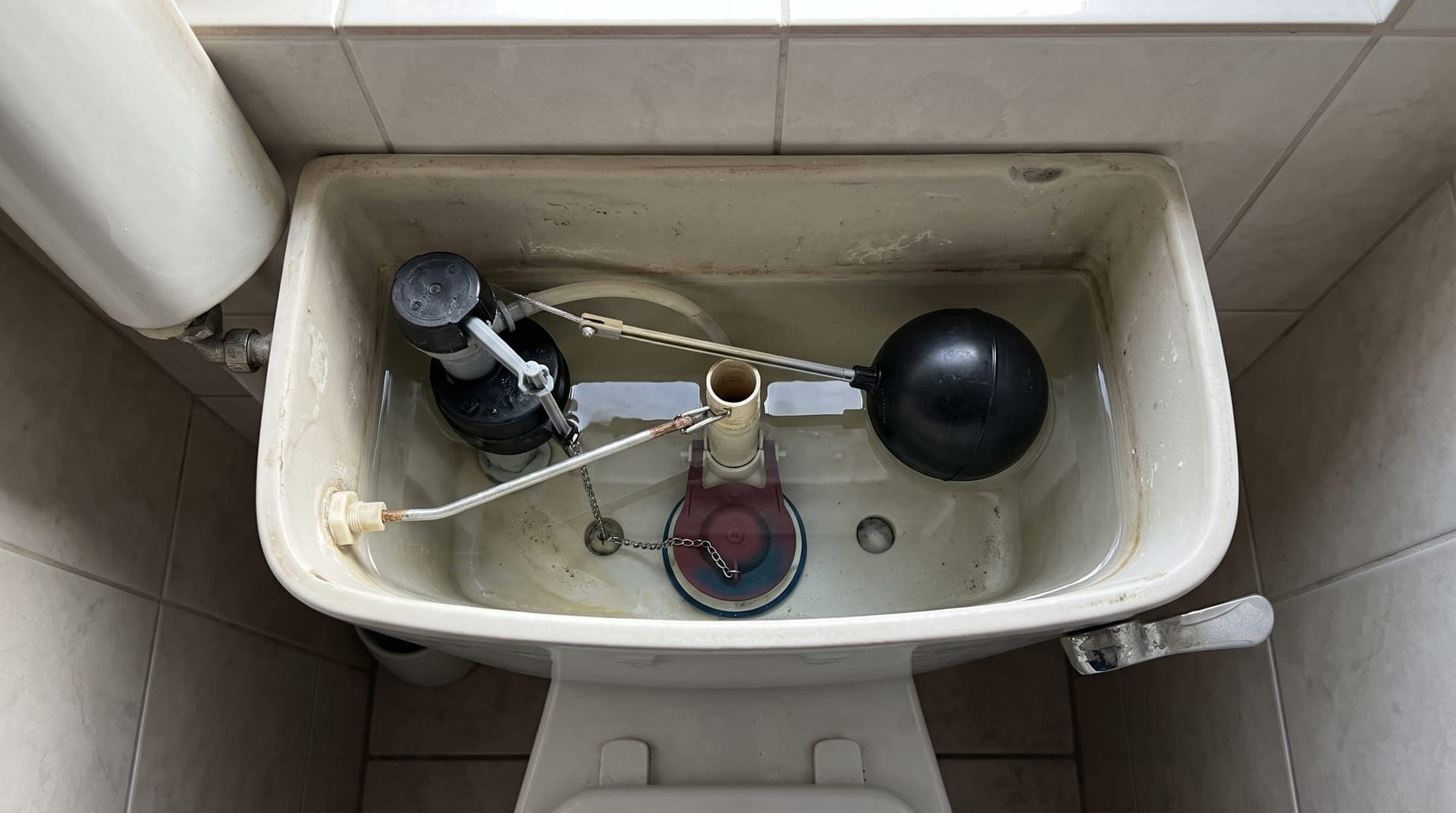
A toilet that keeps running wastes more water than almost any other fault in the house, and it is usually caused by one of two cheap parts: the flapper that seals the tank, or the fill valve that refills it. Both are easy to reach, easy to test, and easy to replace without a plumber. You lift the lid, look inside, and the moving parts explain themselves.
This guide shows you how the tank is supposed to work, how to find out why yours keeps running, and how to fix the two most common causes. It also gives you a short list of problems that are not a flapper or a fill valve and do need a professional.
How a toilet is supposed to fill and flush
Everything that causes a running toilet lives in the tank, and there are only four parts that matter. Once you can name them, the fault is easy to see.
- The flapper is the rubber seal at the bottom of the tank. When you flush, it lifts and lets the tank water rush down into the bowl. When the tank is full, it drops back onto the flush valve seat and seals the water in.
- The fill valve is the tall part on one side. After a flush, it opens to refill the tank, then shuts off when the water reaches the set level.
- The float tells the fill valve when to stop. It rides on the surface of the water, either as a ball on an arm or a cup that slides up the fill valve body. As the water rises, the float rises and closes the valve.
- The overflow tube is the open vertical pipe in the middle. If the water ever rises too high, it drains down this tube into the bowl instead of spilling over the top of the tank. A thin hose from the fill valve clips onto it to refill the bowl.
A healthy toilet does all of this in under a minute and then goes silent. If yours never goes silent, one of these four parts is not doing its job.
Find out why yours keeps running
Start by listening. A faint hiss usually means the fill valve is still letting water through. A trickle you can hear in the bowl usually means water is leaking past the flapper, so the tank slowly empties and the fill valve kicks in every few minutes to top it up.
Now lift the lid and look at the water level. It should sit about an inch below the top of the overflow tube. If the water is right at the top of the tube and running over the edge into it, the level is set too high or the fill valve will not shut off. If the level looks fine but the toilet still refills on its own, suspect the flapper.
The dye test settles it. Put a few drops of food coloring into the tank water, then leave the toilet alone for 10 to 15 minutes without flushing. If colored water appears in the bowl in that time, water is leaking past the flapper. If the bowl stays clear, the flapper is sealing and the problem is at the fill valve or the water level.
Fix a leaking flapper
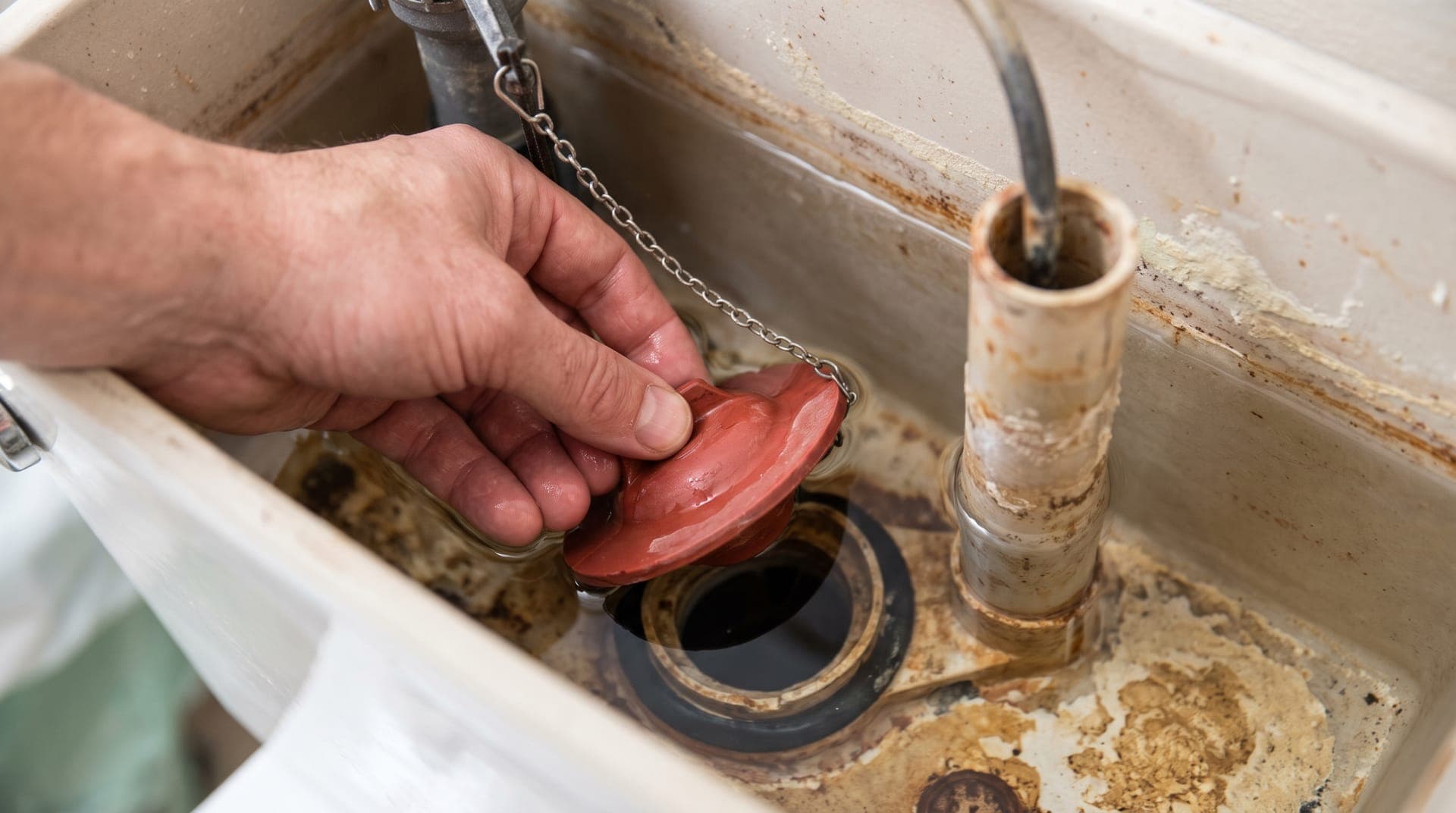
Turn off the water at the shutoff valve on the wall behind the toilet, then flush to empty the tank. Lift the flapper and run a finger around its underside and around the seat it drops onto. Grit, mineral scale, or a thin film of slime will break the seal. Wipe both surfaces clean with a cloth and reseat the flapper.
If the rubber is warped, hardened, or leaves a black smear on your finger, it is worn out and no amount of cleaning will fix it. Take the old flapper to the store and match it, because flappers come in different sizes (commonly two inch and three inch) and different hinge styles. A near match will leak.
Check the chain while you are there. Too much slack and the flapper will not lift fully, giving a weak flush. Too little slack and the flapper cannot seat, which causes a constant leak. Set it so there is a small amount of slack with the flapper closed, usually about half an inch.
Adjust or replace the fill valve and float
If the dye test came back clear, the flapper is fine and the issue is how the tank fills. First set the level. On a modern fill valve, turn the adjustment screw on top or pinch the clip on the float cup and slide it down so the water stops about an inch below the top of the overflow tube. On an older ball float, turn the small screw at the valve or gently bend the metal arm downward.
If adjusting the float does not stop the water, the fill valve itself is worn and will not shut off. Replacing it is a straightforward job. Turn off the shutoff, flush to empty the tank, and sponge out the last of the water. Disconnect the supply line underneath, undo the locknut holding the valve to the tank, and lift the old valve out. Fit the new one, tighten the locknut by hand plus a small turn with pliers, reconnect the supply line, and set the water level. Clip the small refill hose onto the overflow tube, not down inside it.
When the water keeps running into the overflow
If you can see water trickling down into the overflow tube and the tank never quite fills, the water level is set higher than the top of the tube. Everything above that height simply drains into the bowl, so the fill valve runs forever trying to reach a level it can never reach.
Lower the float until the water stops an inch below the top of the tube. If the water still climbs past that point and into the overflow even with the float set low, the fill valve is not sealing internally and should be replaced using the steps above. A valve that ran unchecked for a long time rarely recovers once its seal has failed.
Mistakes to avoid
- Buying a flapper or fill valve before removing the old one. Sizes and fittings vary, and a guess usually leaks.
- Setting the water level at the very top of the overflow tube. Leave the inch of air gap; it is there on purpose.
- Pushing the refill hose down inside the overflow tube. That can siphon tank water out and keep the valve running.
- Forcing the shutoff valve closed when it is stiff. An old valve can snap or start to weep.
- Over-tightening the plastic locknut on a new fill valve. Hand tight plus a nudge is enough; cranking it cracks the nut.
Call a plumber if
- The shutoff valve on the wall will not close, or starts leaking when you turn it.
- The tank is cracked, or you see water seeping from a hairline crack when it is full.
- Water leaks between the tank and the bowl at the bolts after you have replaced the gasket.
- Sewage backs up into the bowl, which points to a blocked drain or vent rather than a tank fault.
Questions about a running toilet
How much water does a running toilet actually waste?
A silent flapper leak can pass several gallons an hour without you noticing, and a fill valve that never shuts off runs continuously. Over a month that adds up to a noticeable jump on the water bill, which is why the dye test is worth doing the moment you suspect a leak.
How do I tell if it is the flapper or the fill valve?
The dye test is the quickest answer. Color in the bowl within 15 minutes means the flapper is leaking. A clear bowl with a hissing or overflowing tank points to the fill valve or the water level. Fixing the wrong one is the most common wasted trip to the store.
Can I use a universal repair kit?
A universal fill valve fits most tanks and is a reliable buy. Flappers are less forgiving, because the seat size and hinge style vary, so match the flapper to your toilet rather than trusting a one-size part. When both parts are old, replacing them together with a kit is often cheaper than two separate trips.
The two-minute check that confirms the fix
Once the repair is done, run the dye test again and leave the toilet for 15 minutes. A clear bowl means the flapper seals. Then flush and watch the tank refill: the water should rise, stop an inch below the overflow tube, and the toilet should go completely silent. If it does both, you are finished. The same calm, test-first approach works on a leaking faucet, and if the bowl also drains slowly the guide to how to unclog a sink covers that. For anything behind the wall, the guide to when to call a professional helps you draw the line.
This guide is general information. Homes, materials, and local rules differ, so check product instructions and the regulations where you live. Read the full disclaimer.