How to unclog a sink without calling a plumber
Start with hot water and a plunger, then clean out the trap. In that order, these methods clear most sink clogs without harsh chemicals.
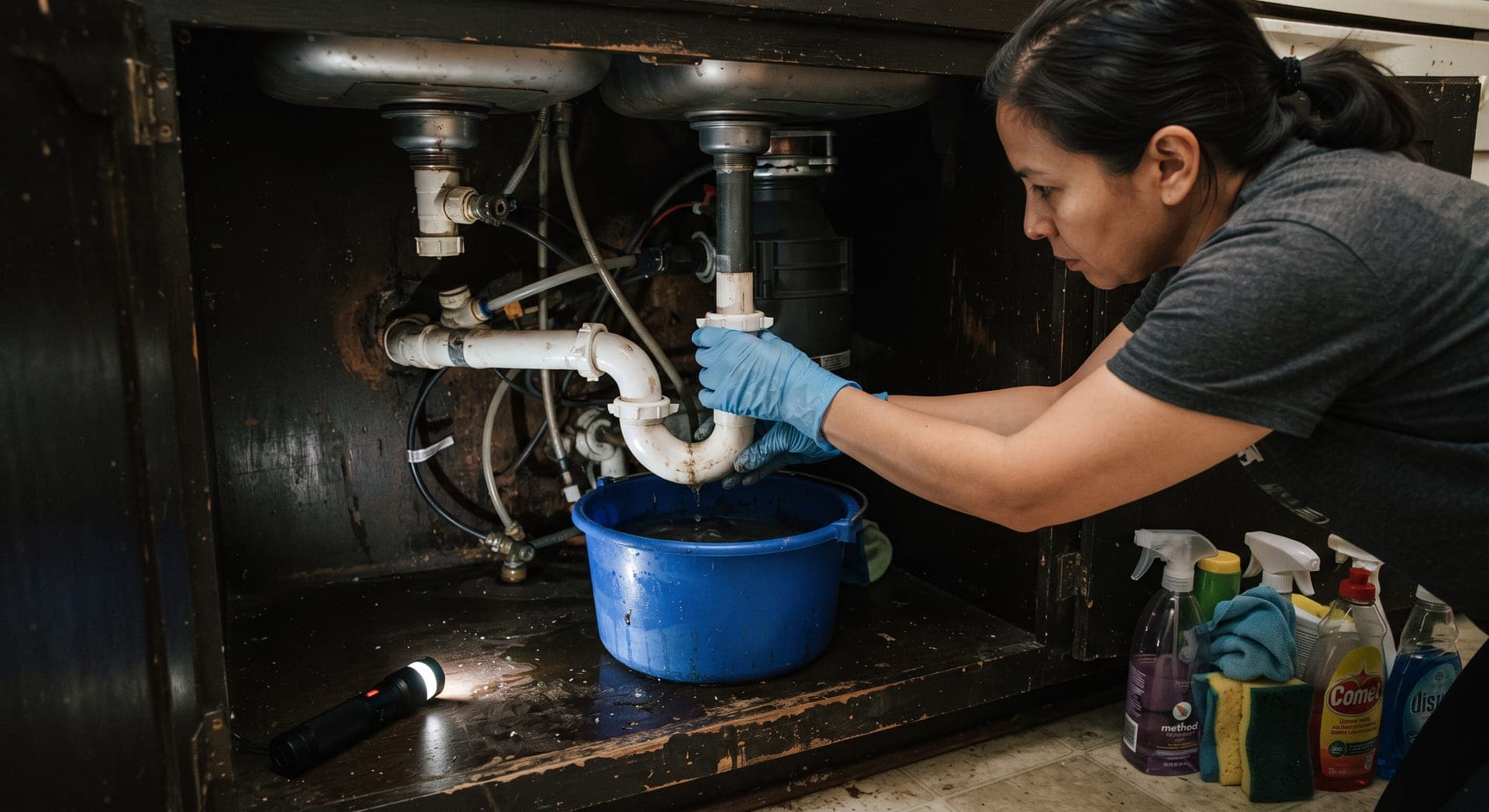
Most sink clogs sit within a couple of feet of the drain opening: in the stopper, in the curved trap under the sink, or just past it in the pipe that goes into the wall. Kitchen sinks usually clog with grease and food scraps. Bathroom sinks usually clog with hair bound together by soap. Both can be cleared with a plunger, a bucket, and a few inexpensive tools.
Work through the methods below in order. Each step is a little more involved than the one before, and most clogs clear in the first two or three.
First, check whether the problem is only this sink
Run water in the nearest other sink, the bathtub, and flush the toilet. If several drains are slow, if the toilet gurgles when the sink drains, or if water backs up into a tub or shower, the blockage is probably in the main drain line. Plunging a single sink will not fix that, and it is a job for a plumber.
If only one sink is affected, the clog is local, and you can deal with it yourself.
What you need
- A cup plunger, the kind with a flat rim, for sinks. A flanged toilet plunger does not seal well on a flat sink.
- A bucket and old towels.
- Rubber gloves and a flashlight.
- Slip-joint pliers.
- A plastic drain-cleaning strip (a barbed hair-removal tool) for bathroom sinks.
- A hand drain auger, also called a drain snake, for stubborn clogs.
Step 1: Clean the stopper and drain opening
In a bathroom sink, the pop-up stopper catches hair. On many sinks you can lift it straight out, or turn it and then lift. If it will not come out, look under the sink for the horizontal rod attached to the drain pipe. Unscrew the nut holding the rod, pull the rod out a little, and the stopper will lift free. Pull the hair off, clean the stopper, and reassemble.
A plastic barbed strip pushed down the drain and pulled back up often brings out a surprising amount of hair. In a kitchen sink, remove and rinse the basket strainer.
Step 2: Use hot water
For a slow kitchen drain clogged with grease, pour a kettle of hot water down the drain in two or three stages, waiting between pours. Let the water cool for a minute after boiling first: very hot water helps soften grease, but boiling water poured straight in can crack porcelain sinks and soften plastic pipe joints. This step helps with soft grease buildup. It will not move a solid blockage.
Step 3: Plunge the sink
- Remove the stopper or strainer.
- In a bathroom sink, block the overflow hole near the rim with a wet cloth held firmly in place. In a double kitchen sink, plug the other drain with its stopper or a wet cloth held down by a helper. Without this, the pressure escapes through the other opening.
- Run enough water to cover the plunger cup by an inch or so. Water pushes the clog better than air.
- Place the plunger over the drain so the rim seals all the way round.
- Plunge firmly up and down about 15 to 20 times, keeping the seal. Then pull the plunger off sharply.
- If the water drains, run hot water for a minute. If it does not, repeat two or three times before moving on.
If your dishwasher drains into the kitchen sink, plunging can push dirty water back up its drain hose. Clamping the hose gently, or having someone hold it pinched while you plunge, prevents that.
Step 4: Clean out the P-trap
The P-trap is the U-shaped pipe under the sink. It holds a little water to keep sewer gas out of the room, and it catches whatever goes down the drain.
- Clear the cabinet and put a bucket directly under the trap. Lay towels around it.
- Loosen the two slip nuts on either side of the U by hand. Use pliers only if they will not turn, and wrap the jaws in a cloth on chrome.
- Lower the trap carefully. It will be full of water.
- Empty it into the bucket and clean it out with an old toothbrush or a bent wire. Check the pipes on both sides with a flashlight for buildup.
- Check the rubber or plastic washers inside the slip nuts. Replace them if they are cracked or flattened.
- Reattach the trap and tighten the nuts by hand, then a quarter turn more. Run water and check for drips.
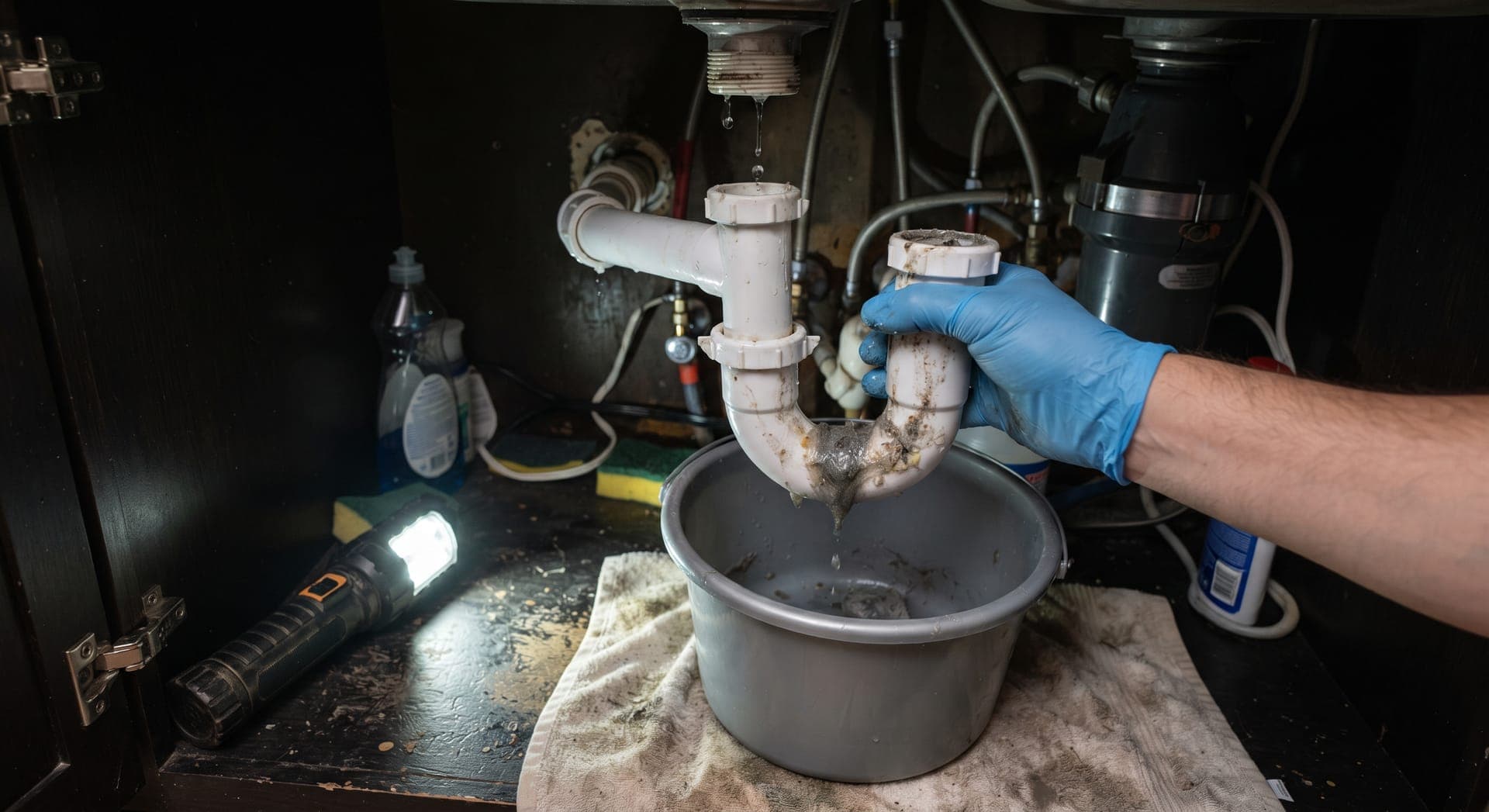
Step 5: Use a drain auger
If the trap was clear, the clog is further along, in the pipe that runs into the wall. With the trap still removed, feed the end of a hand auger into that pipe.
- Push the cable in until you feel resistance.
- Tighten the lock on the auger, then turn the handle clockwise while pushing gently forward. The cable will work through bends and into the clog.
- When you feel the cable break through or grab something, pull it back slowly and clean it off into the bucket.
- Reattach the trap and run hot water for a couple of minutes.
Feed the auger gently. Forcing it can damage old pipes, and a cable spinning while you pull it out can splatter dirty water.
What about baking soda, vinegar, and chemical drain cleaners?
Baking soda followed by vinegar fizzes, and it can freshen a drain or help loosen light buildup. It is unlikely to clear a real blockage.
Chemical drain cleaners are strong caustic or acid products. They can burn skin and eyes, damage some older pipes, and leave a sink full of hazardous water if they fail. If you have already poured one in and the sink is still blocked, do not plunge or open the trap, because the chemical can splash. Tell a plumber what you used. Never combine two drain products.
If the sink has a garbage disposal
- Switch the disposal off at the wall and unplug it or switch off its breaker before doing anything else. Never put your hand into a disposal.
- If it hums but will not turn, find the hex socket in the center of the unit's underside. Turning it back and forth with the Allen key supplied with most disposals frees a jam.
- Many disposals have a small red reset button on the bottom. Press it after clearing a jam.
- If water stands in the sink, the clog is often in the trap or the pipe after the disposal. Follow the steps above.
How to keep sinks from clogging
- Wipe grease and oil from pans with a paper towel and put it in the trash. Grease hardens in pipes as it cools.
- Use a strainer basket in the kitchen sink and a hair catcher in the bathroom.
- Keep coffee grounds, eggshells, rice, and fibrous vegetable peels out of the drain and the disposal.
- Run hot water down each drain for a minute once a week.
- Clean bathroom sink stoppers every month or two, before hair builds up.
When to call a plumber
Call a plumber if
- Several drains are slow at once, or water backs up into another fixture.
- You smell sewage or see dirty water coming up from a floor drain.
- The sink clogs again within days of clearing it.
- You have used a chemical drain cleaner and the sink is still blocked.
- The clog is beyond the reach of a hand auger, or the pipes are old, corroded, or cracked.
Questions about clogged sinks
Why does my sink smell even though it drains?
Food or soap residue in the trap, the overflow channel, or the disposal can smell as it breaks down. Cleaning the trap and the stopper usually fixes it. The guide to getting rid of bad smells covers drain odors in more detail.
Is it safe to take the P-trap off myself?
Yes. On most sinks it is plastic and held with hand-tightened nuts. Use a bucket, check the washers, and avoid overtightening when you put it back.
Can I use a toilet plunger on a sink?
A flanged toilet plunger does not seal well on a flat sink drain, and using the same plunger for both is unhygienic. A cup plunger for sinks is inexpensive.
The order to remember
Clean the stopper, try hot water, plunge with the overflow blocked, clean the trap, then use an auger. Stop and call a plumber when more than one drain is affected. While you are under the sink, check the supply valves and connections for drips. If the faucet itself leaks, the guide to fixing a leaking faucet picks up from there.
This guide is general information. Homes, materials, and local rules differ, so check product instructions and the regulations where you live. Read the full disclaimer.