Essential tools every DIY beginner should own
A short list of tools that handle most small jobs around the house, what each one is for, and which ones can wait until a project calls for them.
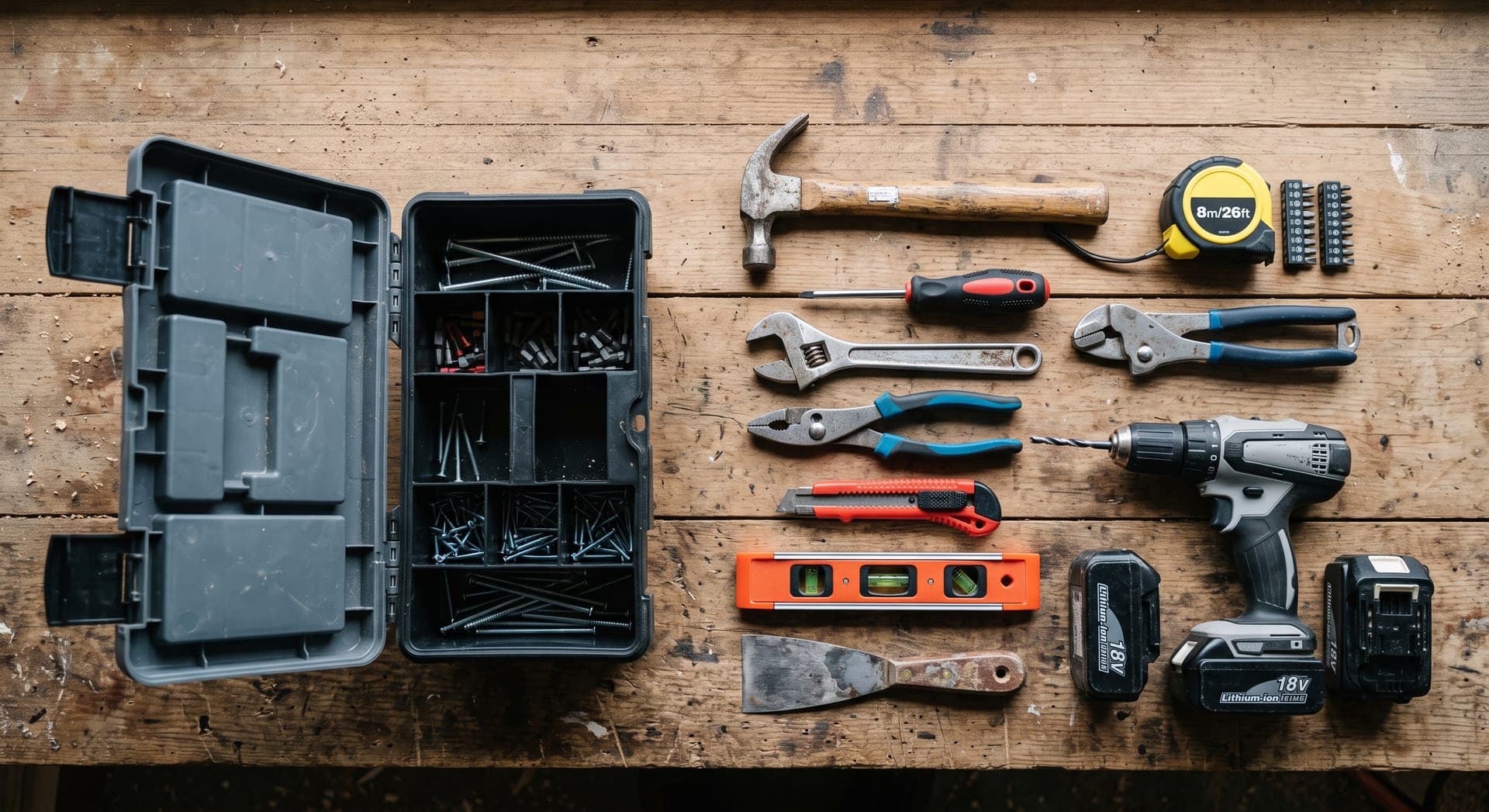
Most small jobs around a home use the same dozen or so tools. Hanging a shelf, tightening a hinge, fixing a drip, assembling furniture, and filling a hole in the wall all draw from one basic kit. Buying those tools first, in decent quality, serves you better than buying a large boxed set where half the pieces are never used.
This guide explains what each beginner tool is actually used for, what to look for when buying it, and which tools you can leave until a specific project needs them.
The basic kit at a glance
| Tool | Used for |
|---|---|
| Tape measure | Measuring furniture, walls, windows, and parts before buying |
| Pencil | Marking drill holes, cut lines, and stud positions |
| Spirit level | Hanging shelves, pictures, and curtain rods straight |
| Stud finder | Locating wall framing before drilling or hanging heavy items |
| Claw hammer | Driving and pulling nails, tapping parts into place |
| Multi-bit screwdriver | Most screws around the house, without drilling |
| Cordless drill/driver | Drilling holes and driving screws quickly |
| Adjustable wrench | Nuts and bolts, faucet parts, showerheads, furniture |
| Slip-joint and needle-nose pliers | Gripping, bending, holding small parts, pulling staples |
| Utility knife | Opening packaging, scoring drywall, trimming caulk and carpet |
| Putty knife | Filling holes, scraping, prying off covers |
| Safety glasses, gloves, dust masks | Protecting eyes, hands, and lungs on every job |
Measuring and marking
Tape measure
A 25-foot tape covers almost everything in a home. Look for one with a blade that stays rigid when extended a few feet, clear markings, and a lock. Measure twice before drilling or buying anything.
Spirit level
A 24-inch level is long enough for shelves and picture rows and short enough to carry. A small torpedo level is handy for tight spaces. Check a new level by setting it on a flat surface, reading the bubble, then turning it end for end. The bubble should sit in the same place both times.
Stud finder
Wall studs are the vertical wooden or metal framing behind drywall. Screwing into them holds far more weight than a wall anchor. An electronic stud finder detects them through the wall. Many also warn of live wires, but that feature can miss cables, so do not rely on it alone. Before drilling, think about where pipes and cables usually run: straight up and down from outlets and switches, and straight across from them.
Fastening and driving
Claw hammer
A 16-ounce hammer is the standard weight for general use. The curved claw pulls nails out. A hammer with a rubber or fiberglass handle absorbs some of the shock.
Multi-bit screwdriver
One handle with interchangeable Phillips, flathead, square, and Torx bits handles most household screws. Use the bit that fills the screw head fully, and press firmly as you turn to avoid stripping it.
Cordless drill/driver
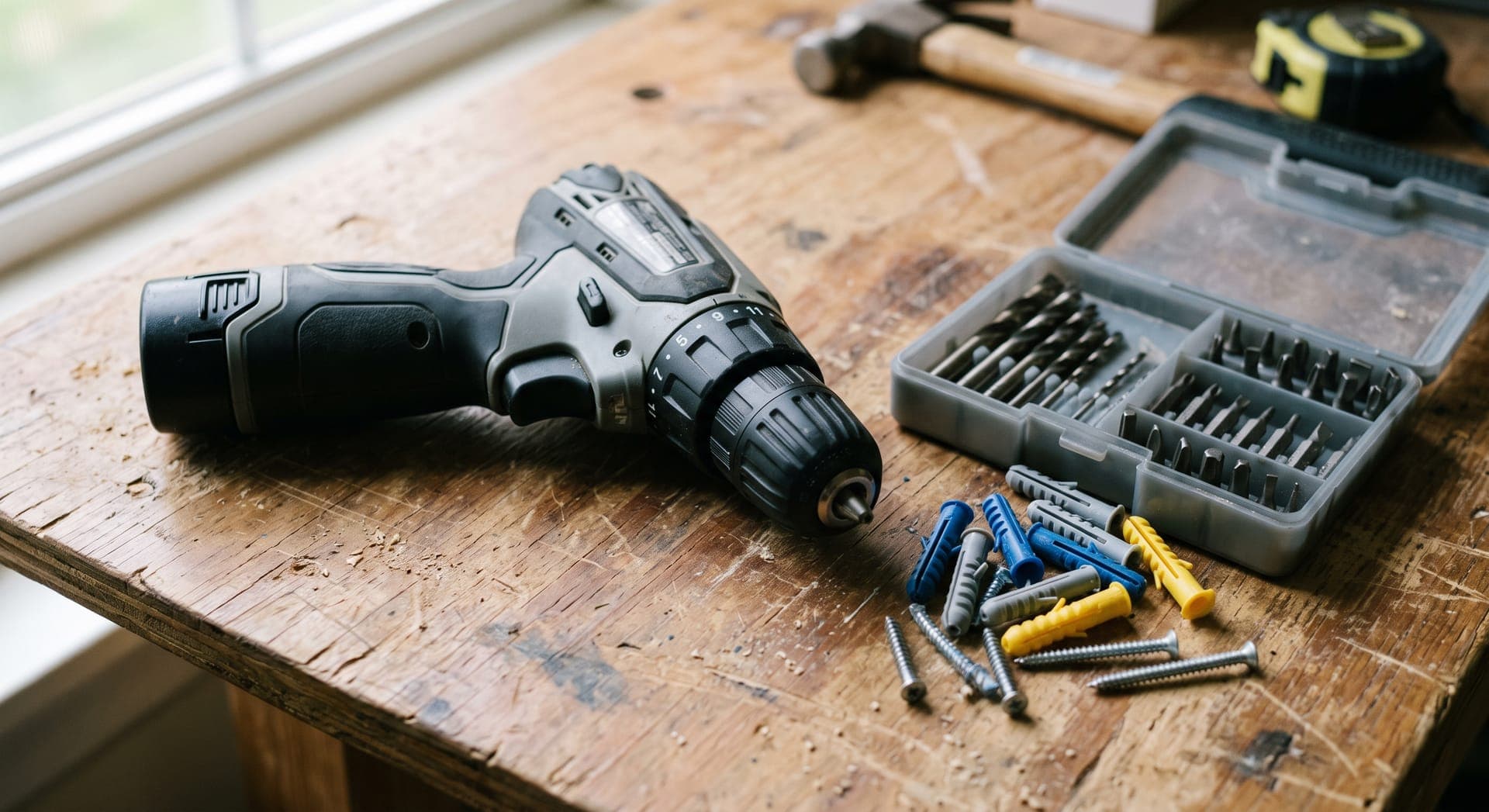
If you buy one power tool, make it this. It drills holes for wall anchors, drives screws into studs, and speeds up furniture assembly. A compact 12-volt or 18/20-volt model with two batteries suits most beginners. Use the clutch, the numbered collar behind the chuck, to set how hard it drives: lower numbers for small screws and soft materials, higher for long screws into wood.
Add a basic set of drill bits for wood and masonry, a set of driver bits, and an assortment of wall anchors and screws. Check the weight rating on anchors and choose ones made for your wall type.
Gripping and turning
Adjustable wrench
An 8- or 10-inch adjustable wrench fits a wide range of nuts and bolts. Adjust it snugly before turning so it does not slip and round off the corners. Wrap chrome fittings in a cloth first.
Pliers
Slip-joint pliers grip and turn things of different sizes, such as sink trap nuts that are too tight by hand. Needle-nose pliers reach into tight spaces and hold small parts. A set of locking pliers is a useful later addition for holding things in place.
Cutting and scraping
Utility knife
A retractable utility knife with spare blades is used constantly: opening boxes, scoring drywall, trimming caulk, cutting carpet and vinyl. Replace the blade as soon as it drags. A dull blade needs more force and is more likely to slip.
Putty knife
A flexible 1.5- to 2-inch putty knife spreads filler into holes and cracks. A stiffer, wider one scrapes loose paint. The guide to fixing holes in walls shows how to use one.
Safety gear
- Safety glasses for drilling, hammering, cutting, and anything overhead. Debris flies further than you expect.
- Work gloves for rough materials, and nitrile gloves for cleaners and paints.
- N95 masks for sanding and dusty demolition.
- Hearing protection if you will use power tools for longer periods.
Handy extras that earn their place
- A headlamp or flashlight, for under sinks and inside cabinets.
- A sturdy stepladder. Standing on chairs is a common cause of falls.
- A sink plunger and a toilet plunger.
- A toolbox or bag, so everything lives in one place.
- A small hacksaw for cutting bolts, plastic pipe, and curtain rods.
Tools you can skip for now
These are useful, but buy or rent them when a project calls for them:
- Circular saw, miter saw, and jigsaw. Many home stores cut lumber to size for you.
- Oscillating multi-tool. Excellent for some jobs, unnecessary for most beginner ones.
- Impact driver. A drill/driver handles most household screws.
- Large socket and wrench sets. An adjustable wrench covers most needs.
- Laser level. A spirit level works for single shelves and pictures.
- Specialist plumbing and electrical tools. Buy them for a specific job, and see when to call a professional before taking on electrical work.
Many hardware stores rent larger tools by the day, and some towns have tool libraries where you can borrow them.
How to buy tools that last
- Buy mid-range tools individually rather than a large cheap kit. Kits often include low-quality screwdrivers and dozens of bits you will not use.
- For cordless tools, choose one brand's battery system. Later tools from the same range can share batteries and chargers.
- Hold hand tools before buying. A comfortable grip matters on longer jobs.
- Keep receipts and register cordless tools if the warranty requires it.
Mistakes beginners make with tools
- Using the wrong screwdriver size, which strips screw heads.
- Drilling without checking for pipes and cables.
- Using a dull utility knife blade.
- Skipping eye protection for "quick" jobs.
- Storing batteries completely flat or in a freezing garage. Check the charging and storage advice in the manual.
Questions about beginner tools
Do I need a power drill?
For hanging anything on a wall or assembling furniture regularly, yes. It saves time and makes holes neater. You can do occasional small jobs with hand tools.
Is a boxed tool kit a good starting point?
It can be, if it is from a reputable brand and contains the tools listed above. Check what is actually inside: some large kits are mostly drill bits and small hex keys.
What should I buy first if my budget is tight?
A tape measure, a multi-bit screwdriver, pliers, an adjustable wrench, a utility knife, and safety glasses. Add the drill when you have a project that needs it.
Build the kit as you go
Start with the basics, then add a tool each time a real project needs it. That way you only own tools you use, and you learn each one on a real job. The guide to weekend DIY projects suggests good first projects to try them on.
This guide is general information. Homes, materials, and local rules differ, so check product instructions and the regulations where you live. Read the full disclaimer.