How to unclog a shower drain
Shower drains block with hair and soap scum just below the grate. Reaching in and pulling it out clears most blockages in minutes.
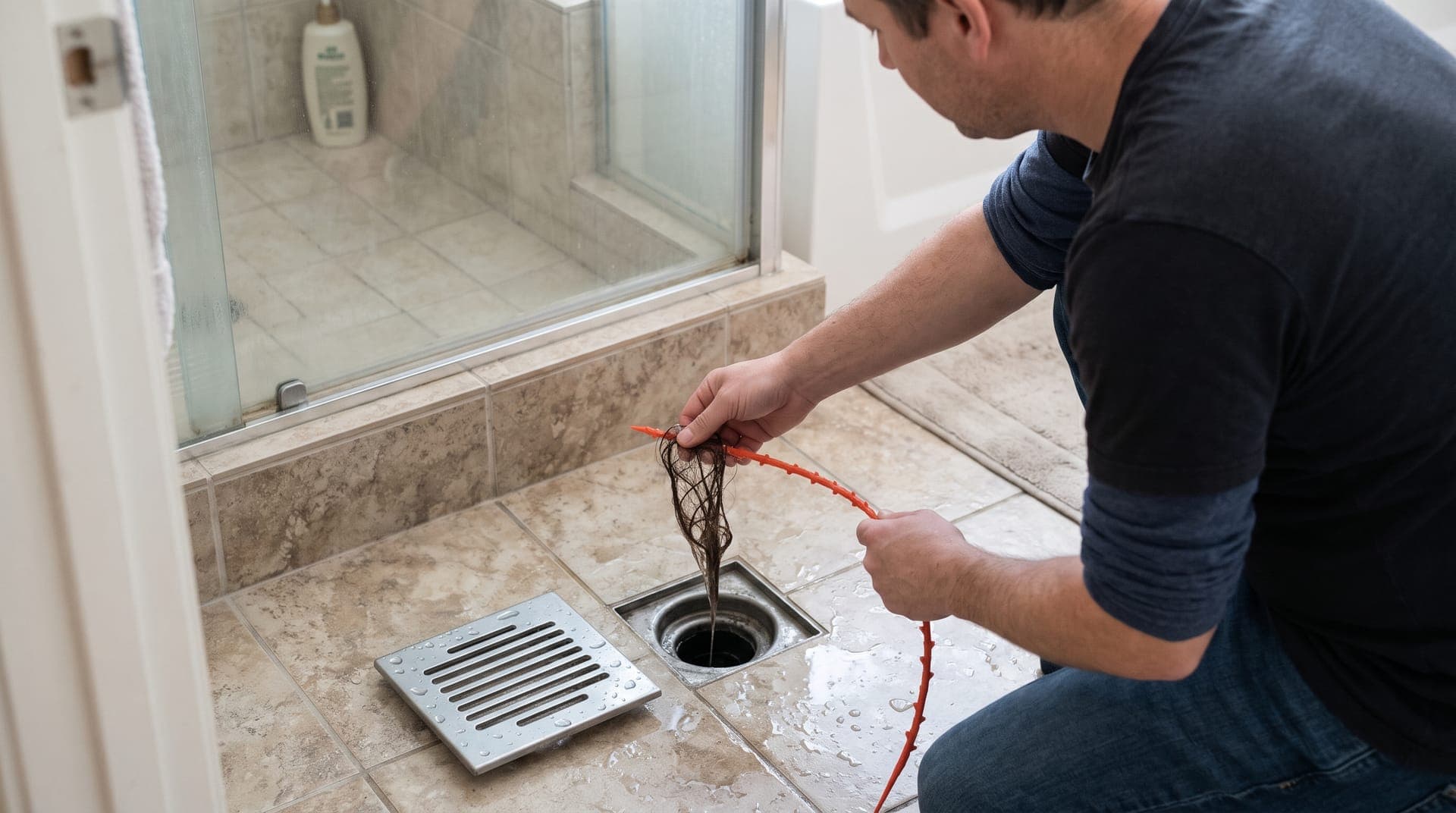
A shower that drains slowly and leaves you standing in water is almost always blocked by the same thing: hair bound together with soap scum. The clog collects just below the grate and in the trap a few inches down, where the pipe bends. Clear that, and the water runs again. Most of the time you can do it in a few minutes with no chemicals and no tools you do not already own.
This guide works from the easiest fix to the hardest, starting at the grate where the blockage usually sits. It also explains why chemical drain cleaners often fail on exactly this kind of clog, and when a slow drain is a sign of a bigger problem in the main line that needs a plumber.
Why shower drains block
Shower clogs are different from kitchen clogs. There is little grease involved. Instead, loose hair washes toward the drain and catches on the underside of the grate and on the walls of the trap. Soap and the minerals in hard water bind it into a soft mat that grows until water can barely pass. Because the mat forms so close to the surface, you can usually reach it by hand, which is why the first step is also the one that works most often.
Remove the hair at the grate
Start at the top. Lift out the grate if it sits loose, or unscrew it with a screwdriver if it is held by a central screw. Set the screw somewhere it cannot roll into the drain.
- Shine a light down the opening. You will usually see the clog within the first few inches.
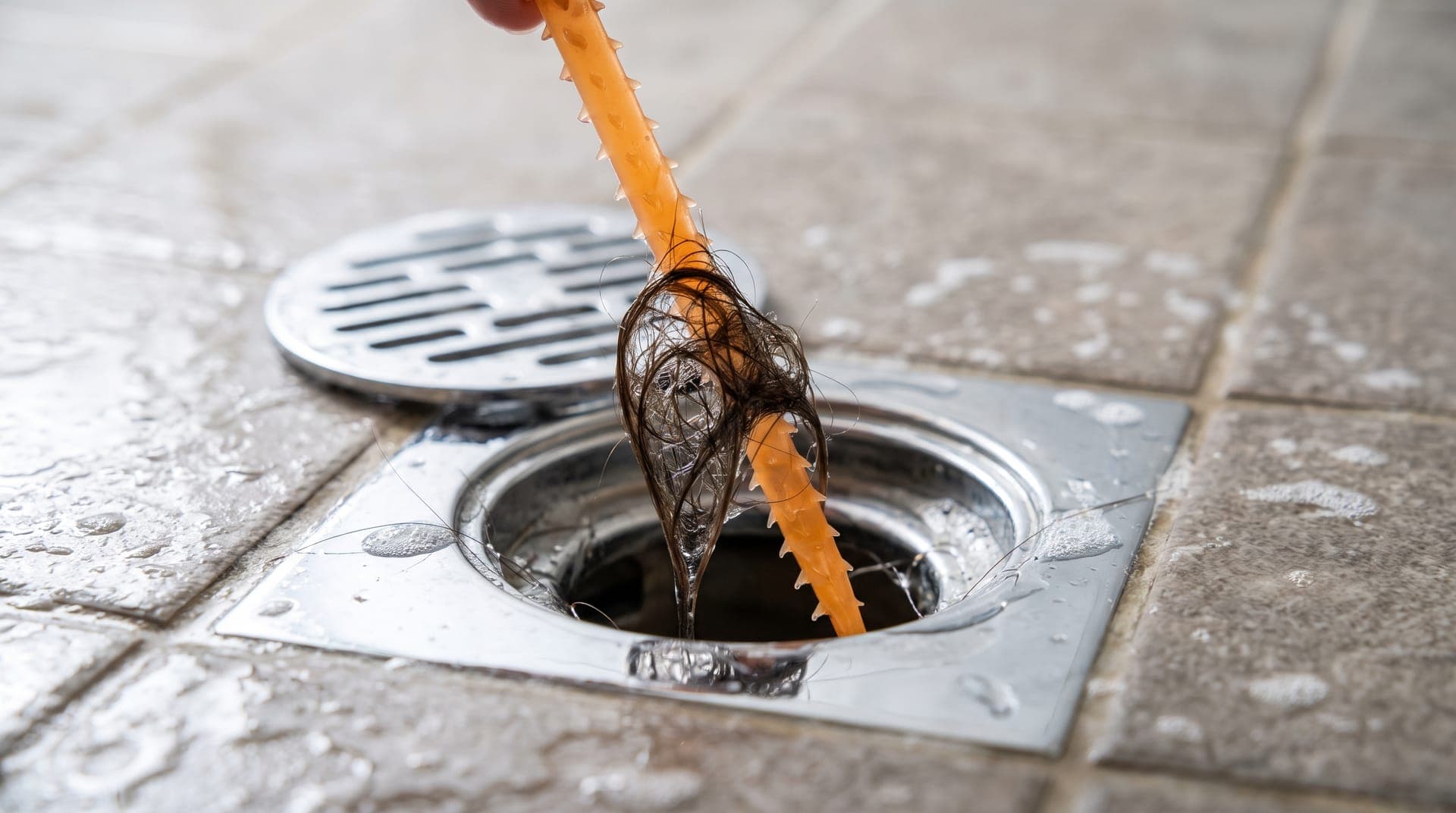
- Reach in with a hooked tool, a bent length of wire, or a barbed plastic drain strip, and pull the hair up and out.
- Wipe away the soap scum clinging to the walls of the opening while you have access.
- Run the water. If it drains freely now, you are done, and most of the time you will be.
A barbed plastic strip is the right tool here. It is cheap, disposable, and flexible enough to follow the bend a rigid hook cannot.
Clear a deeper clog
If pulling the hair out does not fully clear the drain, the blockage sits deeper in the trap. Work through these in order.
- Plunge it. A cup plunger needs a little standing water over the drain to form a seal. Block any overflow opening with a wet cloth, then pump firmly a dozen times. The push and pull breaks up a soft clog.
- Flush with hot water. Run the hot tap and let it pour down the drain for a minute to melt soap scum and move loosened debris along. Use hot tap water, not boiling water, because boiling water can soften or warp PVC pipes and joints.
- Try a baking soda and vinegar soak. Pour in about half a cup of baking soda, then a cup of white vinegar, let it fizz for fifteen minutes, and flush with hot tap water. It is mild and will not harm pipes, though it is better at freshening a sluggish drain than at clearing a solid mat of hair.
- Use a hand drain snake. For a stubborn blockage, feed a small snake down the drain, turn it to catch the hair, and draw it back out. This reaches well past the trap and is the most reliable mechanical fix.
Clean the trap if you can reach it
Some showers, especially those over a basement or with an access panel, have a trap you can reach and unscrew to clean by hand. If yours does, put a bucket underneath to catch the water, unscrew the trap, clear it out, and refit it, checking the seal does not leak when you run the water. The same approach works on a basin, and the guide to unclog a sink covers it in more detail. If the trap is buried in a slab or wall with no access, leave deeper work to the drain snake rather than opening up pipework.
Why to avoid chemical drain cleaners
Chemical drain cleaners are the product people reach for first and the one worth skipping. They work by generating heat and caustic reactions, which can damage older pipes, soften plastic, and degrade the rubber seals in the trap. They are hazardous to handle and store, especially around children. And on a hair clog they often do not even work, because the mat holds its shape while the chemical finds a channel around it. Mechanical removal, pulling the hair out or snaking it, clears the actual blockage.
Prevent it happening again
A few habits keep the drain clear and save you repeating any of the above.
- Fit a hair catcher over the drain. A simple mesh or silicone screen stops almost all the hair before it enters the pipe.
- Empty the catcher regularly, every week or so, straight into the bin rather than back down the drain.
- Run the hot tap down the drain for a minute once a week to move soap scum along before it can build up.
When it is not just the shower
- If several fixtures drain slowly or back up at the same time, or water rises in another drain or the toilet when the shower empties, the blockage is probably in the main line rather than the shower trap, and that needs a plumber.
- Stop using chemical drain cleaners before anyone has to open the pipe. Caustic water left standing in a drain is a hazard to whoever works on it next.
Questions about shower drains
Does baking soda and vinegar really unclog a drain?
It helps with a sluggish drain and with odor, and it is safe for pipes, but it is not a strong clog remover. The fizzing loosens light soap scum, not a packed mat of hair. For that, pull the hair out or use a snake. Treat baking soda and vinegar as maintenance rather than rescue.
There is standing water over the drain. Can I still work on it?
Yes, and a little standing water actually helps a plunger seal. If you want to work dry, bail most of it out with a cup first. Avoid adding a chemical cleaner to standing water, because you then have to reach through a pool of caustic liquid.
Why does my shower drain smell even when it is clear?
A smell usually comes from a film of soap, skin, and bacteria coating the walls of the pipe, or from a trap that has dried out and let sewer gas up. Clean the visible pipe and run water to refill the trap. If the smell persists across several drains, it points back toward the main line.
A two-minute habit that prevents most clogs
A hair catcher emptied once a week and a weekly hot-water flush prevent the great majority of shower clogs, which saves you ever reaching into the drain. When one does form, start at the grate before anything else, because that is where the hair sits. If the leak or drip is coming from the fittings rather than the drain, the guide to fix a leaking faucet covers that, and bathroom mold is worth checking while you have the shower apart.
This guide is general information. Homes, materials, and local rules differ, so check product instructions and the regulations where you live. Read the full disclaimer.