How to prepare your home for winter
A fall checklist for drafts, pipes, heating, gutters, alarms, and outdoor gear, so the first cold snap does not find the weak spots for you.
Cold weather finds a home's weak points: pipes in unheated spaces, gaps around doors, a furnace that has not run since spring, gutters full of leaves. Most of the preparation is simple, and the best time to do it is early fall, before the first hard frost and before heating technicians get busy.
This checklist covers the jobs most homes need. Your climate decides how much of it applies. A mild coastal winter needs less than a long continental one, but the safety checks apply everywhere.
Heating: service it before you need it
- Book a qualified technician to service your furnace, boiler, or heat pump. They check burners, heat exchangers, flues, and safety controls that a homeowner cannot inspect safely. Gas and oil appliances should only be worked on by qualified technicians.
- Replace or clean the furnace filter, and keep spares.
- Turn the heating on for a test run before the first cold night, so you find any fault while repairs are still easy to schedule.
- Bleed radiators that are cold at the top, if you have a hot water system.
- Clear furniture, curtains, and storage away from radiators, vents, and the furnace itself.
- If you use a fireplace or wood stove, have the chimney inspected and swept by a certified chimney professional before the season. Creosote buildup can cause chimney fires.
Space heater safety
- Keep space heaters at least 3 feet from anything that can burn: curtains, bedding, furniture, and paper.
- Plug them directly into a wall outlet, not an extension cord or power strip.
- Choose models with automatic shutoff if tipped over, and turn them off when you leave the room or go to sleep.
- Never use a gas oven, grill, or camp stove to heat a home.
Test smoke and carbon monoxide alarms
Heating systems, fireplaces, and generators all run more in winter, which raises the risk of fire and carbon monoxide poisoning. Test every smoke and CO alarm, replace batteries where needed, and make sure there is a CO alarm outside each sleeping area and on every level, or wherever local rules require. Replace alarms past the age the manufacturer specifies.
Never run a generator indoors, in a garage, or near windows and doors, even with the garage door open. Carbon monoxide from generators builds up quickly.
Protect your pipes from freezing
Water expands as it freezes, and a frozen pipe can split and flood a home when it thaws.
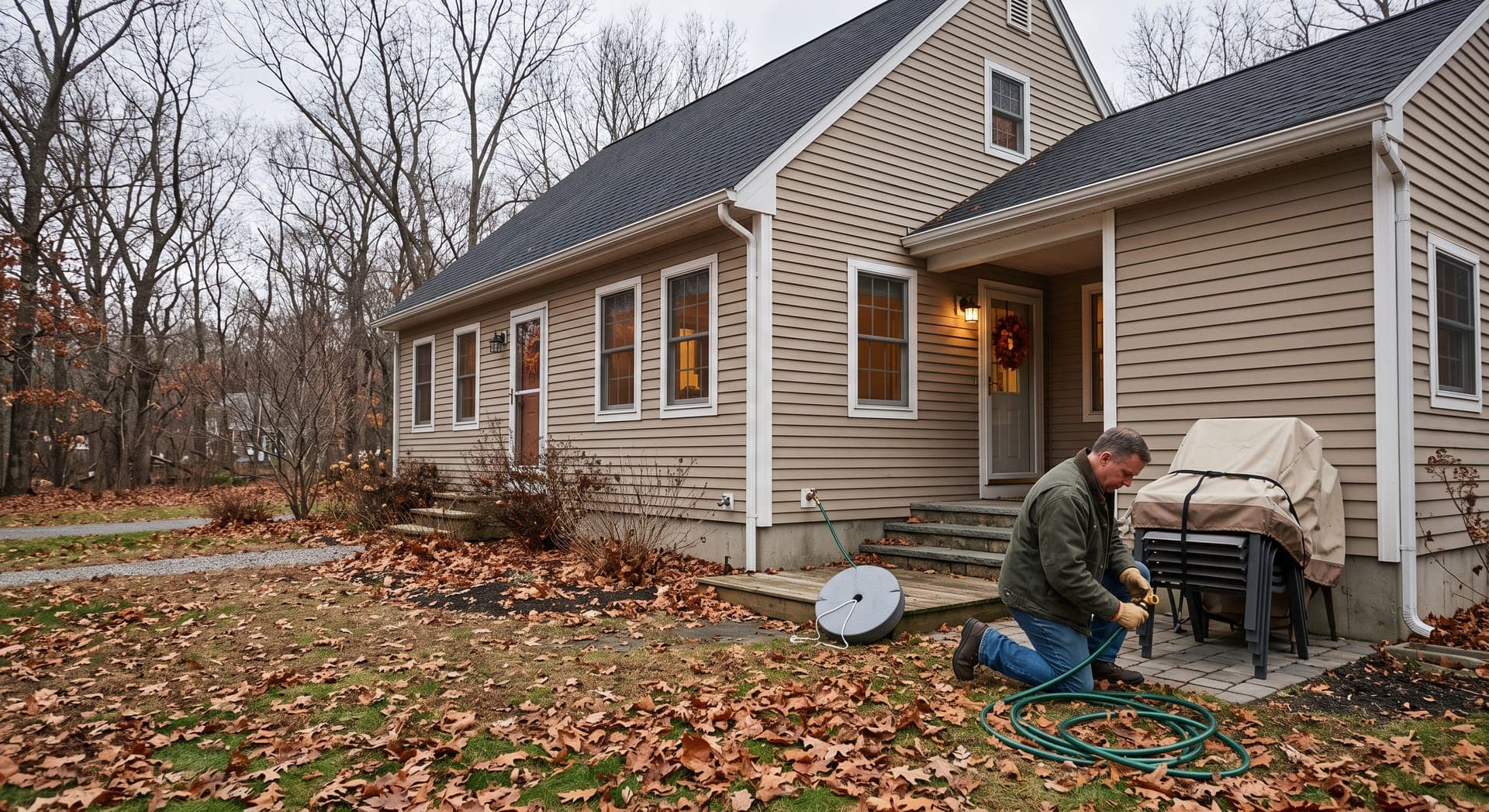
- Disconnect, drain, and store garden hoses. A hose left attached traps water in the faucet.
- If your outdoor faucets have a separate shutoff valve inside the house, close it, then open the outdoor faucet to drain the line and leave it open. Frost-free faucets do not need this, but the hose still needs disconnecting.
- Fit insulating covers over outdoor faucets.
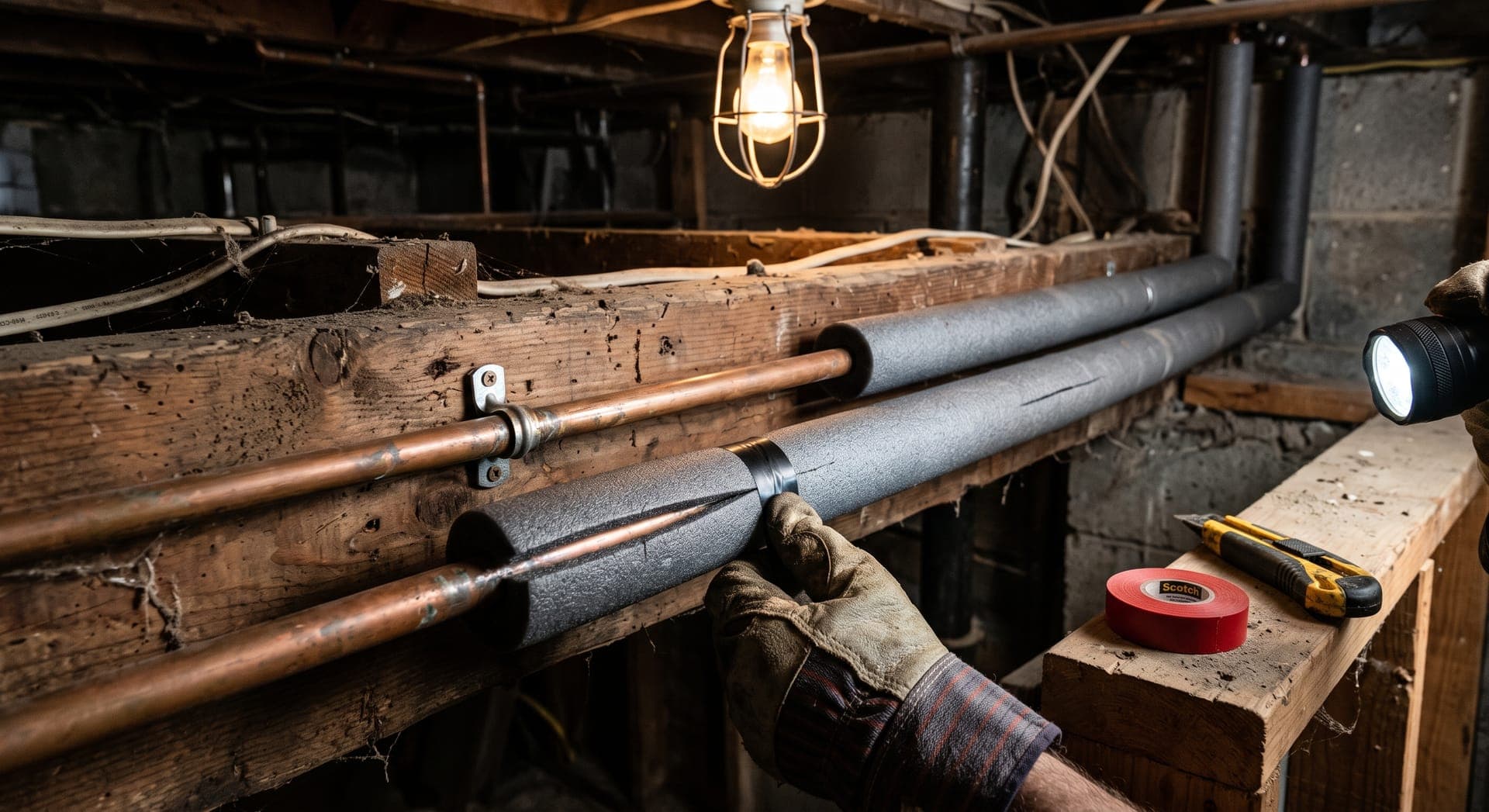
- Insulate pipes in unheated spaces such as crawl spaces, garages, attics, and exterior walls with foam pipe sleeves.
- Seal gaps where cold air reaches pipes, such as around pipes entering through outside walls.
- Make sure everyone knows where the main water shutoff is, and check it turns.
- If you have an in-ground sprinkler system, have it drained or blown out as the installer recommends.
During very cold spells, open cabinet doors under sinks on outside walls to let warm air reach the pipes, and let a faucet on a vulnerable line drip slightly. If you go away, keep the heating on. A common recommendation is no lower than 55°F (about 13°C).
If a pipe freezes
If you turn on a faucet and only a trickle comes out, a pipe may be frozen. Keep the faucet open. Warm the pipe gently with a hair dryer, a heating pad, or towels soaked in warm water, starting nearest the faucet. Never use an open flame or a torch. If you cannot find or reach the frozen section, or if a pipe has burst, shut off the main water supply and call a plumber.
Seal drafts and protect windows
- Check weatherstripping around exterior doors and windows, and replace any that is cracked, flattened, or missing.
- Fit a door sweep or a brush strip to exterior doors with a visible gap at the bottom.
- Caulk gaps between window frames and walls, inside and out.
- Put up storm windows if you have them, or use clear window insulation film kits on single-glazed windows.
- Keep trickle vents and bathroom and kitchen fans working. Sealing a home tightly increases condensation; see how to stop condensation on windows.
The guide to making your home more energy efficient covers draft-proofing in more detail.
Clear gutters and check the roof
- Clean gutters and downspouts after most of the leaves have fallen. Blocked gutters overflow, and in freezing weather they can contribute to ice dams along the roof edge.
- Make sure downspouts carry water several feet away from the foundation, with extensions or splash blocks if needed.
- Look over the roof from the ground, with binoculars if necessary, for missing, cracked, or lifted shingles and damaged flashing around chimneys. Have a roofer make repairs.
- Have large overhanging branches trimmed. Snow and ice can bring them down onto the roof or power lines. Leave tree work near power lines to professionals.
Ladder work is one of the riskier household jobs. If you clean gutters yourself, use a sturdy ladder on firm, level ground, keep three points of contact, and have someone with you. If you are not comfortable at height, hire a gutter cleaning service.
Put away the outdoor gear
- Clean outdoor furniture and store it in a shed or garage, or cover it with fitted covers.
- Store propane tanks outdoors, upright, and away from the house. Never bring them indoors or into a garage.
- Follow the manual for winter storage of lawn mowers and other gas-powered equipment, which may include draining fuel or adding a stabilizer.
- Clean and store garden tools, and bring in pots that can crack in frost.
- Check decks and steps for loose boards and railings before they are covered in snow and ice.
Get winter supplies ready
- A snow shovel and ice melt or sand. Pet-safe ice melt is available if you have animals.
- Flashlights or headlamps and spare batteries, in a place you can find in the dark.
- A few days' supply of drinking water, food that needs no cooking, and any medicines you rely on, in case of a power cut or storm.
- Extra blankets.
- A charged power bank for phones.
Small comfort jobs
- Switch ceiling fans to their winter direction, a slow clockwise turn on most fans, to move warm air down from the ceiling.
- Set a heating schedule on your thermostat.
- Hang heavier curtains and close them at dusk.
- Put a mat and a boot tray inside each door to keep snow and salt off the floors.
Fall checklist at a glance
| Job | Who usually does it |
|---|---|
| Heating service | Qualified heating technician |
| Chimney inspection and sweep | Certified chimney professional |
| Filter change, test run, bleeding radiators | You |
| Test smoke and CO alarms | You |
| Hoses, outdoor faucets, pipe insulation | You |
| Sprinkler system blowout | Irrigation professional, usually |
| Weatherstripping and caulk | You |
| Gutter cleaning | You, if comfortable on a ladder, or a gutter service |
| Roof repairs and large tree work | Roofer, arborist |
| Outdoor furniture, tools, supplies | You |
Mistakes to avoid
- Leaving hoses attached to outdoor faucets.
- Waiting for the first cold night to test the heating.
- Turning the heating off when going away in winter.
- Using extension cords for space heaters.
- Thawing pipes with an open flame.
- Bringing a grill or generator indoors or into a garage.
Questions about winter preparation
When should I start?
Early fall, a few weeks before your area's usual first frost. Book the heating service first, since technicians get busy once the weather turns.
How do I know if my outdoor faucet is frost-free?
Frost-free faucets have a long body that passes through the wall, with the valve inside the heated space. Often the handle is on a longer stem. If you are not sure, look inside for a shutoff valve on the pipe leading to it, and close it to be safe.
What should I do if I lose power in a winter storm?
Keep doors closed and gather in one room, use flashlights rather than candles where possible, and never use a generator, grill, or camp stove indoors. If pipes are at risk and the outage is long, your plumber or utility can advise on draining the system.
Book the service, then work through the list
Call the heating technician first, then spend a weekend on the pipes, drafts, gutters, and outdoor gear. Test the alarms on the same day. Through the winter, the monthly maintenance checklist keeps an eye on things.
This guide is general information. Homes, materials, and local rules differ, so check product instructions and the regulations where you live. Read the full disclaimer.