How to remove limescale and hard water stains
Limescale is a mineral deposit that a mild acid dissolves. White vinegar or citric acid handles most of it, with a few surfaces that need care.
Limescale is the chalky white or gray crust that builds up on taps, kettles, showerheads, and glass in hard-water areas. It is mostly calcium carbonate, the same mineral as chalk, left behind when hard water dries or is heated. A mild acid dissolves it, so the fix is cheaper and simpler than most people expect.
What trips people up is the method. Limescale does not wipe off like soap scum. It has to sit in contact with an acid long enough to dissolve, which means soaking rather than scrubbing. This guide covers what works on each fixture, the surfaces you must keep acid away from, and how to slow the scale coming back.
What limescale is and why it forms
Hard water carries dissolved calcium and magnesium. When that water evaporates or is heated, the minerals come out of solution and settle as a solid deposit. The harder your water and the hotter it gets, the faster the scale forms.
That is why anything that heats water scales the quickest: kettles, immersion heaters, the inside of a dishwasher, and the heating element in a washing machine. Cold taps and shower screens scale more slowly, from water drying on the surface after every use. In soft-water areas limescale is barely a problem. In hard-water areas it returns no matter how often you clean, which is normal and not a sign you are doing anything wrong.
The basic method: a mild acid and time
White vinegar or a citric acid solution dissolves limescale. Citric acid comes as a powder you mix with warm water, usually one to two tablespoons per cup, and it smells far less than vinegar. Both work on the same principle, so use whichever you have.
The part that matters is contact time. A quick wipe does almost nothing. Instead:
- Soak the item in the solution, or hold the solution against it, for at least 30 minutes. Thick scale needs longer.
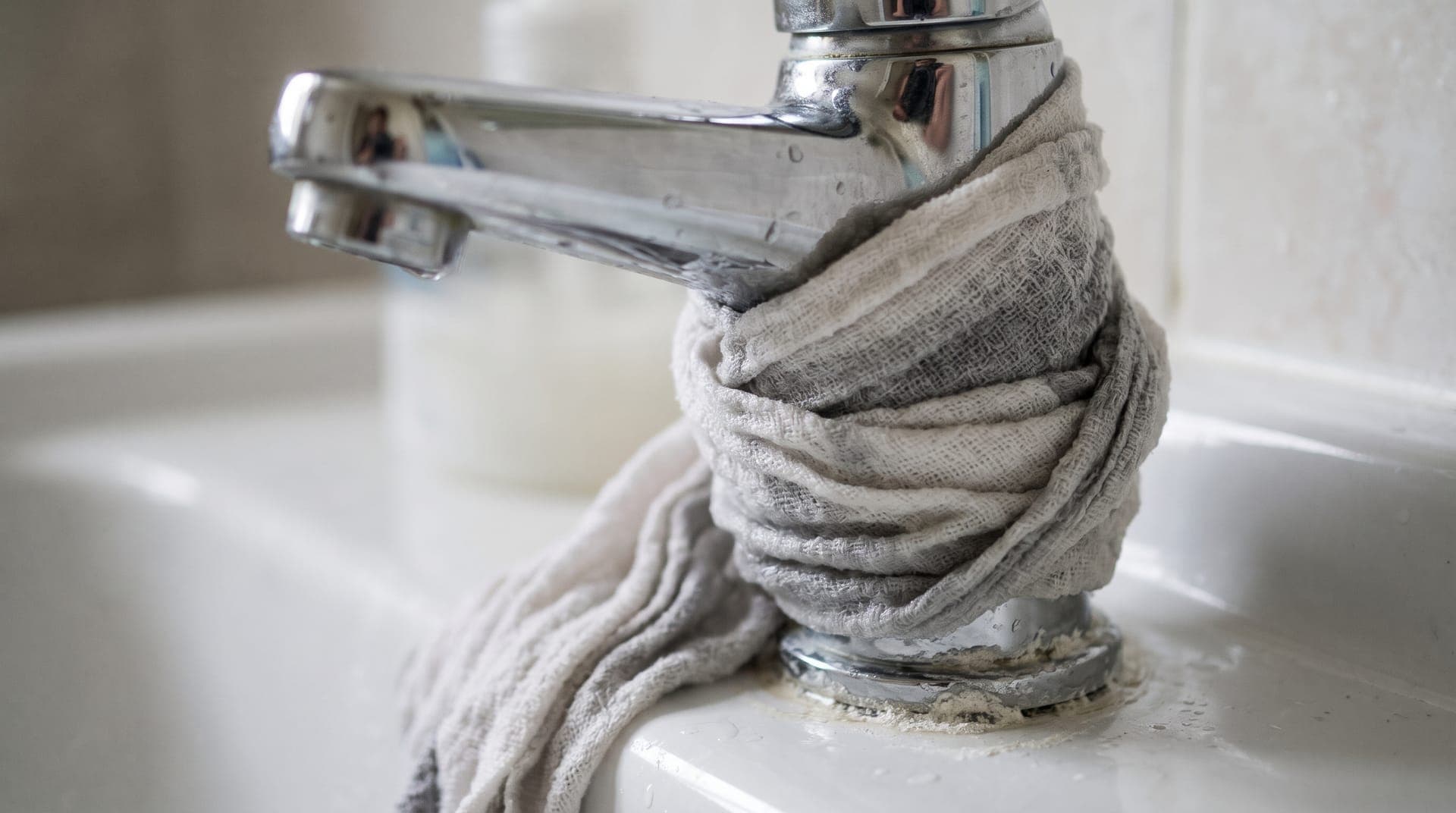
- For a vertical surface like a tap, wrap it in a cloth or paper towel soaked in vinegar so the acid stays put.
- After soaking, the scale softens. Scrub gently with an old toothbrush or a plastic scourer, then rinse well.
- Repeat on stubborn patches rather than reaching for anything abrasive that could scratch the finish.
Descale by fixture
The same acid works everywhere, but how you hold it against the scale changes with the shape of the fixture.
| Fixture | How to treat it |
|---|---|
| Kettle | Fill with equal parts water and vinegar, or water and a spoon of citric acid, bring to a boil, then leave to stand for an hour. Pour away, then boil and rinse with fresh water two or three times before using it again. |
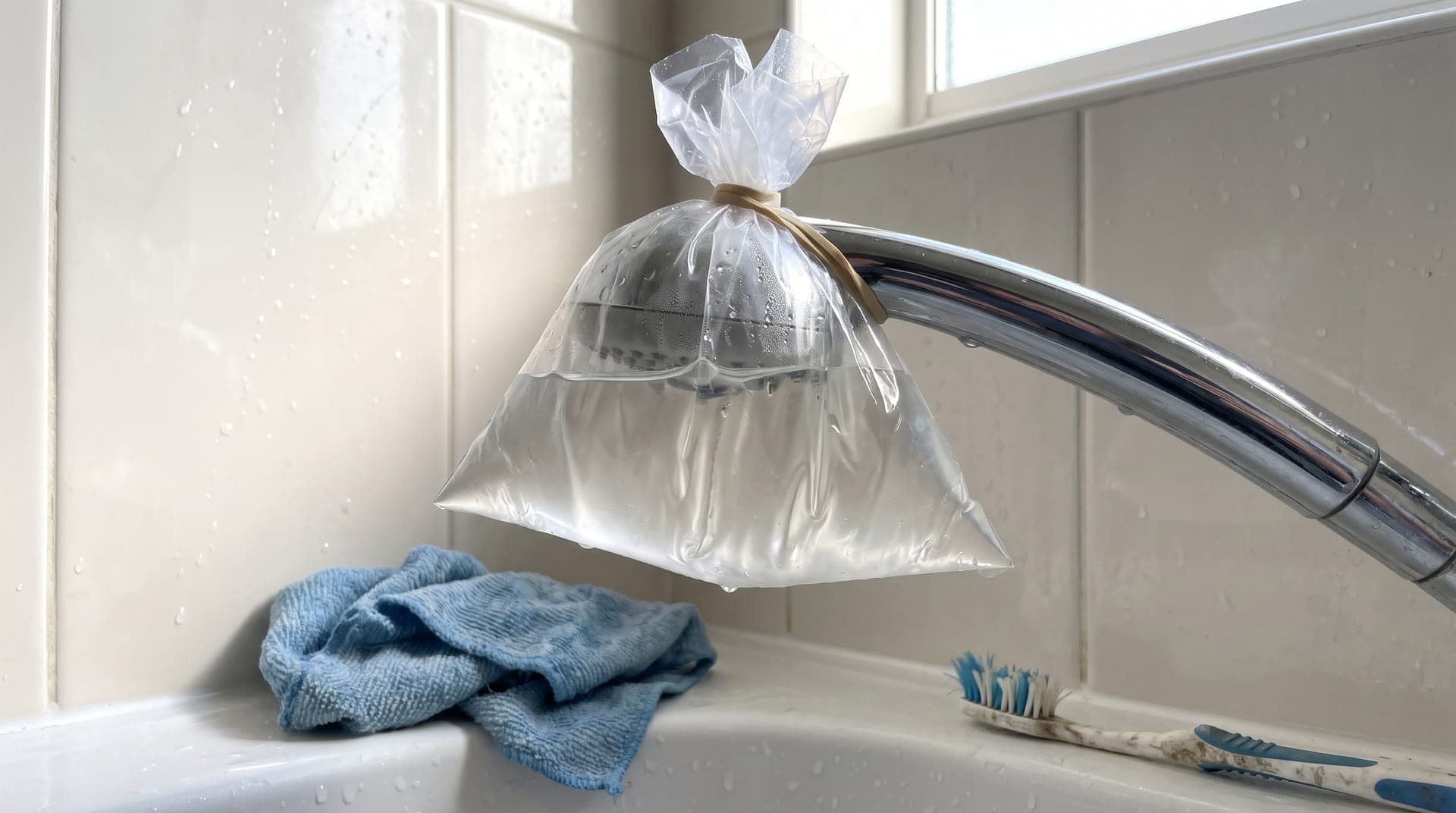
| Showerhead | Unscrew it if you can and soak it in vinegar for an hour, or tie a bag of vinegar around it so the holes sit submerged. Poke any blocked holes clear, then run hot water through it. |
| Taps and spouts | Wrap a vinegar-soaked cloth around the scaled area and leave it 30 to 60 minutes. For the aerator at the tip, unscrew it and soak the parts separately. |
| Toilet bowl | Pour in white vinegar, leave it for a few hours or overnight, then scrub with the brush. Do not mix it with any bleach-based cleaner already in the bowl. |
| Glass shower screen | Spray with vinegar, leave 15 to 30 minutes, then wipe and rinse. A plastic scraper lifts heavy deposits once they have softened. |
Surfaces that need care
Acid dissolves calcium carbonate, and some surfaces are made of it or coated with something acid attacks. Keep vinegar and citric acid away from these:
- Natural stone such as marble, limestone, travertine, and some granite. Acid etches it permanently, leaving dull marks.
- Worn or chipped enamel on old baths and sinks, where the protective glaze no longer covers the metal underneath.
- Plated or coated finishes, including some brushed, colored, or gold-tone taps, which can discolor.
On chrome, acid is fine but rinse promptly and dry it, because vinegar left to dry can leave its own film. When you are not sure what a surface is, test on a hidden corner first and check it after a few minutes before treating the whole thing.
Slow it coming back
Scale forms where water sits and dries, so the habit that helps most is removing the water. Wipe taps and tiles dry after use, and keep a squeegee in the shower to clear the screen in a few seconds each time. Doing that turns a monthly descaling job into an occasional one.
In a hard-water area you can also treat the water itself. A plumbed-in water softener removes the minerals before they reach your taps, which stops scale across the whole house, though it is a bigger outlay and needs salt topped up. Smaller options such as in-line filters and kettle filters help in one spot. None of this is essential, but it cuts how often you reach for the vinegar, and it goes well with other ways to clean more efficiently.
A safety rule that matters
- Never mix vinegar or any acid with bleach or a bleach-based cleaner. The combination releases chlorine gas, which is toxic even in small amounts.
- Open a window or run the extractor while you work, so acid fumes do not build up in a small bathroom.
- Keep acids off natural stone and damaged enamel, where they cause permanent etching rather than cleaning.
Questions about limescale
Should I use vinegar or citric acid?
Either works, because both are mild acids that dissolve the same mineral. Citric acid smells much less and is easy to make up at the strength you want, which makes it pleasant for kettles and anything indoors. Vinegar is cheaper and usually already in the cupboard. Use what you have.
Is limescale harmful?
The deposit itself is not a health risk. It is the same mineral as chalk, and the calcium in hard water is harmless to drink. The problems are practical: scale clogs showerheads and aerators, coats heating elements so appliances work harder, and leaves marks on glass and chrome. A thick layer can also trap grime and hold on to bad smells.
Why does my kettle scale up so fast?
Because it heats water, and heat drives the minerals out of solution much faster than evaporation does. Every boil leaves a little more behind on the element and the base. Descaling every few weeks in a hard-water area is normal. Pouring out the last of the water rather than letting it sit and dry slows it a little.
The habit that does most of the work
Descaling clears what has built up, but drying surfaces after use is what keeps it from coming back. A quick wipe of the taps and a squeegee across the shower screen stop the water that causes scale from ever drying in place. Do that, descale the kettle and showerhead on a rough schedule, and limescale stays a minor chore instead of a losing battle.
This guide is general information. Homes, materials, and local rules differ, so check product instructions and the regulations where you live. Read the full disclaimer.