How to clean a washing machine
A machine that smells is usually holding damp residue in the seal, drawer, and filter. Cleaning those and changing a few habits clears it.
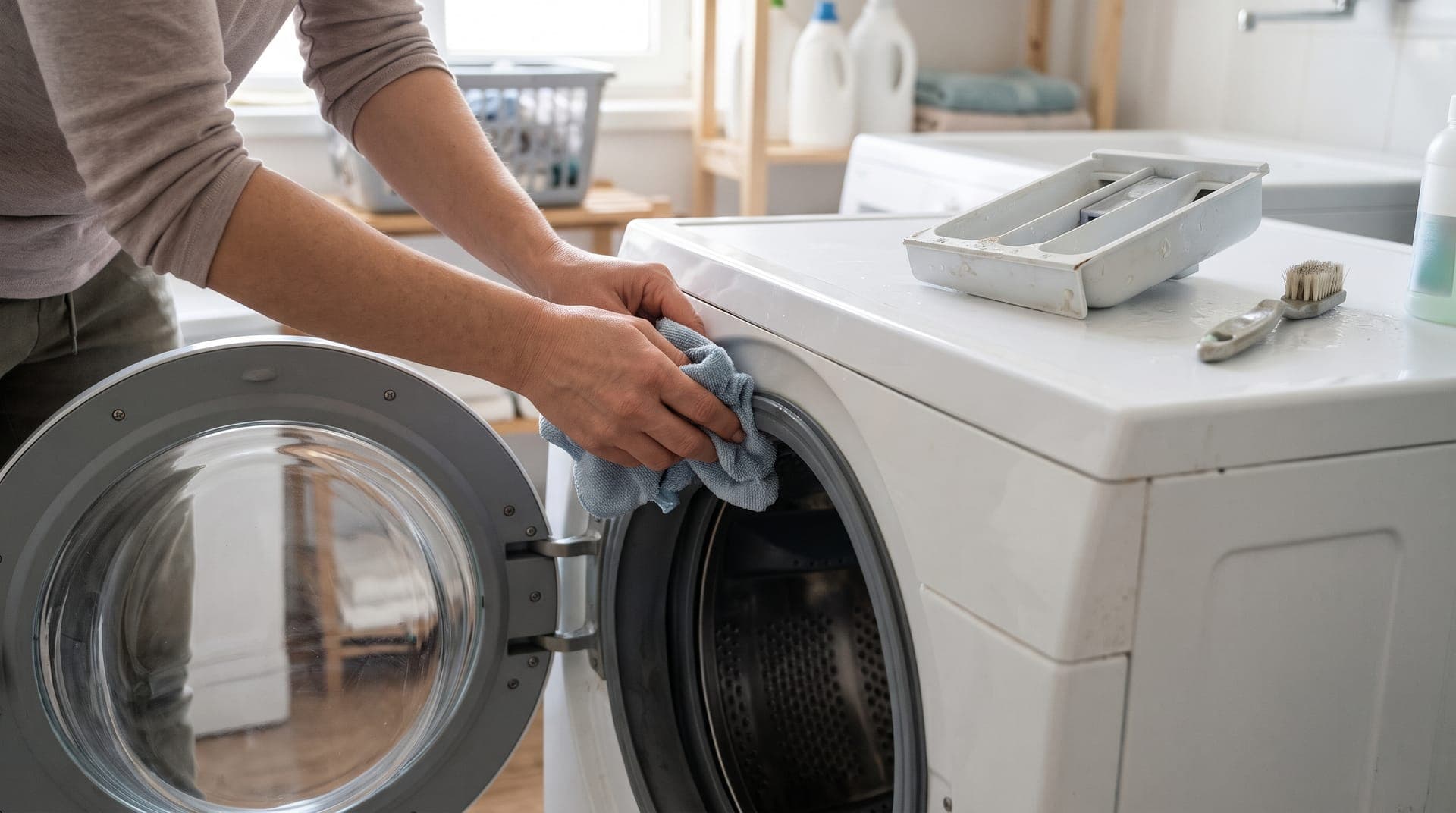
A washing machine that smells, or leaves clean laundry smelling, almost always has a buildup of grime in the places water sits between washes: the door seal, the detergent drawer, and the filter. Cleaning those three spots and running a hot maintenance wash clears most of it, and a few habits keep it from coming back.
This guide works through each part in turn, front-loaders especially, since they trap more water than top-loaders. None of it needs special tools, but one step, opening the filter, releases trapped water, so it is worth reading the safety note before you start.
Why a washing machine starts to smell
The smell is biofilm: a soft layer of bacteria and mold that grows on detergent residue. A few conditions let it take hold.
- Low-temperature washes. Cool cycles save energy but do not kill the bacteria or fully dissolve detergent, so residue builds up over months.
- Too much detergent or fabric softener. The excess does not rinse away. It coats the drum, the drawer, and the hoses, and feeds the biofilm.
- A door kept shut. A sealed machine stays damp inside, which is exactly what mold needs to grow.
Clean the three places that collect this residue and the smell has nothing left to grow on.
Clean the door seal
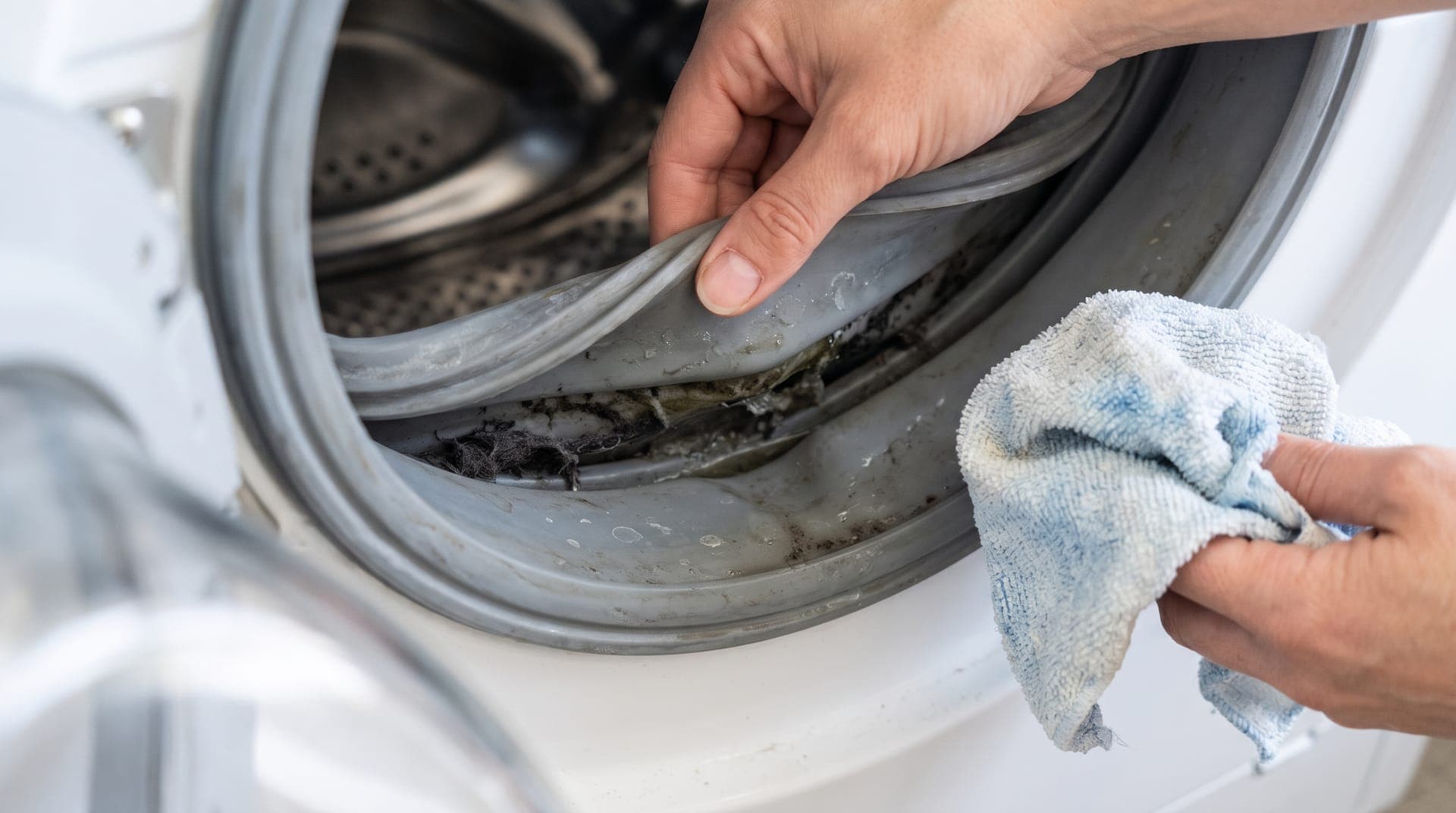
On a front-loader the rubber door seal, or gasket, is the first place to check and usually the worst. Its folds hold a pool of water, lint, hair, and detergent after every wash.
- Fold the rubber lip back gently all the way around so you can see into the fold.
- Wipe out the trapped water, lint, hair, and gray residue with a cloth. A coin or a hairgrip often turns up in there too.
- Wipe the fold with a cloth dampened in warm soapy water, or a diluted cleaner, and dry it afterward.
- Check the small drain holes along the bottom of the seal and clear any that are blocked.
Clean the detergent drawer
The drawer and the recess it slides into collect a slick of old detergent and softener, which goes moldy. Most drawers pull right out.
- Pull the drawer out fully. There is usually a tab or a release catch to press at the back of the compartment.
- Wash off the residue and mold in warm water with an old toothbrush. Pay attention to the softener compartment, which clogs most.
- Lift out the small siphon cap in the softener section if it comes free, and clean under it, since softener sets hard around it.
- Reach into the empty recess with the brush and clean the roof of it, where gray sludge gathers out of sight.
- Dry everything and slide the drawer back.
Clean the filter and drain pump
Most front-loaders have a filter that catches the debris before it reaches the drain pump. It sits behind a small flap near the floor on the front of the machine. A blocked filter causes slow draining and a stale smell, and clearing it is simple, but water will come out when you open it.
- Unplug the machine first and read the safety note below.
- Lay towels down and set a shallow tray or baking dish against the machine to catch the water.
- Open the flap and unscrew the filter cap slowly, letting the water drain into the tray before the cap comes fully out. Several liters can come through in stages.
- Pull the filter out, clear the lint, coins, and hair, and rinse it under the tap.
- Wipe inside the housing, check the impeller behind it turns freely, then screw the filter firmly back in and close the flap.
Run a maintenance wash
With the parts clean, run the machine empty on its hottest cycle to clear the drum and hoses. Use a dedicated washing machine cleaner, following its instructions, or a sensible household alternative.
- For the household route, put about a cup of baking soda in the drum and half a cup of white vinegar in the detergent drawer.
- Do not mix the two in the same compartment. They neutralize each other on contact and you lose the effect of both.
- Run the longest, hottest cycle. The heat is what clears the biofilm, so a cool wash will not do the same job.
- When it finishes, wipe the drum and leave the door open to dry.
Keep it from coming back
A clean machine stays clean with a few small habits, so you rarely have to do the full job again.
- Leave the door and the detergent drawer ajar between washes so the inside dries out instead of staying damp.
- Measure detergent to the dose on the pack. More does not clean better; it just leaves residue.
- Run an occasional hot wash, at 60 degrees Celsius or more, every week or two, even if most of your loads are cool.
- Wipe the door seal dry now and then, and clear the filter every few months.
Before you open the filter
- Switch the machine off at the wall and unplug it before you touch the filter or the pump.
- Lay towels down, because water will come out of the filter housing, often more than you expect.
- Never force a jammed drum or pump. Forcing it can damage the seals or the impeller.
- If the machine is still under warranty, check the manual first, since some makers want the filter cleaned a particular way.
Questions about cleaning a washing machine
How often should I clean it?
Wipe the door seal and run a hot maintenance wash about once a month. Clean the detergent drawer every month or two, and check the filter every three to four months. If you mostly wash cool or use a lot of softener, lean toward the shorter end. Fitting it into a monthly maintenance checklist keeps it from being forgotten.
Is vinegar safe for the machine?
White vinegar is fine for an occasional maintenance wash and will not harm the drum. The caution is the rubber seals and hoses: frequent strong vinegar can, over time, degrade rubber on some machines, so use it now and then rather than every wash, and keep to a dedicated cleaner if your manual recommends one.
Why do my towels still smell after a wash?
Usually the machine itself is the source, so start with the seal, drawer, and filter above. Beyond that, towels hold smell when they are left damp in the drum after the cycle, washed too cool to kill bacteria, or overloaded so they do not rinse. Dry them promptly and give towels an occasional hot wash. Our guide to track down bad smells covers sources elsewhere in the home.
A short routine that works
Wipe the door seal, clean the drawer, clear the filter, and run one hot empty wash. That sequence clears almost every washing machine smell, and the habits that follow, an open door and the right dose of detergent, keep it gone. If you are working through the house, our guide to clean your home more efficiently puts jobs like this in a sensible order.
This guide is general information. Homes, materials, and local rules differ, so check product instructions and the regulations where you live. Read the full disclaimer.