How to remove common carpet stains
Most fresh stains come out if you blot rather than rub and match the cleaner to the spill. A few need a specific approach to avoid setting them.
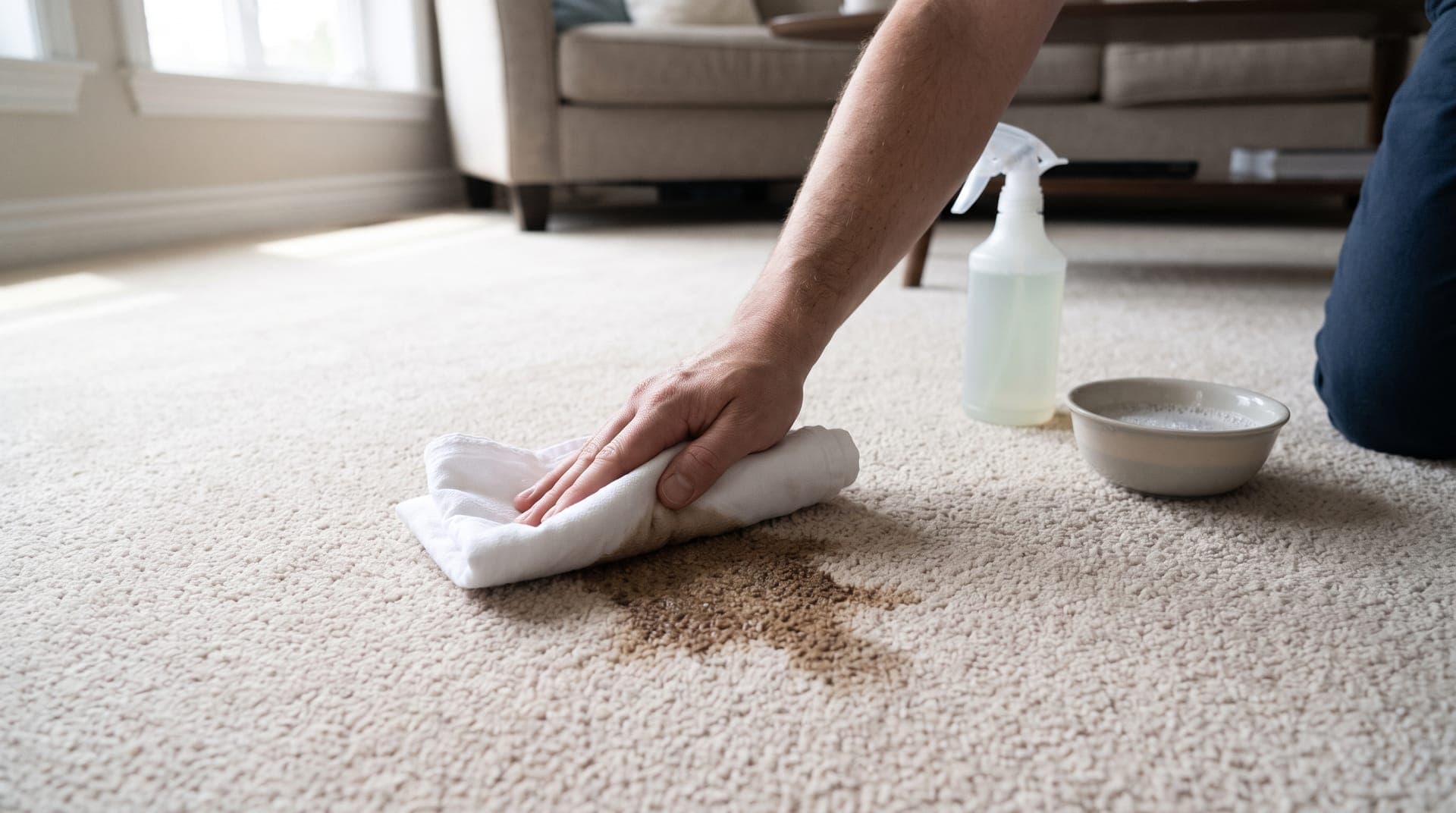
Most carpet stains come out if you reach them in the first few minutes, before the liquid dries and the color sets into the fibers. The method is almost always the same: lift what you can, blot gently, and rinse. What changes from one stain to the next is the cleaner you reach for and the few things you must never do.
This guide covers the first response that works on most spills, a safe general cleaning method, and specific advice for the stains that behave differently, such as blood, grease, and pet urine. It also covers when a stain is set for good and calling a professional is the sensible next step.
Act fast and blot, don't rub
Speed matters more than technique. A fresh spill sits on top of the pile; a dry one has soaked into the fibers and often the backing.
- Lift solids first. Scoop food or mud off the surface with a spoon or a blunt knife, working toward the center so you do not smear it wider.
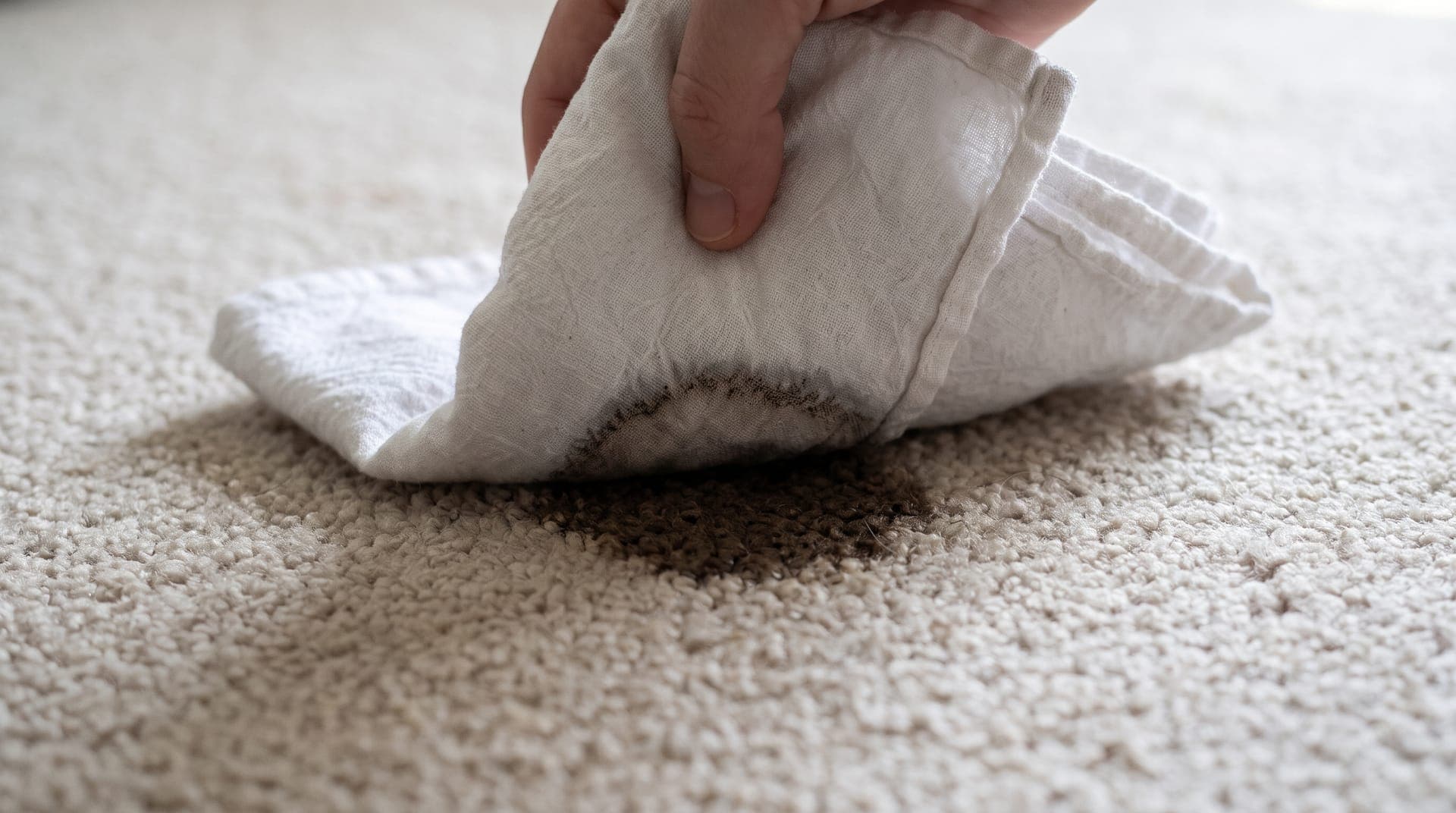
- Blot liquids from the edge inward. Press a clean white cloth onto the spill and let it soak up the liquid, then move to a dry part of the cloth and press again.
- Keep the pressure straight down. Rubbing drives the stain deeper into the pile, spreads it outward, and frays the fibers so the cleaned patch looks worn afterward.
- Work from the outside of the spill toward the middle. Blotting from the center out pushes the stain into clean carpet.
A safe method for most stains
For everyday spills like food, drink, and mud, a mild soap solution lifts most of the color without risking the carpet. Work through these steps in order and stop as soon as the stain is gone.
- Test a hidden spot first, in a closet or under furniture, to check that your cleaner does not lift the carpet's own dye.
- Mix a little mild dish soap into warm, not hot, water. A quarter teaspoon to a cup of water is plenty.
- Apply the solution to the cloth, not straight onto the carpet. Over-wetting the carpet soaks the backing and takes days to dry.
- Blot the stain with the damp cloth, moving to a clean section each time color transfers.
- Rinse by blotting with a second cloth dampened with plain water. Leftover soap attracts dirt and the spot grays over.
- Blot dry with a towel until little moisture comes up.
- Lay a dry folded cloth over the area and weigh it down with a heavy book. It pulls the last moisture out of the pile as it sits.
Treat specific stains
Some stains need a different cleaner, and a few are made permanent by the wrong one. Match the stain to the right approach before you start.
| Stain | What to use | What to avoid |
|---|---|---|
| Coffee and tea | Mild dish soap solution, then a plain water rinse. A little white vinegar in water helps with the brown tint. | Letting it dry, which leaves a yellow-brown ring that is hard to shift. |
| Red wine | Blot hard first, then the soap solution. An oxygen-based cleaner helps with what is left. | Salt and hot water, which can set the pigment rather than lift it. |
| Grease and oil | Blot up the oil, then a small amount of dish soap, which is made to cut grease. Rinse well. | Water alone, which beads off oil and spreads it. |
| Pet urine | Blot dry, then an enzyme cleaner made for pet messes. Let it dwell as the label says. | Ammonia, whose smell can draw the animal back to the same spot. |
| Blood | Cold water and blotting. Cold keeps the protein from setting into the fibers. | Hot water, which cooks the protein and locks the stain in. |
| Ink | Dab with a cloth lightly dampened with isopropyl alcohol, blotting often so you lift ink rather than spread it. | Soaking the area, which carries the ink sideways into clean pile. |
What not to do
A few habits turn a treatable spot into a permanent mark. These are worth knowing before you reach for anything stronger.
- Do not use hot water on blood, egg, milk, or other protein stains. Heat sets the protein and the stain stops coming out.
- Do not reach for chlorine bleach. It strips the color from most carpet and leaves a pale patch worse than the stain.
- Do not over-wet the carpet. Water that reaches the backing can cause odor and loosen the glue holding the pile.
- Use white cloths and white paper towels. A colored or printed cloth can transfer its own dye into damp carpet.
When a stain won't budge
Older stains that have dried and set are harder, because the color has bonded to the fiber. An enzyme cleaner breaks down organic marks like food and pet messes, and an oxygen-based cleaner lifts stubborn tint without the risk of bleach. Apply either one, let it sit the full time on the label, then rinse and blot dry.
If a mark survives two careful attempts, professional cleaning with hot-water extraction reaches deeper than you can by hand and often lifts what is left. Be realistic about the exceptions: some dye stains, from drink mixes or medicines, can chemically bond to the fiber and never come out fully. A cleaner can advise you whether a stain is set for good. While you are at it, our guide to clean more efficiently covers how to keep on top of spills so they rarely reach that stage.
Use cleaners safely
- Never mix cleaning products, especially anything containing bleach with anything containing ammonia. The combination gives off toxic gas.
- Open a window and keep the room ventilated while you work, particularly with alcohol or any solvent cleaner.
- Always test on a hidden area first, so you find out there before a dye reaction shows up in the middle of the room.
Questions about carpet stains
Can I still remove a stain that has dried on?
Often, yes, though it takes longer. Loosen the dried stain with the mild soap solution first, give it a few minutes to soften, then switch to an enzyme or oxygen cleaner for what remains. Dried stains rarely come out in one pass, so repeat the cycle rather than scrubbing harder.
How do I get rid of an old pet smell in the carpet?
Surface cleaning hides the smell but leaves the residue that causes it. An enzyme cleaner is the one that works, because it digests the compounds the odor comes from. Soak the area enough to reach as deep as the urine did and let it dwell the full time before blotting dry. Our guide to get rid of bad smells covers tracking down a source you cannot see.
Is vinegar safe to use on carpet?
Diluted white vinegar, roughly one part to three parts water, is safe on most synthetic carpet and helps with coffee and general grime. Test a hidden spot first, keep it off wool, which does not like acids, and rinse with plain water after so no residue is left. The same diluted mix is handy to remove limescale elsewhere in the home.
Keep a small kit ready
The difference between a spot that lifts out and one that stays is usually the first few minutes, so keep a small kit where spills happen: a stack of white cloths, mild dish soap, and an enzyme cleaner for pet households. With those on hand you can act before a spill dries, and most of the stains in this guide never get the chance to set.
This guide is general information. Homes, materials, and local rules differ, so check product instructions and the regulations where you live. Read the full disclaimer.