How to hang shelves and pictures that stay up
Most things fall off walls because the fixing was wrong for the wall or the weight. Match the anchor to both and they stay put.
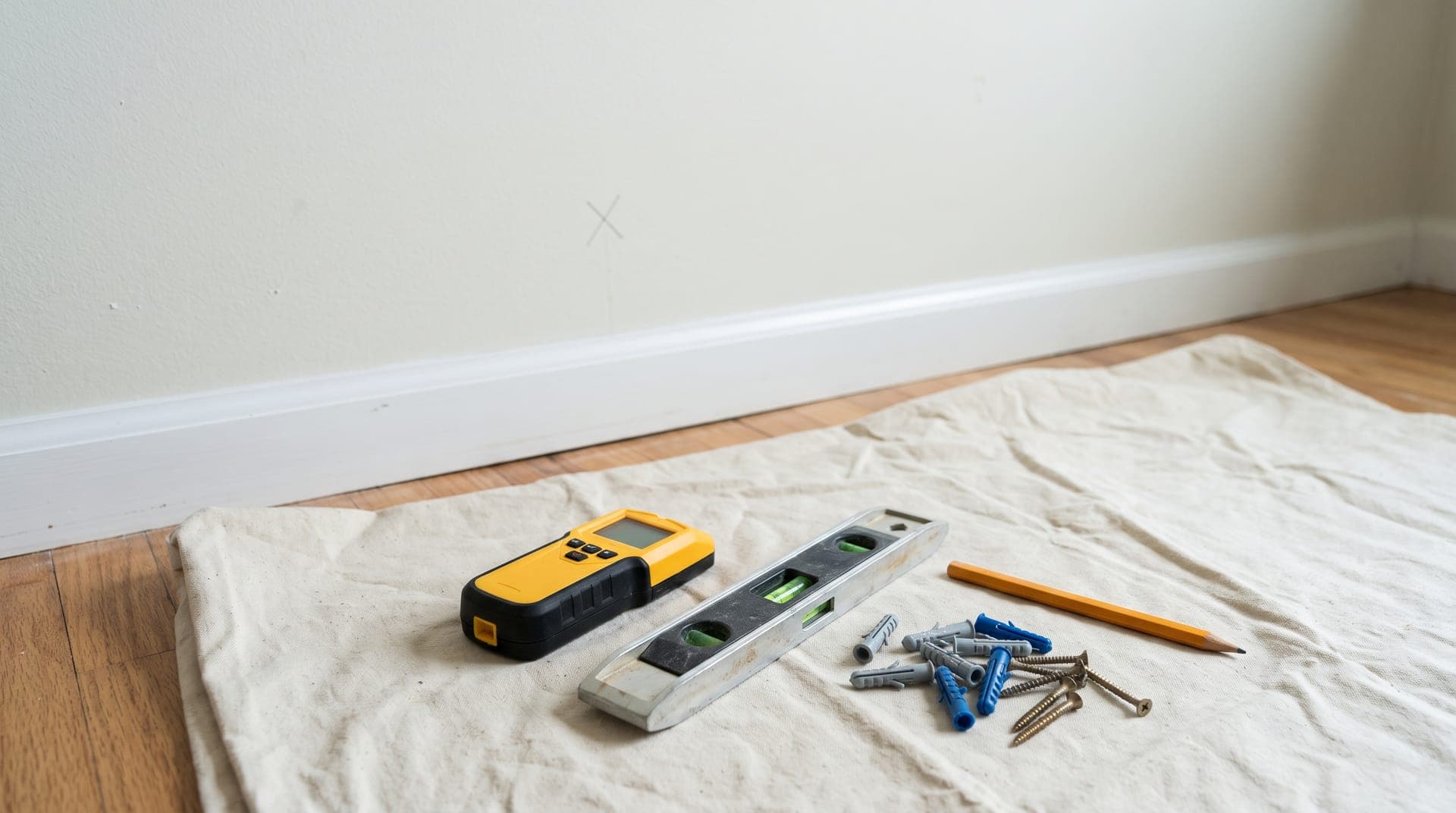
A shelf or picture falls down for one reason: the fixing was wrong for the wall or the weight. The screw went into hollow plasterboard with no anchor, or an anchor rated for a light frame held up a loaded shelf. Get the fixing right and the job lasts for years.
This guide works from the wall outward. It shows how to tell what your wall is made of, how to find the solid points inside it, how to match an anchor to both the wall and the load, and how to hang a picture level and a shelf that holds its contents. A few of the essential DIY tools cover most of it.
Start with the wall, not the shelf
Three wall types are common inside homes, and each holds a fixing differently. Knowing which you have decides the anchor before you pick up a drill.
- Drywall (plasterboard) sounds hollow when you tap it and gives slightly under a knuckle. The drill passes through about half an inch of soft board, then meets air. The dust is white and fine.
- Plaster over lath or masonry feels hard and sounds dense. It can crack, so drilling needs a slow start. The dust is often gray or sandy.
- Solid masonry, brick, or concrete block does not give at all and needs a masonry bit, usually on hammer setting. The dust is red, gray, or buff depending on the material.
When you are unsure, drill a small pilot hole in a spot that will be hidden by the fixing and watch what comes out. The color and texture of the dust, and whether the bit breaks through into a cavity, tell you what you are working with.
Find the studs
Behind drywall is a frame of vertical timber or metal studs, and a fixing driven into one is far stronger than any anchor in the board alone. Studs sit at regular spacing, commonly 16 inches apart center to center, sometimes 24 inches in newer or non-load-bearing walls.
An electronic stud finder is the reliable way to locate them. Slide it horizontally until it marks an edge, then keep going to find the far edge, and mark the center between the two. You can cross-check by knocking: the sound turns from hollow to solid over a stud. Once you find one, measure 16 inches along to predict the next and confirm it with the finder. Where a fixing has to land on a stud, mark the center lightly in pencil before anything else.
Match the anchor to the wall and the weight
If a fixing cannot reach a stud, an anchor spreads the load across the board or grips the masonry. The anchor has to suit both the wall type and the weight it will carry. The table gives the common choices.
| Anchor | Best for | Rough load |
|---|---|---|
| Into a stud (screw) | Any wall where a stud sits behind the fixing point. The strongest option. | Heavy |
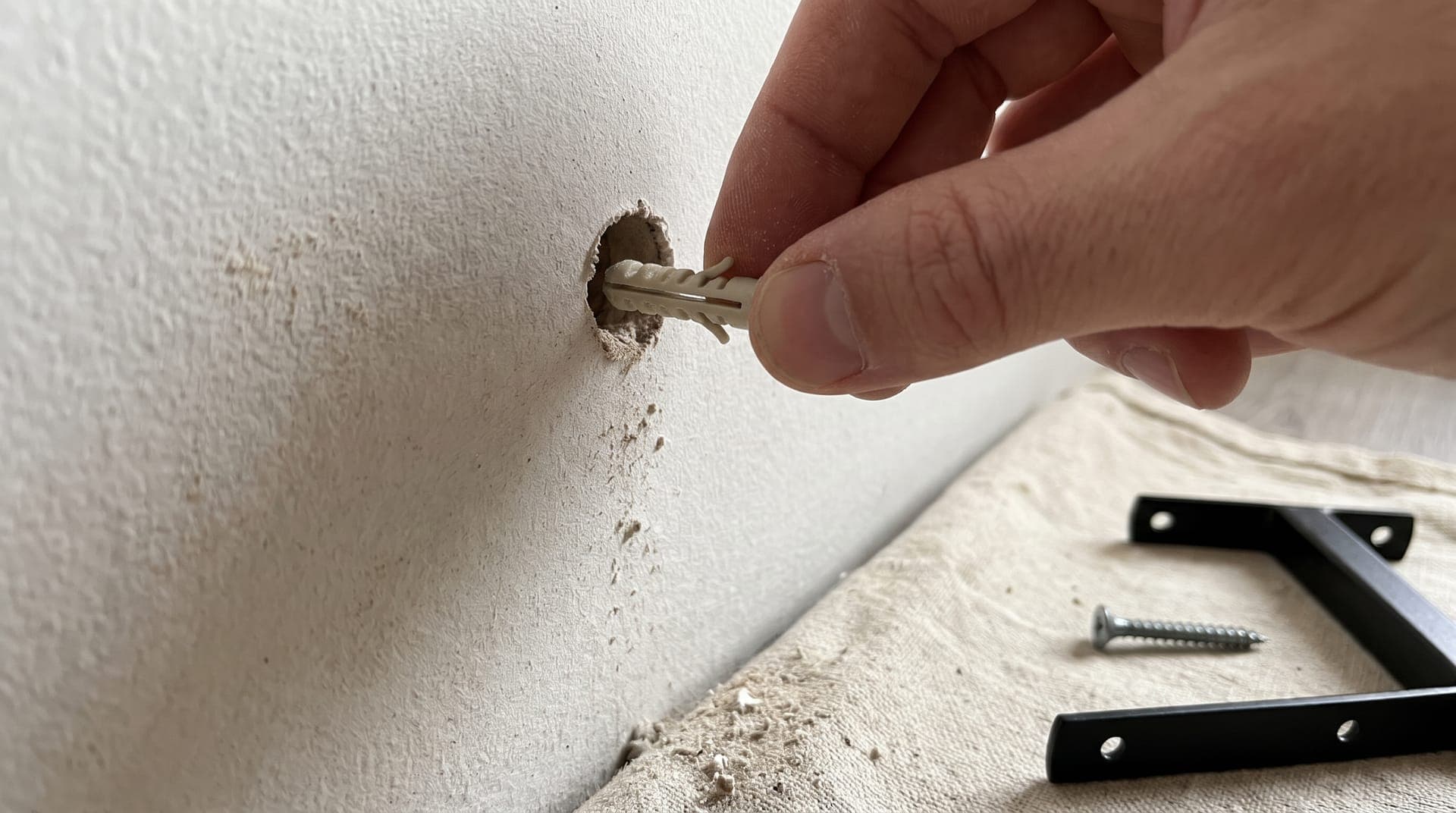
| Plastic expansion anchor | Drywall and plaster, for light items. The sleeve spreads as the screw goes in. | Light |
| Self-drilling drywall anchor | Drywall only, where you want speed and no pre-drilling for medium items. | Light to medium |
| Toggle or molly bolt | Hollow drywall or plaster carrying real weight, where no stud is available. | Medium to heavy |
| Masonry plug | Brick, block, or concrete, with a masonry bit and the matching screw. | Medium to heavy |
Hang a picture so it stays level
A single hook works for a small or light frame, but anything wide tends to tip out of level over time. Two hooks set apart hold a wide frame square and stop it shifting when a door slams nearby.
Many frames use D-rings on the back, either hung directly on hooks or joined by a taut wire. If you use wire, lift it to the tension it will hang at and measure from the top of the frame down to that point. Subtract that distance from where you want the top edge to sit, and that is where the hook goes. The common guideline is to place the center of the picture at eye level, around 57 to 60 inches from the floor, which is why gallery hangs feel comfortable. For a pair of hooks, mark both, check they are level with a spirit level, and fix them before hanging.
Hang a shelf that holds its load
A shelf fails at its brackets, so fix them into studs wherever the layout allows. Hold the shelf or a bracket against the wall, rest a spirit level on top, and mark the fixing holes only when the bubble is centered. For a two-bracket shelf, fix one bracket first, level the shelf across to the second, then mark and fix that one.
- Use at least two fixings per bracket, not one, so the bracket cannot pivot under load.
- Into drywall with no stud behind, use toggle or molly bolts rated for the weight, not plastic plugs.
- Load the shelf with the heaviest items near the brackets, where the support is, not in the unsupported middle.
- Keep a long shelf from sagging by adding a bracket roughly every 24 to 32 inches along its length.
Mistakes to avoid
- Driving a bare screw into drywall and expecting it to hold. It pulls straight out under any real load.
- Using a plastic expansion anchor for a heavy mirror or loaded shelf. Match the anchor to the weight.
- Hanging a wide frame on one central hook, then wondering why it keeps tilting.
- Marking holes by eye instead of with a level, so the shelf runs downhill.
- Drilling before checking for cables and pipes, covered below.
Before you drill
- Avoid drilling directly above or below outlets and light switches, where cables often run vertically.
- Keep clear of likely pipe runs in kitchens and bathrooms, especially near taps and the boiler.
- Use a detector that finds live wires and pipes, not just studs, and sweep the whole area first.
Questions about hanging things on walls
The anchor pulled out of the wall. What now?
A pulled anchor usually means it was too light for the load, or the hole was drilled oversized. Do not refit the same type into the same ragged hole. Move to a stud if one is near, or step up to a toggle or molly bolt and a fresh hole. If the hole is torn, patch it and drill a new one a short distance away.
There are no studs where I need to hang something.
This is common, and it is what toggle and molly bolts are for. They open out behind the board and spread the load across a wide area, so they hold real weight in a pure cavity. Choose one rated above the weight you are hanging, and use more than one fixing point for anything wide.
How do I hang a heavy mirror safely?
Treat a heavy mirror like a loaded shelf. Fix into studs if you can, using two fixings. Where studs do not line up, use toggle bolts rated well above the mirror's weight, and hang from two points so the load is shared. Tightening both points level also keeps the mirror from drifting out of true.
The three things to get right
Know your wall, find the studs, and match the anchor to both the wall and the weight. With those three settled, the fixing holds and the hanging stays level. Hanging and shelving pair well with other weekend DIY projects, and a wall of good shelves is one of the better storage ideas for small homes.
This guide is general information. Homes, materials, and local rules differ, so check product instructions and the regulations where you live. Read the full disclaimer.