How to fix a squeaky floor
Floors squeak when boards rub against each other, the subfloor, or a nail. Find the movement, fix it in place, and the noise stops.
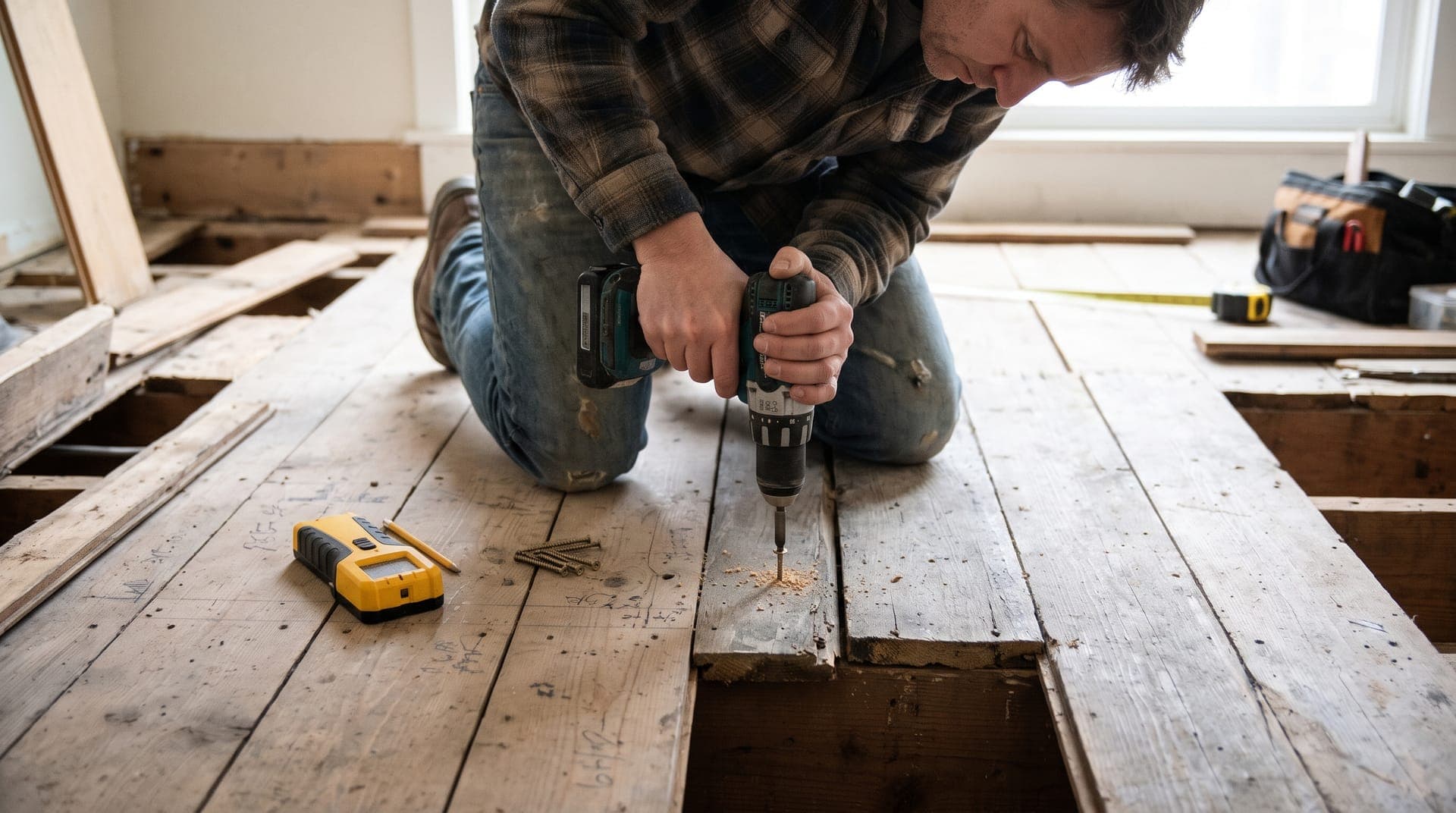
A squeaky floorboard is almost always a part that has worked loose, rubbing against a nail, the subfloor, or the board next to it as you step on it. The fix is to stop that movement, usually with a single screw driven into the joist below, and it rarely costs more than a handful of fixings and half an hour.
This guide shows you how to find the exact spot that squeaks, how to silence it from above or from below depending on what you can reach, and what changes for carpet and laminate. It also covers the one safety check to do before any screw goes into a floor.
Why floors squeak
A floor squeaks when something that should be held still is moving. A board flexes against the shank of the nail that holds it, two boards rub along their edges, or a board lifts and drops against the subfloor each time your weight passes over it. The sound is friction, and friction means a loose joint.
Wood is the reason the joint comes loose. Timber shrinks in the dry heat of winter and swells again in damp weather, and over years of that movement nails lose their grip and gaps open up. This is why squeaks tend to appear and disappear with the seasons, and why a nail that was solid when the floor was laid no longer holds.
Find the exact spot
Walk the floor slowly in socks and shift your weight from one foot to the other. Listen for exactly where the sound starts, then press down with one foot and rock gently to confirm you have it. A squeak can travel, so the noise you hear standing is not always directly under the board that moves.
If you can get beneath the floor, the quickest method is to have someone step on the squeak while you watch the underside. You will often see the subfloor flex away from the joist at the moment it sounds. Either way, mark the spot clearly with a pencil or a piece of tape so you do not lose it once you start working.
Fix a squeak from above
If you can only reach the floor from the top, the aim is to pull the loose board down tight to the joist underneath it. First locate the joist. Joists usually run at a regular spacing, and the lines of existing nails across the floor mark where they are. Tap along the board until the sound turns solid, or use a stud finder.
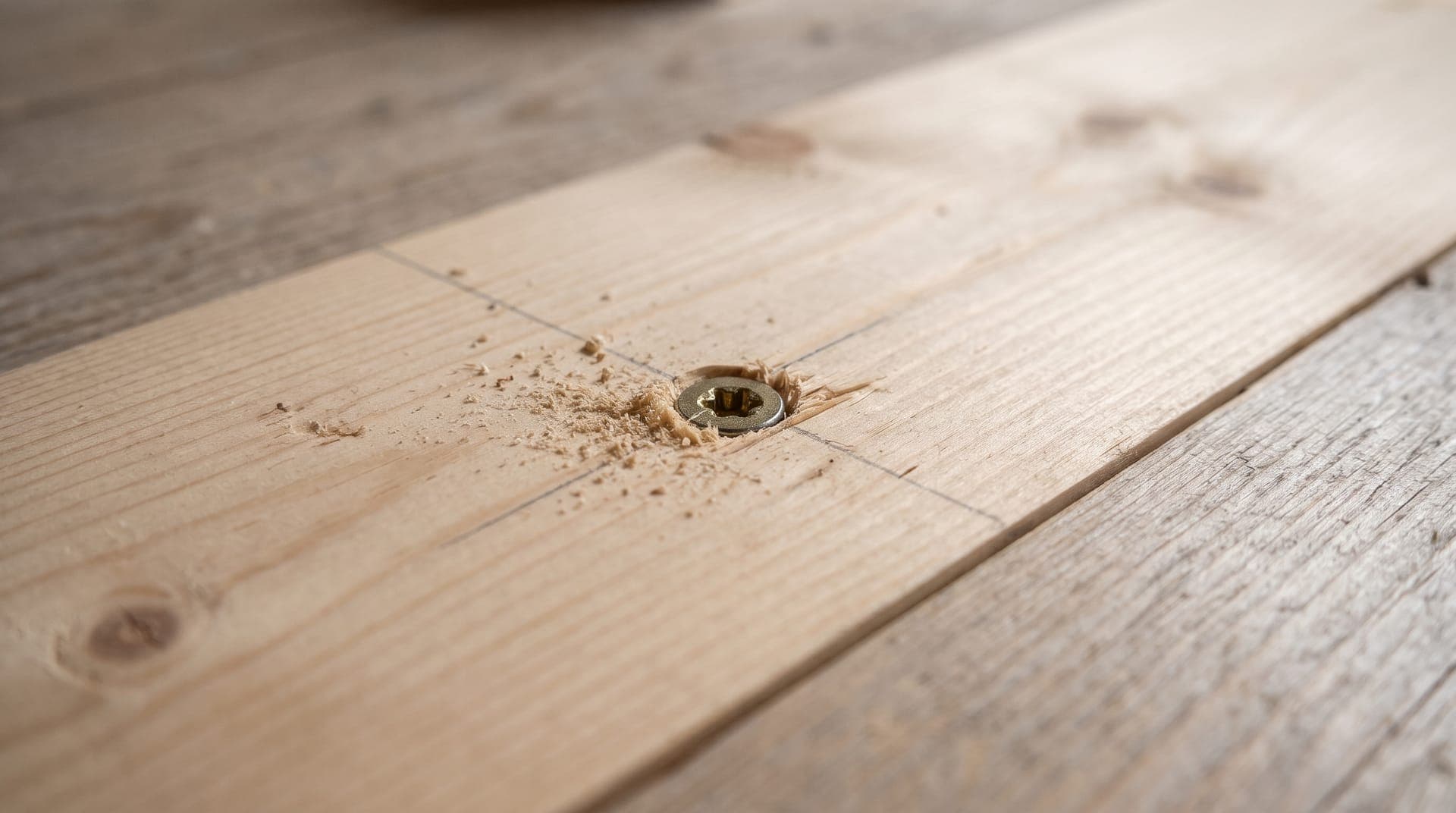
Drive a screw through the board into the joist at the squeaking point, and countersink the head just below the surface so it sits flush. A screw grips the joist far better than a nail and holds the board still for good. Choose a screw long enough to bite well into the joist but no longer, and fill the small hole afterward if the floor is bare wood.
When the squeak is two boards rubbing against each other rather than a board lifting off the joist, you do not always need a screw. Work a little powdered graphite or talc into the gap between the boards and flex them a few times to carry it in. The powder lubricates the edges so they slide silently instead of gripping.
Fix a squeak from below
If there is a basement or crawl space under the floor, fixing it from below is tidier because nothing shows on top. Have someone stand on the squeak so you can see the gap open between the subfloor and the top of the joist. That gap is what lets the floor move.
Spread wood glue on a thin wooden shim and tap it gently into the gap until it is snug, then let the glue set. For a longer loose section, screw a straight length of timber alongside the joist so its top edge presses up against the underside of the subfloor and supports it. The key word is gently: if you drive the shim in hard, you will lift the floorboard above and create a hump you can feel upstairs. Snug, not forced.
Carpeted and laminate floors
A carpeted floor does not have to come up. There are special screws made for the job that drive straight through the carpet and into the joist, then snap off below the pile when you rock the driver sideways, leaving nothing to catch your feet. A depth-control fitting sets how far they go so the head breaks off out of sight.
Laminate and most engineered wood floors are a different case, because they float as one connected sheet over an underlay rather than being fixed down. Driving a screw through a floating floor pins it and causes worse problems, so the fix there is almost always a lubricant such as talc worked into the joints where the boards click together, not a fixing.
Mistakes to avoid
- Using a screw that is too long. It can punch through the board, split the joist, or reach something below the floor.
- Missing the joist. A screw driven into the subfloor alone has little to grip and the squeak soon returns.
- Over-tightening. Pulling the board down too hard can crack it or create a new squeak at the next board along.
- Forcing a shim from below until the floor lifts. A snug fit silences the gap; a hard one makes a hump.
- Screwing into a floating laminate floor, which pins a floor that is designed to move and makes things worse.
Check what is under the floor first
Before you drive any screw or nail, check for water pipes and electrical cables running under the boards or along the sides of the joists. They often sit close to the surface. Use the shortest screw that still reaches the joist, and if you are not certain what is below, lift a board to look rather than drilling blind.
Questions about squeaky floors
Will the squeak come back?
A screw into the joist is a long-term fix, because it holds the board still even as the timber moves with the seasons. Lubricant between boards is more of a temporary fix and may need redoing after a year or two, since the powder works its way out and the wood keeps shifting.
Should I use screws or nails?
Use screws. Nails are what came loose in the first place, because their smooth shank loses grip as the wood expands and contracts. A screw thread holds far better and can be countersunk neatly. Driving a fresh nail will usually quiet the floor for a while and then work loose again.
Why does the floor squeak near the wall?
Squeaks near a wall often come from the board rubbing against the skirting or against the last fixing line rather than from a loose joist. Try working talc into the gap along the wall first, and only add a screw if you can confirm a joist runs under that point.
The order to work in
Find and mark the squeak, decide whether you can reach it from below or only from above, check for pipes and cables, then make the smallest fix that stops the movement: a screw into the joist, a glued shim, or lubricant between boards. Work one squeak at a time and test it before moving on. A countersunk hole in bare timber fills the same way you would fix small holes and cracks, a cordless driver and a stud finder are on the list of essential DIY tools, and a stubborn squeak sits alongside the other common household problems worth knowing how to handle.
This guide is general information. Homes, materials, and local rules differ, so check product instructions and the regulations where you live. Read the full disclaimer.