How to declutter your home, room by room
Decluttering stalls when you try to do the whole house at once. Working in short sessions, one surface at a time, is what actually finishes it.
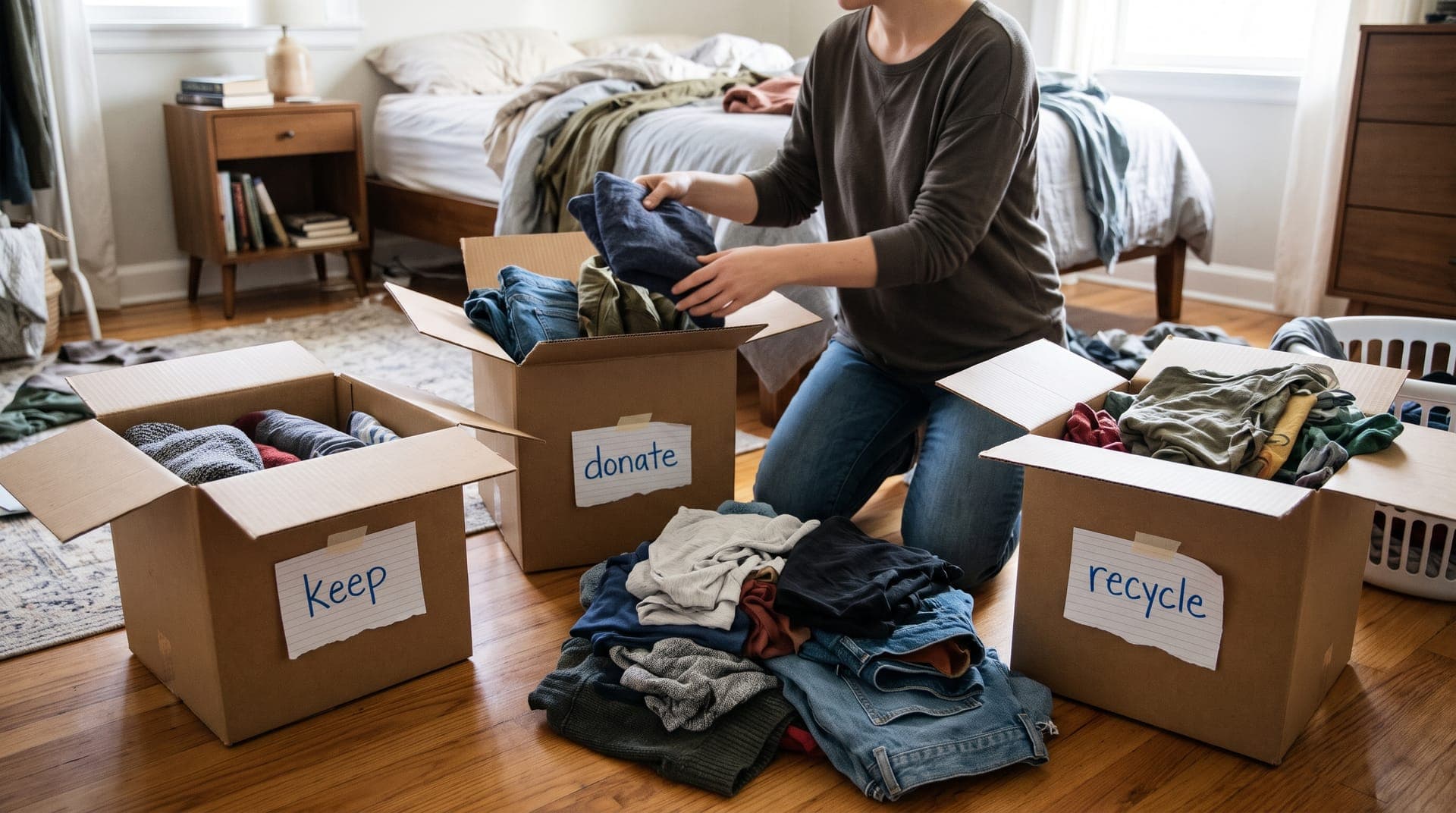
Decluttering fails most often because of how it is attempted, not because of a lack of willpower. People clear a whole house in one burst, run out of energy halfway, and leave the job worse than it started. The method that works is small, repeatable sessions with clear decisions, and a few habits that keep the clutter from coming back.
This guide sets up a simple sorting system, then works through short sessions, a rule for deciding what to keep, a room-by-room order, and the habits that hold the result in place. It pairs well with smart storage ideas, though the point here is to own less before you store it better.
Why decluttering stalls
Three things stall most attempts. Naming them makes them easier to work around.
- Taking on the whole house at once. The scale is overwhelming, so the job is abandoned with everything pulled out of cupboards and nowhere to put it.
- Decision fatigue. Every item is a small choice, and after a couple of hours the choices get harder and worse, which is why short sessions beat long ones.
- Sentimental items. A box of photos or a relative's things can stop progress for an hour, so these are left for last rather than met head-on at the start.
Set up before you start
A few minutes of setup removes most of the friction. Before touching a single drawer, gather:
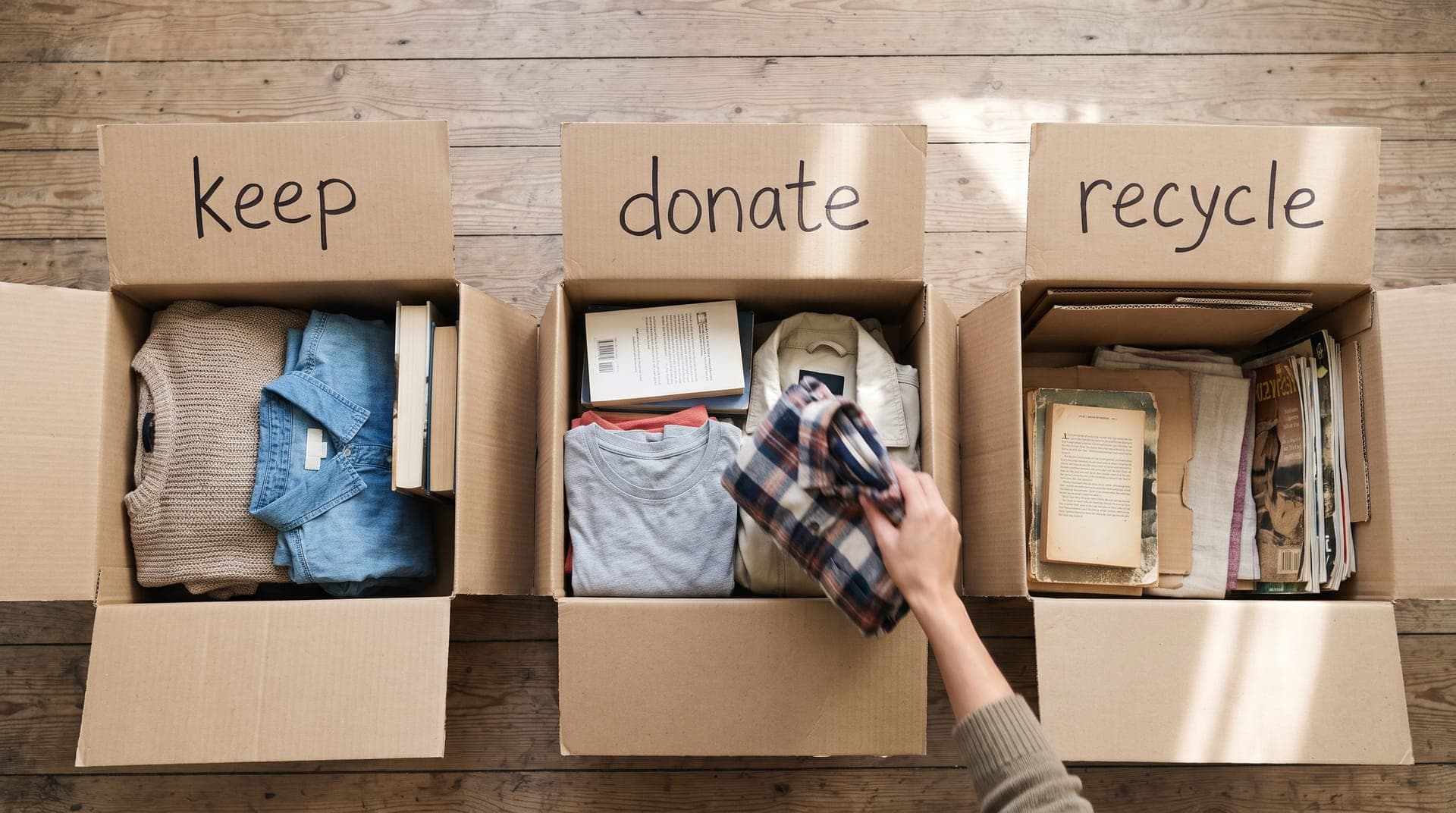
- Four boxes or bags, labeled keep, donate, recycle, and relocate (things that belong in another room).
- A timer, so each session has a clear end and you do not drift into fatigue.
- A trash bag for the things that are simply rubbish, which is more than you expect.
The relocate box matters more than it looks. Carrying one item to its proper room breaks your focus and often turns into a side task, so everything that lives elsewhere goes in the box and gets distributed at the end.
Work in short sessions, one surface at a time
Set the timer for 15 to 30 minutes and pick one surface: a single drawer, one shelf, the top of a dresser. Finish that one completely, sorting every item into a box, before you move on. A finished drawer is a visible win that keeps you going, whereas a half-cleared room is discouraging.
When the timer goes, stop, even mid-flow. Empty the boxes: donate and recycle leave the house, relocate items go to their rooms, keepers go back tidily. Short sessions done often beat a single marathon that burns you out and ends with piles everywhere.
A simple rule for deciding what to keep
Most items answer to a few quick questions, and answering fast is the whole point. For each thing, ask:
- Have I used this in the last year? If not, it is a strong candidate to go.
- Would I buy it again today at full price? If the answer is no, you are keeping it out of habit, not need.
- Do I already have one that does the job? Duplicates are easy wins; keep the better one.
For the genuinely hard items, use a maybe-box. Put the item in, write today's date on the box, and tape it shut. If you have not opened the box to retrieve anything by the date a few months on, you did not need its contents, and the box can go unopened.
Go room by room
Each room has its own quick tests. Work through them in short sessions like any other surface.
Kitchen
Clear expired food and spices, chipped or lidless containers, and duplicate gadgets. Keep the counter for what you use daily. A tidier kitchen is easier to organize a small kitchen around.
Wardrobe
Pull anything that does not fit, is damaged, or has not been worn in a year. Try on the maybes. Clothes photograph badly in a drawer, so handling each one is the quickest honest test.
Bathroom cabinet
Bin expired medicines (dispose of them safely, not down the drain), old cosmetics, and dried-up products. These build up fastest and clear fastest.
Paperwork
Sort into keep (documents you must retain), shred (anything with personal details), and recycle. Set up a single folder or tray for incoming paper so it stops piling up.
Children's things
Involve children in choosing where you can, but do the broken toys and outgrown clothes yourself. Pass on what still has life in it rather than letting it fill a cupboard.
Stop clutter coming back
Decluttering once is easy to undo. A few habits hold the result:
- One in, one out. When something new comes in, a similar thing goes out, so the total does not creep up.
- A home for everything. If an item has no place, you have either too many or nowhere to keep it, and both need deciding.
- A landing spot by the door. A tray or hook for keys, post, and bags stops the usual pile forming on the nearest surface.
- A regular quick reset. Ten minutes every few days returns stray items to their homes before they accumulate.
A note on sentimental items
Set these aside for last, once your decisions are warmed up and quicker. Keep the few things that matter most rather than every item in the box, and photograph the things you want to remember but do not need to store. A photo of a child's artwork keeps the memory without keeping the paper.
Questions about decluttering
Where should I start?
Start somewhere small and low in sentiment, like a bathroom cabinet or a single kitchen drawer. An early, visible result builds the momentum you need for the harder rooms. Avoid starting with photos or keepsakes.
What if I regret getting rid of something?
Regret is rare and usually small, which is what the maybe-box is for: it gives a safety margin on the hard calls. For everyday items, if you have not used something in a year and would not buy it again, the odds of needing it are low enough that the space is worth more than the item.
How do I keep the rest of the family on board?
Only declutter your own things without asking. For shared spaces, agree the plan together and let each person decide on their own belongings. Leading by example in your own areas works better than pressure, and a visibly tidier shared room tends to bring people along.
The habit that keeps it done
The clearing is the easy part. What keeps a home decluttered is the small routine: one in one out, a home for everything, and a short reset every few days. With those running, a once-a-year clear-out is all the maintenance most homes need. A tidy home is also far quicker to clean your home more efficiently, since there is less to work around.
This guide is general information. Homes, materials, and local rules differ, so check product instructions and the regulations where you live. Read the full disclaimer.