How to care for and restore wooden furniture
Most wooden furniture needs little more than dusting and the occasional wax. Knowing the finish tells you how to clean it and how to fix the common marks.
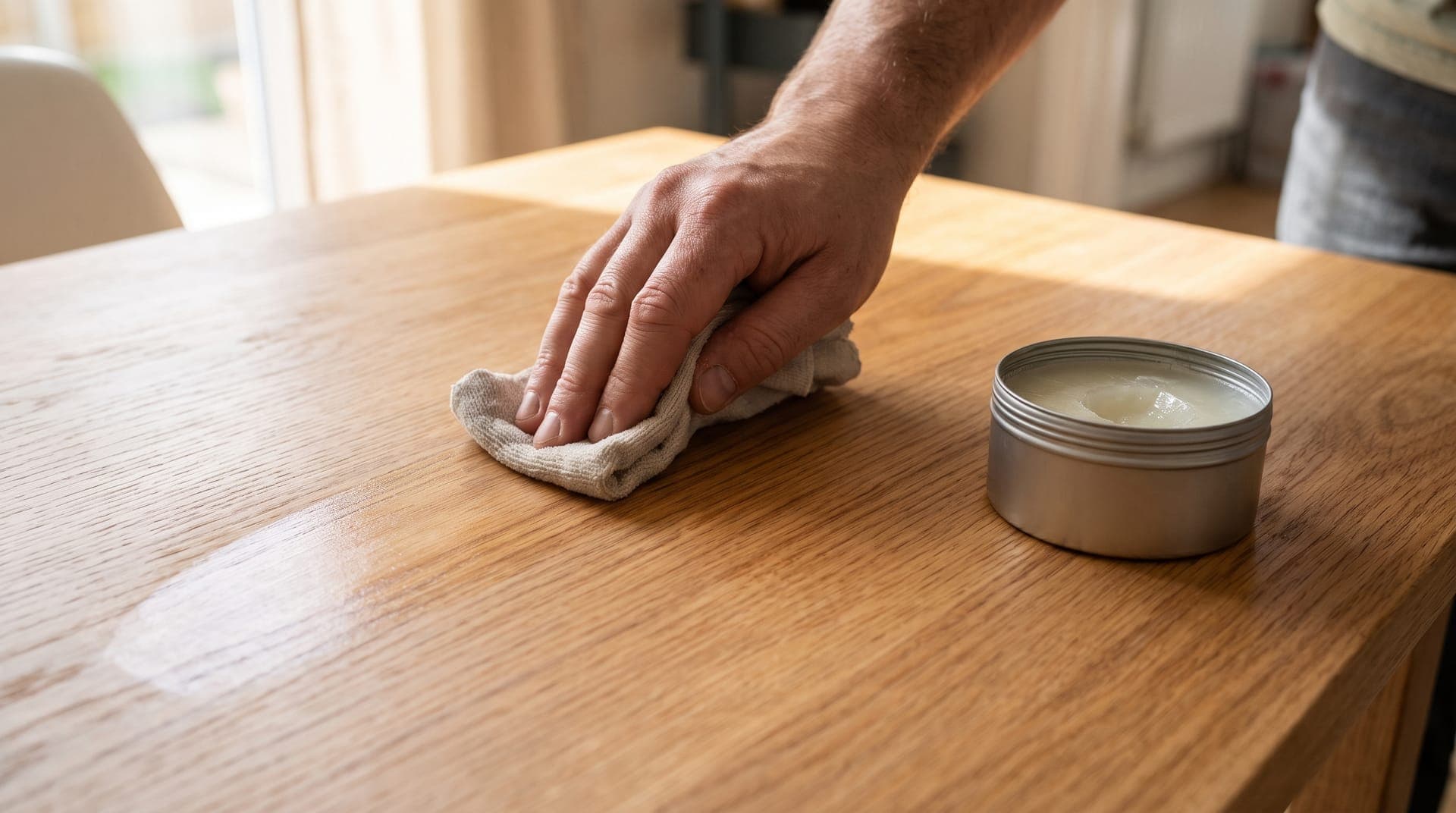
Wooden furniture lasts for decades when it is cleaned the way its finish wants and wrecked in an afternoon when it is not. The finish is the thin protective layer on the surface, and oiled, waxed, varnished, and painted wood each respond differently to water, heat, and the products you reach for. Match the care to the finish and most pieces look after themselves.
This guide shows you how to tell which finish you have, how to clean and protect wood day to day, and how to deal with the marks that worry people most: white rings, scratches, and small dents. It also draws the line where cleaning stops and refinishing begins, so you do not strip a piece that only needed a wipe.
Know the finish before you clean
Before any product touches the wood, work out how sealed the surface is. The simplest test is a single drop of water on a spot that does not show, such as the underside of a tabletop or the inside of a leg.
- If the drop beads and sits on top, the wood has a film finish: varnish, polyurethane, or lacquer. It is well sealed.
- If the drop slowly soaks in and darkens the wood, the surface is oiled or bare. It needs feeding, not sealing.
- A soft surface that smudges under a fingernail and smells faintly of wax when rubbed is waxed over wood or over an oil.
- Painted wood behaves like a film finish for cleaning, but the paint, not the wood, is what you are protecting.
Antiques and older pieces are often finished in shellac, which is sealed enough to bead water briefly but dissolves in alcohol. Treat anything you cannot identify as delicate and start with the gentlest option.
Routine cleaning and dusting
Most wood needs nothing more than regular dusting. Dust is mildly abrasive, and left to build up it dulls a finish over time. Use a dry microfiber cloth, or one that is barely damp for a surface that needs more, and dry it straight away with a second cloth. Wood and standing water are a poor match even on a sealed top.
Skip the aerosol spray polishes. Most contain silicone, which builds up into a smeary layer that attracts more dust and, worse, contaminates the wood so a future wax or refinish will not take. If you keep your whole home on a routine, the guide to clean your home more efficiently folds furniture dusting into the same pass as everything else.
Protect wood from heat, water, and sun
Damage is easier to prevent than to repair. Three things do most of the harm, and simple habits stop all three.
- Use coasters and mats under drinks, hot dishes, and anything that sweats condensation. Heat and moisture both mark a finish.
- Keep wood away from radiators, heating vents, and fireplaces. Dry heat shrinks timber and opens joints and veneer.
- Move pieces out of long hours of direct sun, or close blinds in the brightest part of the day. Sunlight fades color unevenly and dries the surface.
Wood also responds to the air around it. Large swings in humidity make it swell and shrink, which loosens joints and cracks panels over the years. Steady indoor humidity, roughly the range that is comfortable for people, suits furniture too.
Fix common marks
Most everyday marks come off without refinishing if you treat them for what they are.
White water rings
A white or cloudy ring is moisture trapped in the finish, not in the wood, so it often lifts out. On a film or waxed finish, lay a dry cotton cloth over the mark and press with a warm iron on a low setting for a few seconds at a time, checking often. The gentle heat drives the moisture back out. Go slowly, because too much heat damages the finish you are trying to save.
Light scratches
Fill a shallow scratch with a wax repair stick matched to the wood color, then buff off the excess. For a quick fix on darker wood, rub the meat of a fresh walnut along the scratch; its oils darken the exposed fibers enough to hide a fine line.
Small dents
On bare or oiled wood, a dent is crushed fibers that you can often raise. Lay a damp cloth over the dent and press a warm iron onto it briefly. The steam swells the fibers back toward level. This does not work under a film finish, because the steam cannot reach the wood, and it is not for veneer.
Oil, wax, or refinish?
People often reach for the wrong product because the three jobs sound similar. They are not.
- Wax goes over an existing finish. It adds a soft sheen and a thin sacrificial layer that takes the wear instead of the finish. It feeds nothing.
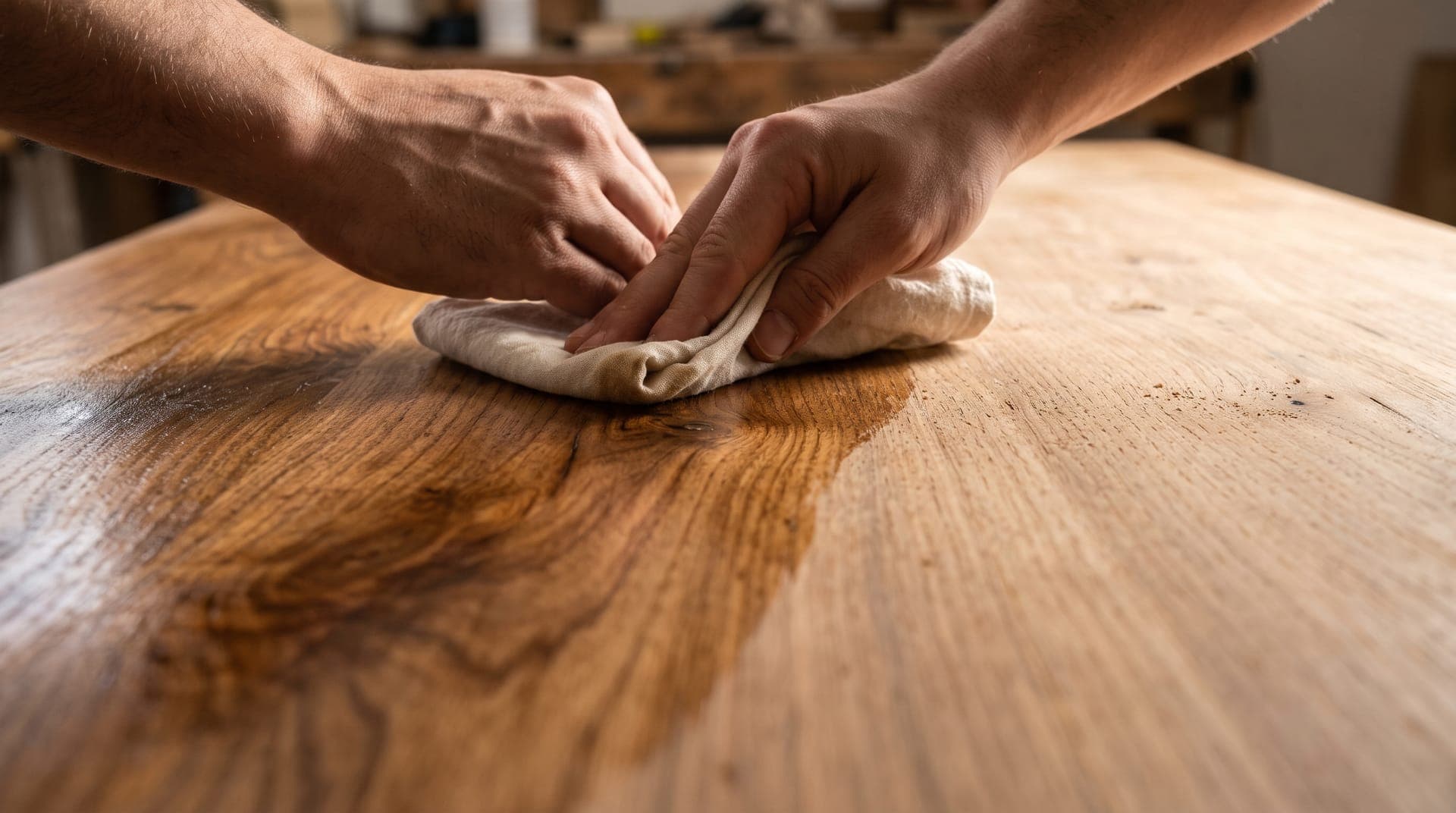
- Oil feeds bare or oiled wood. It soaks in, replaces what age and cleaning have drawn out, and is renewed by wiping on another thin coat.
- Refinishing means stripping back to bare wood and building a new finish. It is the right answer only when the surface is worn through, stained deep, or damaged past a surface repair.
If a tired oiled table just looks dry and gray, a fresh coat of oil usually brings it back. Refinishing a piece that only needed oil throws away sound finish and real work. For other small restoration jobs around the house, the guide to simple home improvements covers the same measure-twice mindset.
Mistakes to avoid
- Soaking wood, or leaving a damp cloth on it. Water in the grain lifts veneer and opens joints.
- Using all-purpose kitchen sprays on antiques or any delicate finish. They can soften shellac and strip wax.
- Sanding a veneered surface. The veneer is often under a millimeter thick, and you sand through it before you notice.
- Using the wrong product for the finish, such as oil on a sealed film finish, where it only sits on top and stays sticky.
Two safety points
- Test any product, including oil, wax, and polish, on a hidden area first and wait to see how the finish reacts.
- Lay oily rags out flat to dry, or soak them in water before you throw them away. Rags soaked in linseed or Danish oil generate heat as the oil cures and can catch fire on their own in a bunched pile. This is a real cause of house fires, not a theoretical one.
Questions about wooden furniture
Should I oil or wax my table?
It depends on the finish. If the wood is bare or already oiled and looks dry, feed it with oil. If it has a sound finish and you only want more sheen and a little protection, use wax. You can wax over an oiled piece once the oil has cured, but you cannot usefully oil over wax or a sealed film.
How do I remove a white ring that the iron did not shift?
A stubborn ring on a waxed or oiled surface sometimes responds to a mild abrasive, such as a little non-gel toothpaste or a paste of baking soda and oil, rubbed gently with the grain and buffed off. If the mark is dark rather than white, the moisture has reached the wood itself, and that usually needs refinishing the affected area.
Can I treat an antique the same way?
Be more cautious. Old shellac and French-polished surfaces are easily damaged by water, heat, and alcohol, and a valuable piece can lose value if it is stripped or refinished. Dust it, keep it out of sun and dry heat, and get advice from a restorer before using anything stronger than a barely damp cloth.
A little and often
Wooden furniture rewards small, regular attention far more than occasional heavy treatment. Dust it, keep drinks and heat off it, feed oiled pieces when they look dry, and deal with marks early while they are still in the finish. Stripping and refinishing is the last resort, not the first. If you are freshening up a whole room, the same steady approach applies to filling and sanding the walls before you repaint.
This guide is general information. Homes, materials, and local rules differ, so check product instructions and the regulations where you live. Read the full disclaimer.