How to bleed a radiator
A radiator that stays cold at the top while warm at the bottom has trapped air. Bleeding it takes a few minutes and one inexpensive key.
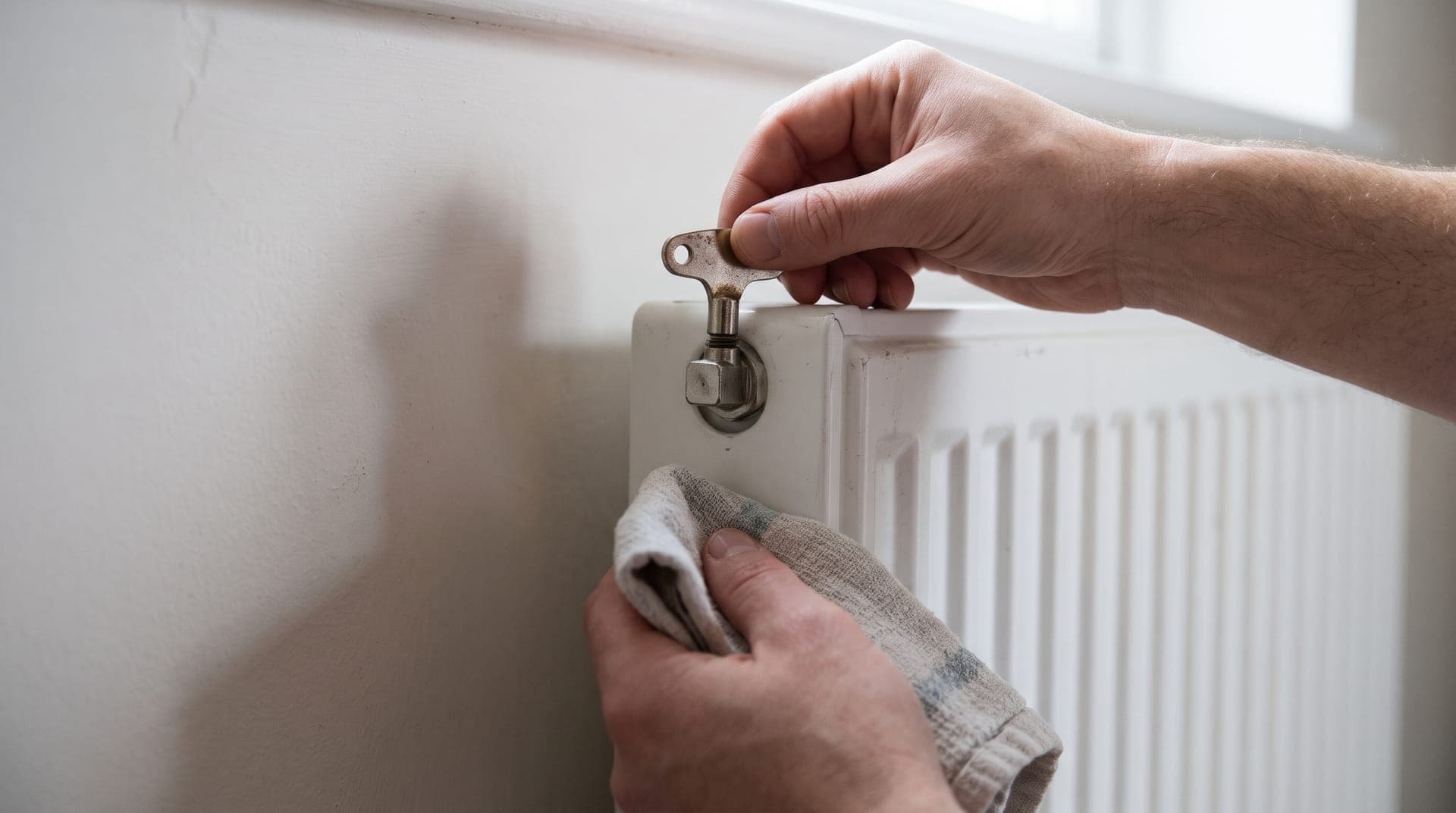
A radiator that is cold at the top but warm at the bottom has air trapped inside it, and bleeding that air out is one of the quickest wins in home heating. The job takes a couple of minutes per radiator, needs a single cheap tool, and often restores a room that has felt cold all winter for no obvious reason.
This guide shows you how to tell when a radiator needs bleeding, how to do it without soaking the carpet, and what to check on the boiler afterward. It also explains the one symptom that looks like trapped air but is not, so you do not spend an afternoon bleeding a radiator that will never get warm at the bottom.
When a radiator needs bleeding
Trapped air rises to the top of a radiator and sits there, blocking hot water from filling the upper section. The tell is a radiator that is warm or hot across the bottom but stays cold along the top edge once the heating has been running for a while.
Gurgling or knocking sounds when the heating comes on are another sign that air is moving around inside the system. Cold patches, slow warm-up, and rooms that never quite reach temperature often trace back to the same cause. The best time to bleed radiators is at the start of the heating season, before you rely on the system every day, and again if a radiator starts to feel cold at the top partway through winter.
What you need
- A radiator bleed key, sold cheaply in any hardware store. It fits the square spindle in the bleed valve.
- A cloth to catch drips and to protect your hand from hot metal.
- A small container or cup to hold under the valve, since a little water always follows the air.
Some older radiators have a slotted bleed valve instead of a square one. Those take a flat-blade screwdriver rather than a bleed key, so check the valve before you start and bring the right tool.
How to bleed a radiator step by step
- Turn the heating off and let the radiators cool. Bleeding a hot, pressurized system sprays scalding water, and the pump can pull more air in while it runs.
- Find the bleed valve, a small square or slotted fitting at the top of one end of the radiator.
- Hold the cloth and container under the valve to catch what comes out.
- Fit the bleed key onto the spindle and turn it slowly, a quarter to half a turn, anticlockwise. Do not remove the spindle completely.
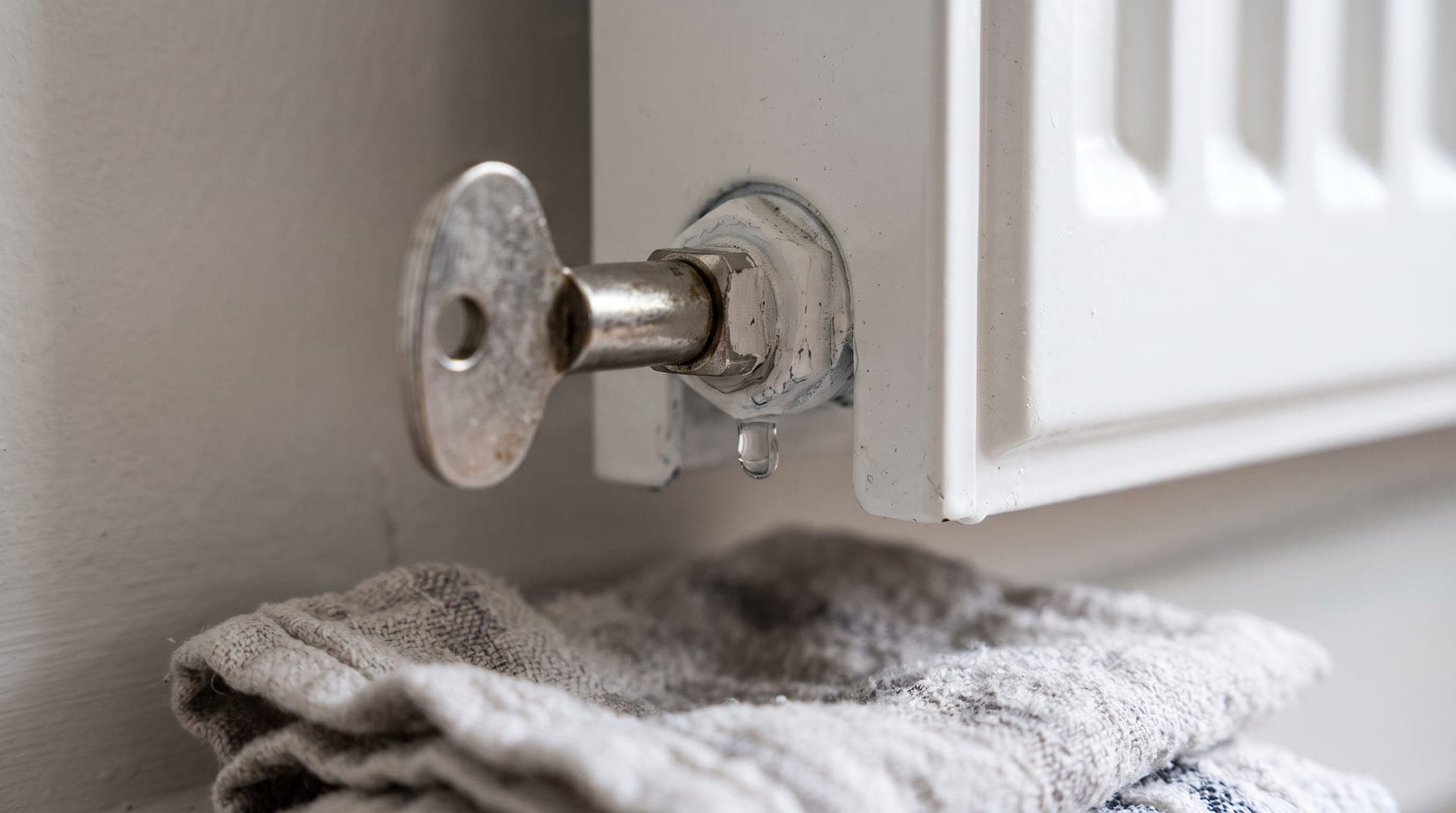
- Listen for the hiss of escaping air. Keep the valve open while it hisses.
- As soon as the hiss stops and a steady dribble of water appears, close the valve by turning the key clockwise until it is snug. Do not force it past that point.
- Wipe the valve and the wall below it dry.
Check and top up the boiler pressure
Letting air out lowers the amount of water in the system, so the pressure on a sealed boiler can drop after you bleed several radiators. Check the pressure gauge on the boiler once you have finished. Many systems sit around 1 to 1.5 bar when cold; your boiler manual will give the right figure for yours.
If the pressure has dropped below the normal range, top it up using the filling loop, the small braided hose with a valve at each end underneath most combi boilers. Open both valves slowly, watch the gauge climb back into the normal range, then close them. If your boiler has no filling loop, or you are not sure where it is, leave this step to a heating engineer rather than guessing.
Do it in the right order across the house
When you are bleeding several radiators, order matters. Start with the radiator on the lowest floor that is nearest the boiler, then work outward and upward through the house, finishing with the radiator that is highest and furthest away.
Working this way pushes the air ahead of you toward the high points where it naturally collects, rather than drawing it back into radiators you have already done. On a two-story house that usually means the downstairs radiators first, then upstairs, ending with the one in the furthest bedroom.
If bleeding does not fix it
If a radiator is cold at the bottom rather than the top, the problem is not trapped air. Cold at the bottom usually means a build-up of sludge, a sediment of rust and debris that settles in the lowest part of the radiator and blocks the flow. Bleeding does nothing for that.
Sludge is cleared by a power flush or by removing and flushing the radiator, and a system that keeps producing it may need an inhibitor added. Radiators that are all cold at one end of the house, or that warm up very unevenly, may instead need balancing so the flow is shared fairly. Both jobs are worth a heating engineer rather than a bleed key.
Call a heating engineer if
- Radiators need bleeding often, which means air is getting into the system somewhere and should be traced.
- You can see or smell a leak at a valve, a joint, or the boiler.
- The boiler pressure will not hold after you top it up, or it keeps dropping.
- You smell gas. Leave the building first, then call the emergency gas line from outside.
Questions about bleeding radiators
How often should I bleed my radiators?
Once a year, at the start of the heating season, is enough for most homes. Beyond that, bleed a radiator whenever it goes cold at the top. If you find yourself bleeding the same radiator every few weeks, air is getting in somewhere and the cause needs investigating rather than repeating the fix.
Which radiator should I bleed first?
Start with the one on the lowest floor closest to the boiler and work outward and upward, finishing with the highest and furthest radiator. This drives the air toward the top of the system instead of back into radiators you have already cleared.
Why is one radiator cold at the bottom?
Cold at the bottom is a sludge problem, not an air problem, so bleeding will not help. The sediment needs flushing out, which is a job for a heating engineer with a power flush or by removing the radiator to clean it.
A quick check once the heating is back on
Turn the heating back on and give it 20 minutes, then feel each radiator you bled from top to bottom. It should now be evenly warm across the whole panel, and the gurgling should be gone. Check the boiler pressure one more time once the system is hot. Keeping air out of the radiators is part of making a house more energy efficient, and it sits naturally alongside the other jobs in the guides to how to prepare your home for winter and the seasonal home maintenance checklist.
This guide is general information. Homes, materials, and local rules differ, so check product instructions and the regulations where you live. Read the full disclaimer.